



The refraction unit is the workstation where you spend most of your day. If it is clunky, loud, or uncomfortable, your efficiency drops and your patients feel the lack of professionalism.
A good ophthalmic refraction unit must be ergonomically designed, mechanically stable, and capable of integrating your phoropter, projector, and chair into a single workflow. Look for a unit with a smooth motorized table, a comfortable patient chair with at least 150kg lifting capacity, and a small footprint to maximize your exam room space.
I’ve spent 15 years in the manufacturing side of this industry, including three years as an OEM for Topcon. I know exactly what separates a premium unit from a cheap one that will rattle in six months. Let’s look at how to build your perfect workspace.
What Is an Ophthalmic Refraction Unit and Why Does It Matter?
Many new doctors think they can just buy a table and a chair separately. This is a mistake that leads to messy cables and frustrated patients.
An ophthalmic refraction unit is an integrated workstation that houses your chair, motorized table, and instrument arm in one synchronized system. It matters because it organizes your equipment, manages cables, and allows you to move instruments in front of the patient without them having to stand up or reposition.
The Psychology of Professionalism
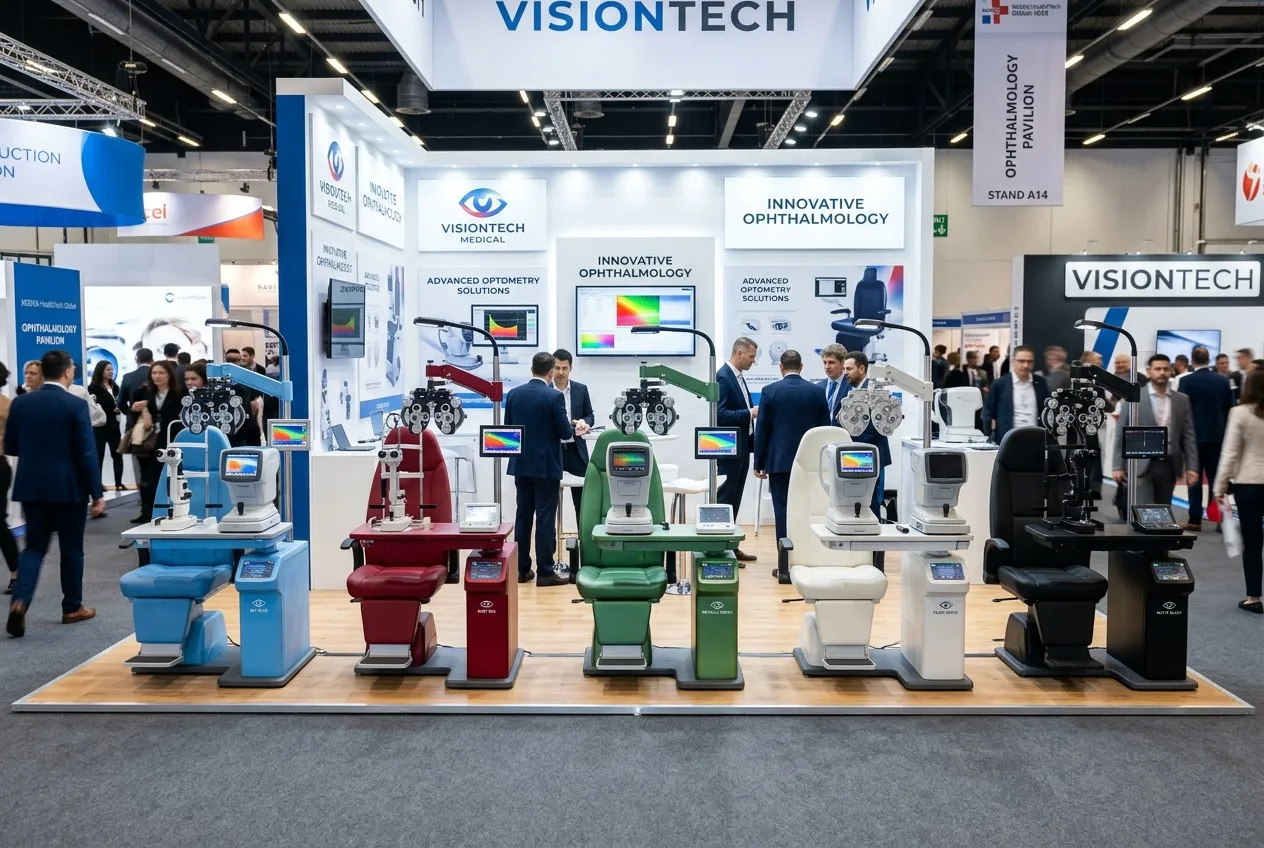
When a patient walks into a room with a sleek, high-tech refraction unit, their confidence in your diagnosis goes up instantly. It looks like a specialized medical environment, not just a desk. I’ve had many customers tell me that after upgrading to our Hongdee units, they were able to justify higher exam fees. It’s about the “wow” factor as much as it is about the “work” factor.
Workflow Efficiency
Imagine having to move the patient from one chair to another for each test. It wastes five minutes per exam. Over a day, that’s an hour of lost time. With a proper unit, you swing the phoropter arm in, then swing it out and move the slit lamp table in. Everything is at your fingertips. At Hongdee, we design our units with a “one-button” reset that brings the chair and table back to the starting position. This saves you thousands of small movements every year.
Key Components of a Unit
| Component | Function | Why It’s Critical |
|---|---|---|
| Motorized Chair | Positions patient height | Prevents doctor back pain |
| Sliding Table | Holds slit lamp/refractometer | Fast instrument swapping |
| Phoropter Arm | Holds the phoropter | Precise eye alignment |
| Projector Column | Holds the chart projector | Saves wall space |
| Control Panel | Manages all power/lights | Centralized control |
What Configuration Should I Choose for My Practice Size?
Exam rooms come in all shapes and sizes. If you buy a unit that is too big, you will be constantly bumping into it; too small, and it won’t hold the tools you need.
For a small optical shop, choose a compact, two-instrument unit with a sliding table and a 90-degree rotating chair. For a larger hospital setting, a three-instrument unit with a double-instrument arm and a fully reclining chair is better suited for specialized exams and surgical pre-ops.
The Compact Solution
If you are working in a tight 2.5m x 3m room, every centimeter counts. Our Hongdee “Mini” units are designed for exactly this. They have a small base but don’t sacrifice stability. I always recommend these for malls or high-rent areas. We even use a special vacuum-forming technology for the plastic parts—it’s the same tech we used for Topcon—which keeps the unit light but incredibly durable and scratch-resistant.
The Full Hospital Grade
If space isn’t an issue, go for the “Hospital” configuration. These units have heavy-duty motors that can lift even very heavy patients without a sound. They often include extras like a built-in charger for your ophthalmoscope and a specialized tray for your trial lens set. I recently helped a large clinic group in Algeria outfit 10 rooms with these. They needed equipment that could handle 100+ patients a day, and our heavy-duty units were the perfect fit.
Configuration Comparison
- Compact (2-Instrument): Best for routine refraction and small spaces.
- Mid-Range (2-3 Instrument): Includes extra arms for charts or lights.
- Premium (3+ Instrument): Best for full-service eye clinics and hospitals.
How Does the Motorized Table Improve Daily Workflow?
The table is the part of the unit you move most often. If it doesn’t slide smoothly or if the height adjustment is jerky, your patients will be startled and your instruments could be damaged.
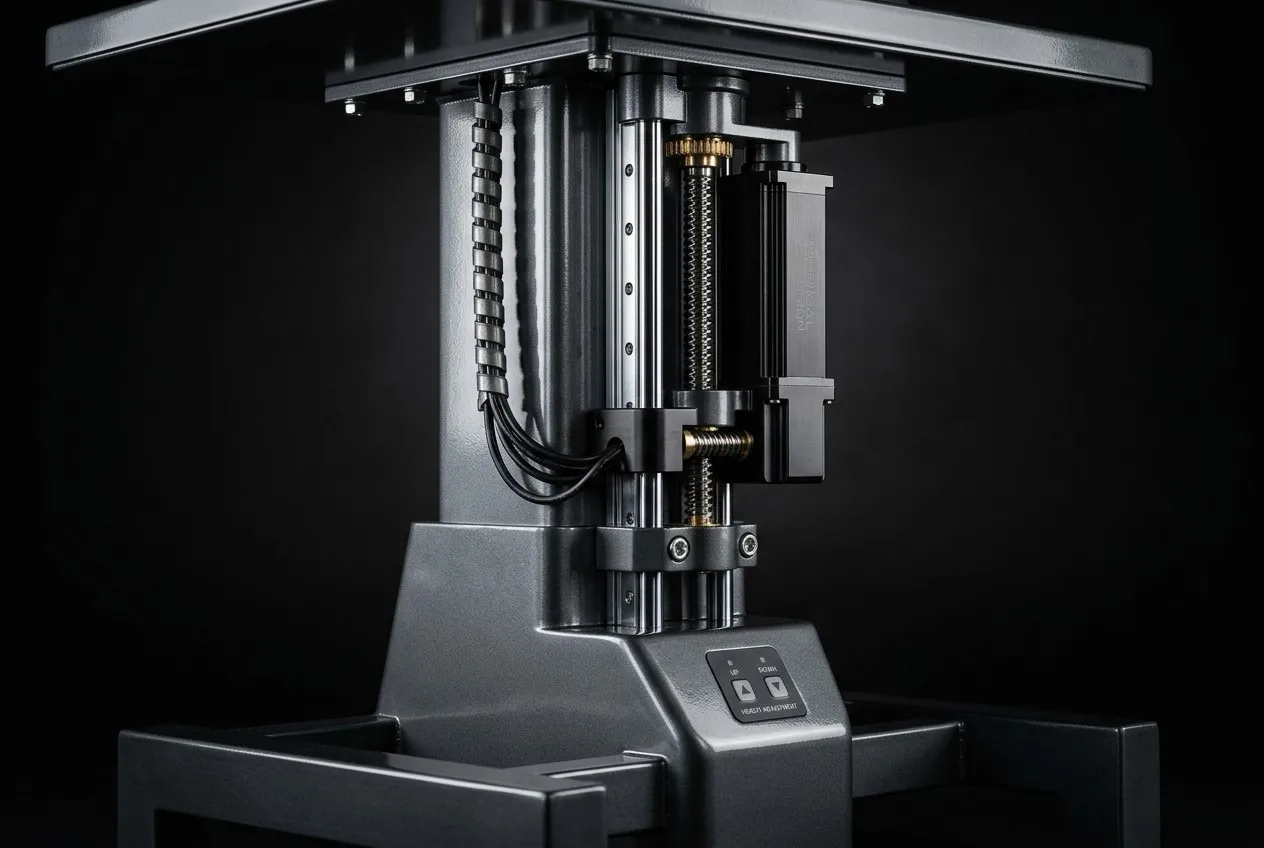
A motorized table allows for effortless height adjustment to accommodate children, adults, and patients in wheelchairs. High-quality units use silent linear actuators and ball-bearing tracks to ensure instruments like your slit lamp stay perfectly calibrated even after thousands of sliding cycles.

The Silence of Quality
One thing I tell my distributors: listen to the motor. If it sounds like a vacuum cleaner, it’s a cheap motor that will fail. A good motor should be a whisper. At Hongdee, we use industrial-grade actuators. Our CEO is very strict about this because he knows a loud motor makes patients nervous. We also use a unique vacuum-forming paint process. This isn’t just for looks—it’s anti-scratch and very easy to clean with medical-grade disinfectants.
Safety First
Have you ever worried about a motorized table crushing a patient’s knees? Our tables include a safety sensor. If it hits an obstruction while moving down, it stops automatically. This “anti-crush” feature is something we are now providing as a free upgrade on all our 2026 models. We want you to focus on the patient’s eyes, not on the safety of your furniture.
Table Features to Look For
- Silent Operation: Under 50dB.
- Safety Sensors: Auto-stop on obstruction.
- High Weight Limit: Should hold at least 50kg of equipment.
- Stable Tracking: No “wobble” at full extension.
What Should I Budget for a Quality Refraction Unit?
This is a “big ticket” item. Because it is large and heavy, the price isn’t just about the machine; it’s also about the shipping and the steel.
In 2026, a high-quality ophthalmic refraction unit will cost between $3,500 and $7,000 depending on the configuration. While you can find units for $2,000, they often use thin sheet metal and weak motors that will fail within two years. Investing in a mid-range unit with a 3+ year warranty will save you money on repairs and downtime.
Understanding the Cost Drivers
Steel prices and shipping costs are the biggest factors here. A good unit weighs over 200kg because it needs to be stable. If a unit is light, it will vibrate when the slit lamp is used. We use thick-gauge steel and heavy cast-iron bases. I know shipping is expensive, but I offer a 2-3% discount if we are ever late on delivery to help offset your costs. We also have 60+ distributors, which means we can often ship in bulk to reduce your individual freight bill.
Avoiding “Cheap” Traps
I’ve seen doctors buy $1,800 units only to find that the paint peels off and the chair starts squeaking in three months. Our new vacuum-formed paint technology is a game-changer here. It’s fused to the plastic, so it doesn’t scratch or yellow over time. We actually offer this as a free upgrade now because we want our Hongdee units to look new even after five years of hard use.
Budgeting Checklist
- Base Unit: $3,000 – $5,000
- Shipping/Crating: $500 – $1,200
- Import Duties: 5% – 20% (Region dependent)
- Assembly/Install: Usually 1-2 hours of your time.
How Do I Ship a Refraction Unit Internationally Without Damage?
This is a massive piece of equipment. If it is packed poorly, it will arrive as a pile of scrap metal and broken plastic. You need to know your supplier knows how to pack.
International shipping for refraction units requires custom-built, ISPM-15 certified wooden crates with internal foam blocking. At Hongdee, we use a “double-crate” system for long-haul sea freight and provide all the necessary FDA and CE documentation to ensure your unit passes through customs without inspection delays.
The Crating Process
We don’t just use cardboard. Each unit is bolted to a wooden pallet and then encased in a thick plywood crate. We’ve shipped to 300+ customers globally, from the USA to Nigeria. I invite you to join a live factory tour via video. You can see our packing team in action. We even include “Tilt-Watch” indicators on the boxes so you can see if the shipping company mishandled your crate.
After-Sales and Assembly
“How do I put this thing together?” Don’t worry. We provide step-by-step video guides. You don’t need to be an engineer. If you get stuck, you can call us—or甚至 message our CEO directly. We provide free repairs and ship any necessary spare parts via DHL at our expense during the warranty period. We even keep parts in stock for units we sold 10 years ago.
Shipping & Support Checklist
- [ ] Is the wood heat-treated (ISPM-15)?
- [ ] Does the seller assist with FDA/CE registration?
- [ ] Are there detailed assembly videos in English?
- [ ] Is there a direct contact for technical support?
Conclusion
A refraction unit is more than just furniture; it is the engine of your eye exam room. By choosing a unit with the right configuration, smooth motors, and a manufacturer that understands the rigors of international shipping, you can build a practice that is both efficient and impressive. At Hongdee, we are proud to use our 15 years of experience to help you succeed.