


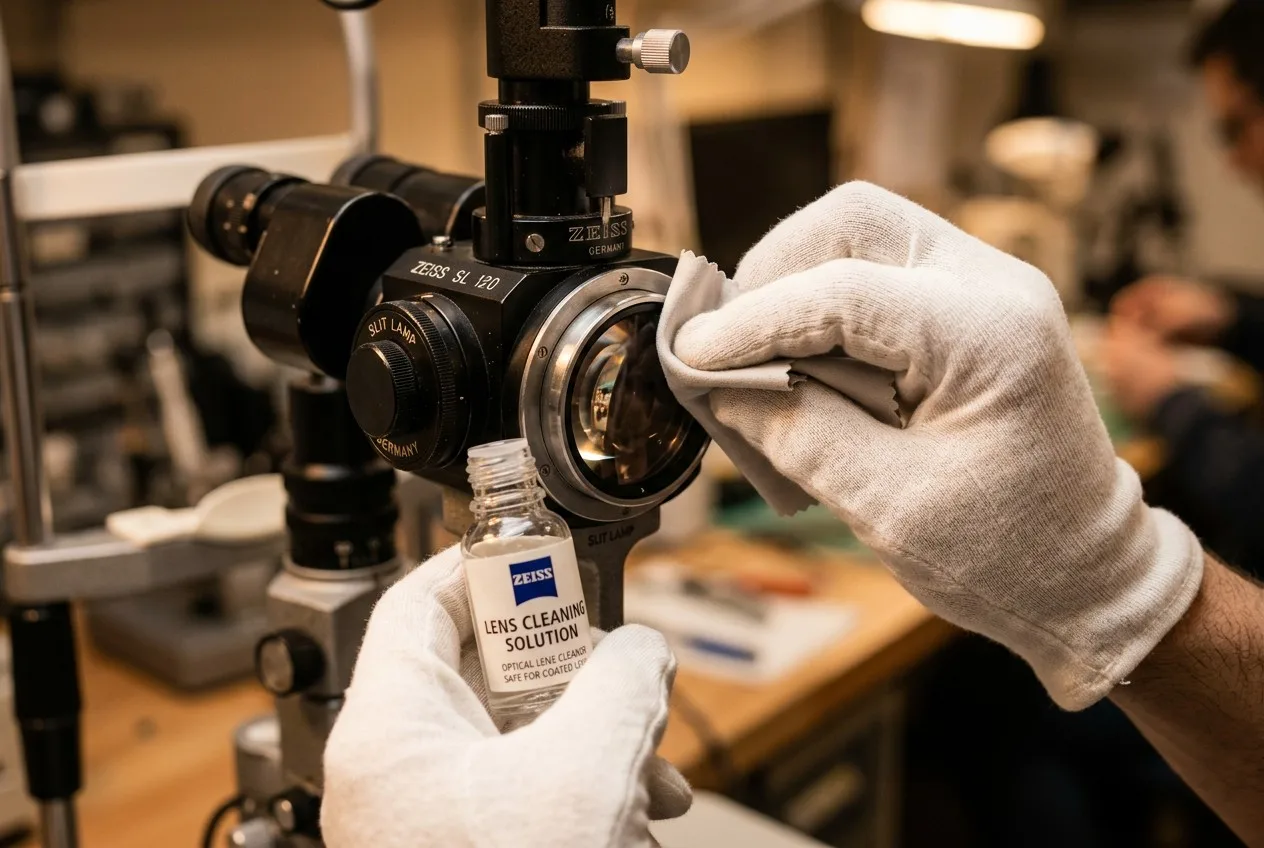
Is your slit lamp showing signs of age? Maybe the movement is stiff, or the light is dim. A slit lamp is the heart of your exam room. If it fails, your clinic stops. Proper maintenance is not just about cleaning; it is about protecting your investment.
Maintain your slit lamp by cleaning the optics daily, lubricating the mechanical tracks monthly, and checking the illumination system weekly. Avoid harsh chemicals on the lenses and ensure the power supply is stable to prevent bulb or LED failure.
I have seen slit lamps last for 30 years and others fail in 3. The difference is always maintenance. At Hongdee, we build our slit lamps to last, but they still need your care. We are here to help you keep your equipment in top shape for decades.
In this article, I will share the secrets of long-lasting slit lamps. We will talk about dust, bulbs, and mechanical parts. I will also tell you when it is safe to fix it yourself. Let’s make sure your slit lamp stays as bright as the day you bought it.
Why Do Slit Lamps Fail Prematurely in Most Clinics?
Most slit lamps do not “die” of old age. They are killed by neglect or wrong cleaning habits. I see the same mistakes over and over. It breaks my heart to see a high-quality instrument ruined by a simple error.
Slit lamps fail prematurely due to dust accumulation in the optics, the use of abrasive cleaning fluids, and lack of lubrication on the mechanical base. Environmental moisture and power surges also contribute to early electronic and optical degradation.
The Enemy Number One: Dust
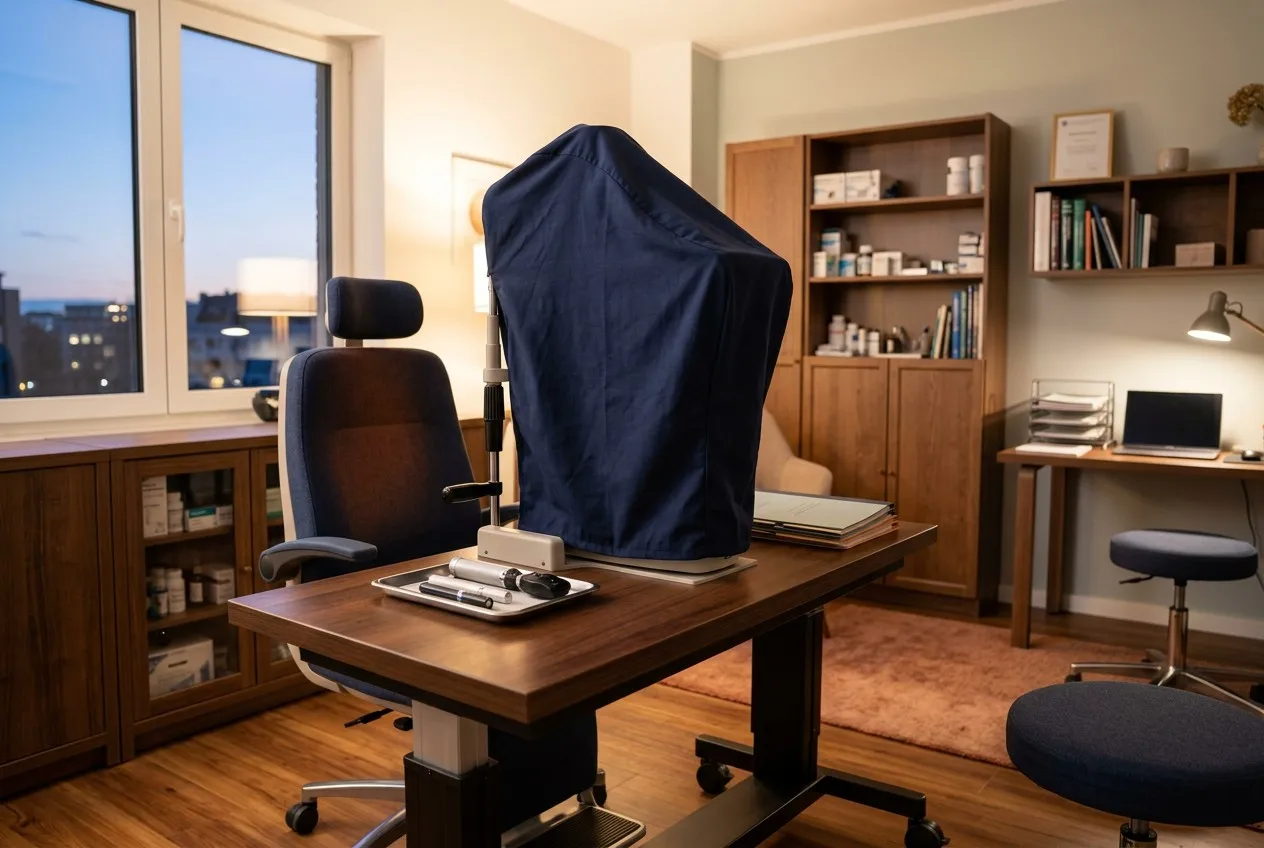
Dust is everywhere. It settles on the mirrors and inside the eyepieces. Over time, it creates a “haze” that reduces contrast. You might think your vision is getting worse, but it is just the dust.
I have noticed that clinics in dry climates have more issues. The dust acts like sandpaper. When you move the slit lamp, the dust grinds into the metal tracks. This makes the movement “choppy.” A choppy slit lamp makes it hard to focus on the cornea.
Wrong Cleaning Fluids
This is a big one. I once saw a technician use window cleaner on a slit lamp lens. The ammonia in the cleaner stripped the anti-reflective coating right off. The lens was ruined in seconds.
Never use household chemicals. The coatings on ophthalmic lenses are very delicate. They are designed to let specific wavelengths of light through. If you damage the coating, you get glare and reflections. We at Hongdee always recommend 90% isopropyl alcohol or dedicated lens cleaners.
Mechanical Neglect
The base of your slit lamp has gears and tracks. They need to be smooth. If they get dry, the metal rubs against metal. This creates “play” or wobbliness. A wobbly slit lamp is useless for fine procedures like removing a foreign body.
I suggest a light wipe of the tracks every month. Use a lint-free cloth. Do not use heavy grease, as it attracts more dust. A tiny drop of high-quality sewing machine oil is usually enough. Keep it simple and keep it clean.
What Is the Daily and Weekly Cleaning Routine I Should Follow?
Consistency is better than intensity. You do not need to spend hours cleaning. You just need a few minutes every day. I follow a “Zone System” to make sure I do not miss anything.
A daily routine involves wiping the chin rest and forehead band with alcohol and dusting the objective lens with a blower. Weekly, you should clean the eyepieces, wipe the mechanical tracks, and check the bulb’s brightness and centration.
The Daily “3-Minute” Wipe
First, think about hygiene. The chin rest and forehead band touch every patient. Use a 70% alcohol wipe between every single patient. This is not just for the machine; it is for patient safety.
Second, use a manual air blower (like a “rocket” blower) on the lenses. Do not use your breath, as it contains moisture and oils. A few puffs of air will remove the loose dust before it can settle. This prevents scratches when you eventually do a wet clean.
The Weekly Deep Clean
Once a week, I check the “Joystick” movement. It should feel like it is floating on air. If it feels sticky, wipe the pad underneath the joystick. This area often collects skin oils and dust.
Check the eyepieces too. Mascara and skin oils from the doctor’s eyes often end up on the glass. Use a lens tissue and a drop of cleaner. Start from the center and spiral outward. This pushes the dirt to the edges rather than smearing it across the middle.
Cleaning the Slit Aperture
The slit itself is a mechanical assembly. If dust gets inside the slit blades, the light beam will look “fuzzy” or have black lines in it. Open the slit to its maximum width and use compressed air to blow out the gap.
Be careful not to stick anything into the slit. The blades are very thin and easily bent. If you bend a blade, you will never get a sharp beam again. At Hongdee, we use high-grade steel for our blades to prevent this, but they still need gentle handling.
| Cleaning Task | Frequency | Tools Needed | Target Area |
|---|---|---|---|
| Patient Contact Surfaces | Every Patient | 70% Alcohol Wipes | Chin rest, Forehead band |
| Objective Lens Dusting | Daily | Air Blower | External glass surfaces |
| Eyepiece Cleaning | Weekly | Lens Tissue + Fluid | Doctor’s viewing lenses |
| Mechanical Track Wipe | Monthly | Lint-free cloth | X-Y-Z Base tracks |
| Power Cord Inspection | Every 6 Months | Visual Check | Wall plug and unit entry |
How Do I Replace the Bulb Without Damaging the Optics?
Replacing a bulb seems easy, but I have seen many people break the lamp housing. You are working close to expensive mirrors. One slip of the hand can cost you a lot of money.
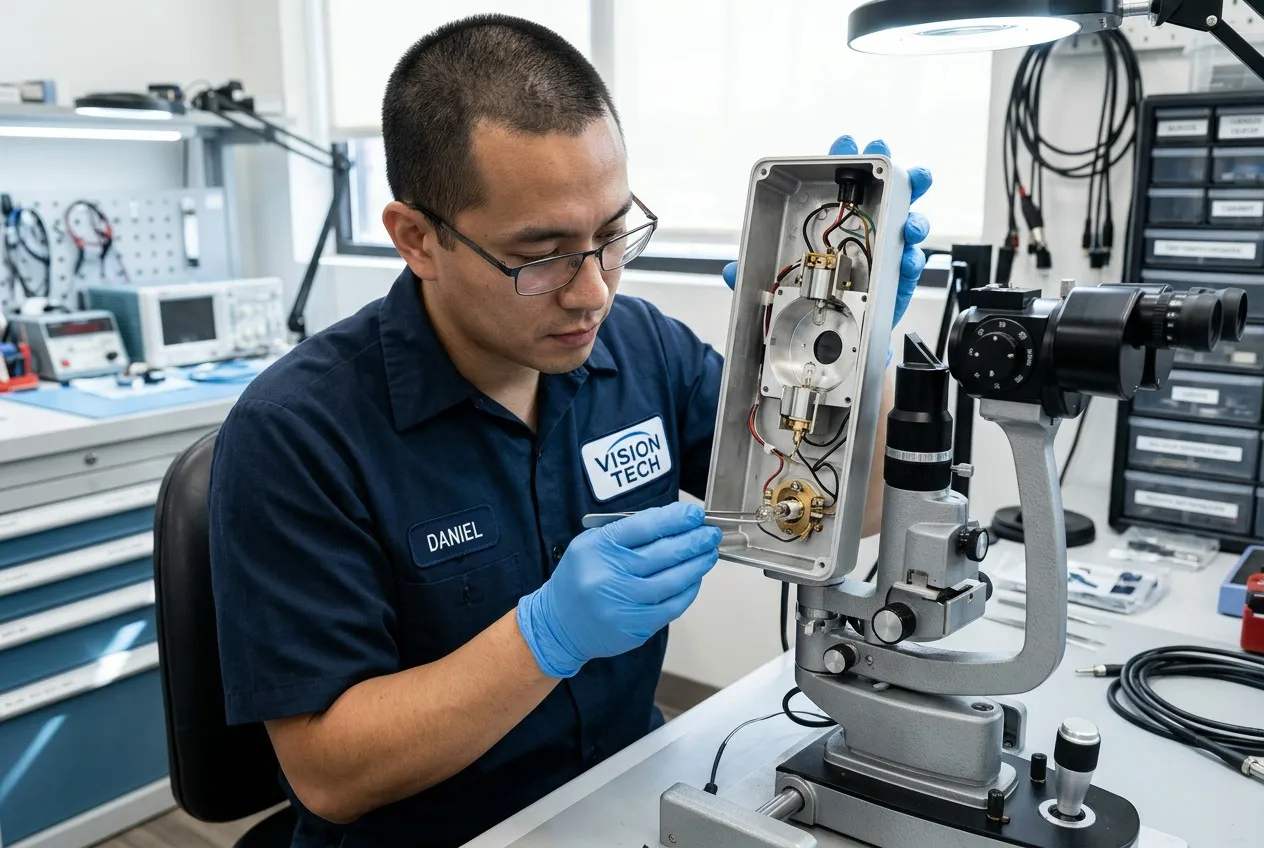
Replace the bulb by first turning off and unplugging the unit. Wait for the bulb to cool completely. Use a tissue to handle the new bulb to avoid skin oils, and ensure the bulb is fully seated and aligned before tightening the housing.
LED vs. Halogen: Which Is Better?
Most older slit lamps use halogen bulbs. They are warm and comfortable, but they burn out. Modern units, like the ones we make at Hongdee, often use LED. LED lasts much longer and stays cool.
I always recommend upgrading to LED if possible. A halogen bulb lasts about 100 to 200 hours. An LED lasts 50,000 hours. Think about the savings! You won’t have to keep a stock of expensive bulbs, and you won’t have to worry about a bulb blowing out mid-exam.
The Danger of Skin Oils
Never touch a halogen bulb with your bare fingers. The oils from your skin stay on the glass. When the bulb gets hot, these oils cause the glass to heat unevenly. This leads to the bulb exploding or burning out prematurely.
If you accidentally touch the bulb, clean it with alcohol before installing it. I always keep a pair of tweezers or a clean tissue nearby for this task. It is a small detail that makes a huge difference in bulb life.
Alignment and Centration
After you install the new bulb, check the beam. Is it centered? Is the light even? If the bulb is slightly tilted, the slit will be brighter on one side. Most housings have small adjustment screws to center the filament.
I suggest checking the centration against a white card. Project the slit onto the card and look for shadows. If it looks uneven, adjust the bulb position slightly. We provide detailed videos for our customers to help with this process. Our 24-hour support is always ready if you get stuck.
What Are the Common Mechanical Issues and How Do I Prevent Them?
Mechanical issues usually start small. A little squeak here, a slight drag there. If you catch them early, the fix is free. If you wait, you might need a whole new base.
Common mechanical issues include a stiff joystick, drifting chin rest, and loose magnification knobs. Prevent these by tightening set screws annually, keeping the base plate clean, and avoiding excessive force when changing magnifications.
The Stiff Joystick
The joystick uses a “ball and socket” or a sliding plate mechanism. If it gets hard to move, it is usually because of grit. I tell my clients to never use WD-40. It is too thin and can leak into the electronics.
Instead, clean the sliding plate with a dry cloth. If it is still stiff, a tiny amount of specialized optical grease is needed. I usually send a small tube of this to our regular buyers. It is part of the Hongdee “long-term partnership” promise.
Drifting Chin Rests
Does the chin rest slide down on its own? This is common as the internal springs lose tension. There is usually a tension screw near the height adjustment knob. Give it a half-turn clockwise.
Check the patient’s weight. Some patients lean very heavily on the chin rest. I always coach the patient to “rest gently.” This protects the delicate gears inside the lift mechanism. If the gears strip, the whole assembly must be replaced.
Loose Magnification Knobs
If the magnification click-stops feel “mushy,” the internal detent ball is worn or the screw is loose. Do not force it. Forcing a stuck knob can break the internal glass prisms.
I suggest checking the screws on the side of the drum every year. Just make sure they are snug. If the drum is stuck, call us for a video diagnosis. We can often tell you exactly which screw to turn to fix it in seconds.
When Should I Call a Professional vs Fix It Myself?
I am a big fan of DIY, but I also know its limits. Some parts of a slit lamp are “factory aligned.” If you touch them, you will lose the parfocality (staying in focus while changing magnification).
Fix it yourself for bulb changes, basic cleaning, and external screw tightening. Call a professional for internal optical cleaning, prism realignment, or power supply repairs. Hongdee offers free repairs and 5-year parts supply to make professional support affordable.
The “Do Not Touch” Zone
Never open the binocular head unless you are a trained technician. The prisms inside are aligned to a fraction of a millimeter. If they move, you will see double (diplopia). This is very hard to fix without specialized tools.
Also, stay away from the internal wiring. Slit lamps use high-voltage transformers for halogen bulbs. There is a risk of electric shock. If the light won’t turn on and the bulb is good, the problem is in the base. That is a job for a professional.
Who Repairs Your Equipment?
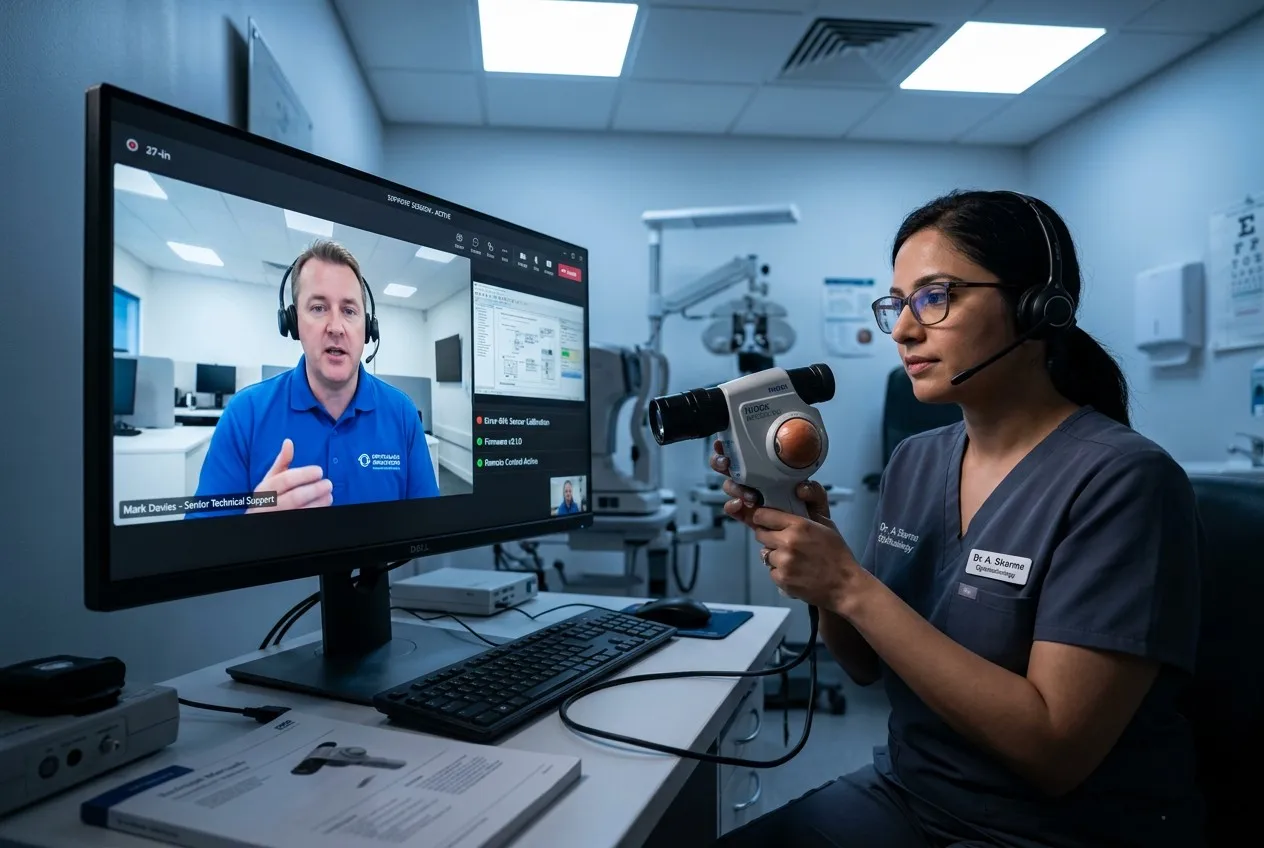
This is a question I get all the time. “If I buy from China, who will fix it?” At Hongdee, we have a different approach. We don’t expect you to ship the machine back for every small issue. We provide the parts for free and guide your local tech via video.
If it is a major failure, we discuss the best shipping option. Who pays the freight? We believe in fairness. If the machine is under warranty, we work with you to minimize the burden. Our CEO is directly involved in these decisions because we value your trust more than a shipping fee.
The Value of Free Repairs
We offer free repairs because we trust our build quality. We have 15 years of history and we OEM for Topcon. We know these machines inside and out. If something goes wrong, it is usually a simple fix.
By offering free repairs and a 5-year parts guarantee, we remove the risk of buying from us. You get the quality of a top-tier brand without the high service costs. It is how we bring value to eye care practitioners worldwide.
Conclusion
A well-maintained slit lamp is a joy to use. Daily cleaning and careful bulb replacement will extend its life by years. When things get complicated, remember that Hongdee is standing by with free parts, video support, and a commitment to your clinic’s success.