


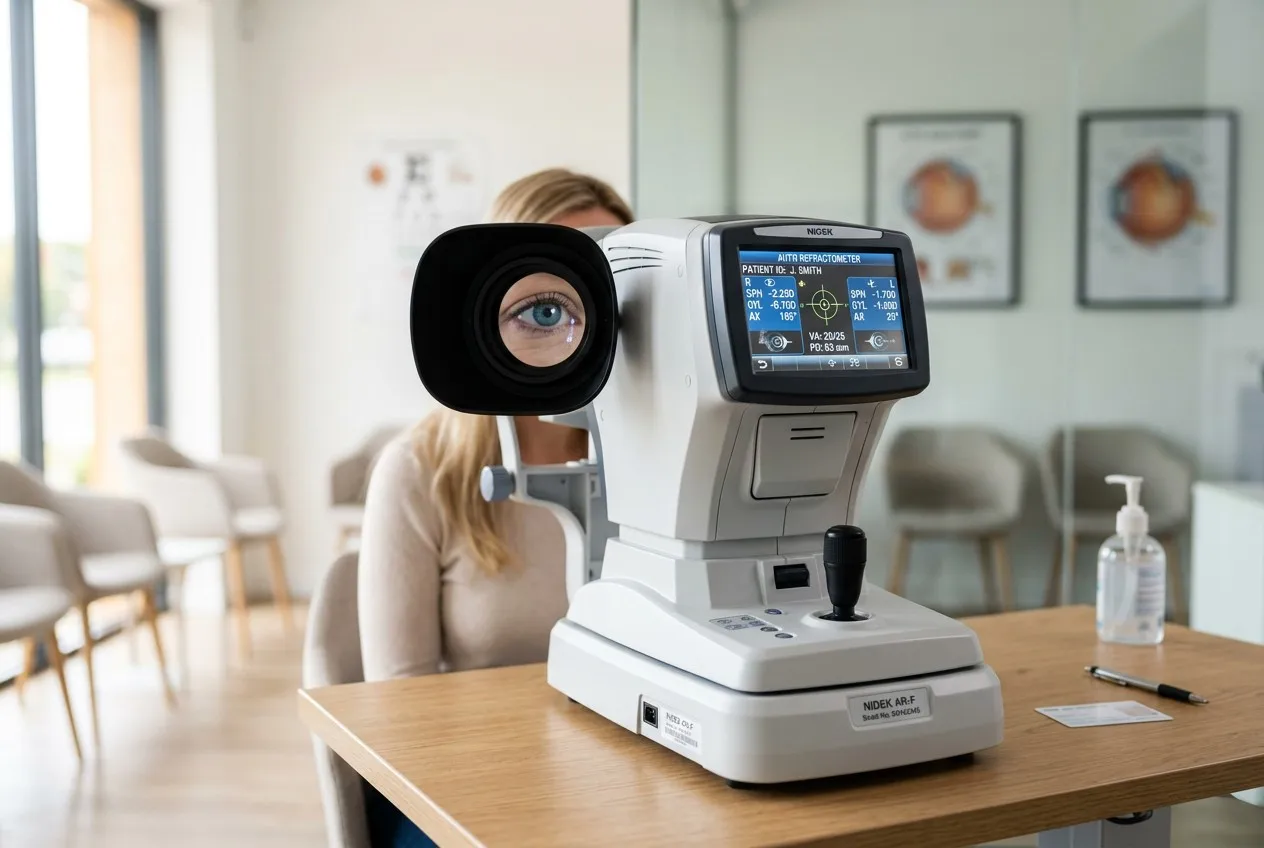
Buying an auto refractometer is one of the biggest budget decisions for your practice. You need a machine that is fast and accurate, but the price range in 2026 is wider than ever.
When buying an auto refractometer, look for high measurement accuracy (within +/- 0.25D), a minimum vertex distance range of 0 to 15mm, and a user-friendly interface. Prioritize models with fogging technology to relax patient accommodation and ensure you have a reliable local or manufacturer support system for calibration.
At Hongdee, we have spent 15 years refining these machines. I’ve seen how a slow refractometer can create a bottleneck in a busy clinic. Let’s look at what actually matters in the modern exam room.
What Does an Auto Refractometer Actually Measure?
It seems like a simple question, but modern machines do much more than just check for glasses. If you don’t understand the full data output, you are missing half the value.
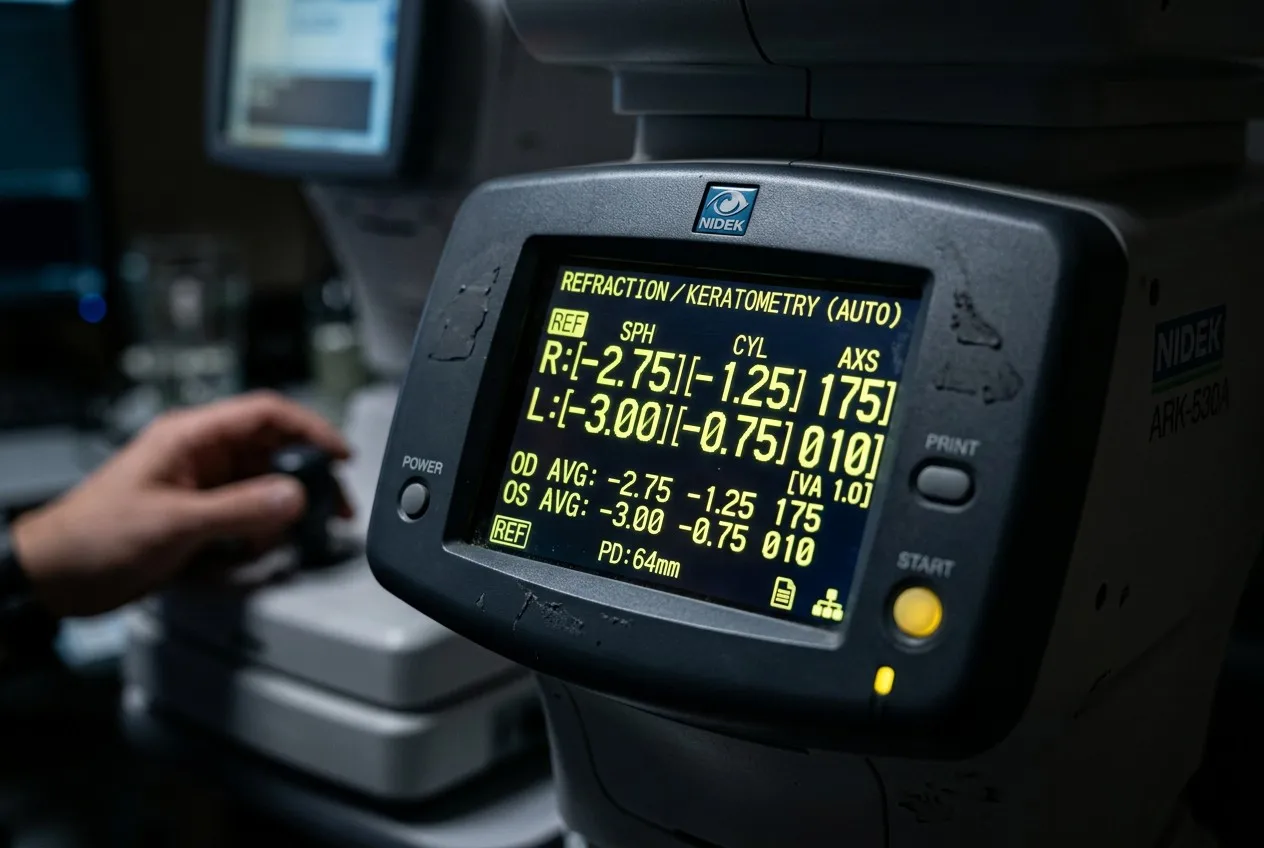
An auto refractometer primarily measures the eye’s refractive error by calculating how light focuses on the retina, providing data on sphere, cylinder, and axis. Modern units also measure keratometry (corneal curvature), pupillary distance (PD), and sometimes even pupil size to help with contact lens fittings.
The Science of the Search
The machine works by projecting infrared light into the eye and measuring how it bounces back. It’s a miracle of physics that happens in less than a second. In my experience, the “fogging” mechanism is the most critical part of this process. Without it, the patient’s eye tries to focus on the internal target, giving you a “false” reading of myopia. At Hongdee, we use a multi-step fogging process to ensure the eye is truly relaxed before the sensor fires.
Keratometry and Beyond
Most of our customers buy an “Auto Ref-Keratometer” (ARK) rather than a simple Refractometer. Why? Because knowing the corneal curvature (R1 and R2) is essential for fitting contact lenses and screening for keratoconus. I always recommend the ARK combo for new clinics. It saves space and time. We also include a peripheral keratometry feature in our high-end models, which gives you data points beyond the central 3mm of the cornea.
Typical Data Output
| Measurement | Clinical Use | Importance |
|---|---|---|
| Sphere (S) | Nearsighted/Farsighted | Critical |
| Cylinder (C) | Astigmatism | Critical |
| Axis (A) | Astigmatism orientation | Critical |
| K-Reads | Contact lens fit | High |
| Pupil Size | Surgical planning | Medium |
What Accuracy and Speed Should I Demand in 2026?
In a high-volume clinic, every second counts. If the machine takes five tries to get a reading, your patients get frustrated and your schedule falls behind.
In 2026, you should demand a measurement speed of under 0.5 seconds per eye and a repeatability score of 95% or higher. Accuracy should be within 0.25 diopters for sphere and cylinder to ensure your starting point for subjective refraction is as close to the final prescription as possible.
The Speed-Accuracy Balance
I often hear from doctors who bought a “fast” machine only to find it was wildly inaccurate. Real speed isn’t just about how fast the shutter clicks; it’s about how quickly the machine can align with the pupil. Our latest Hongdee models use an auto-tracking system that finds the eye in 3D space. This reduces the “hunting” time that manual machines suffer from. I’ve seen this reduce pre-test times by 40% in busy optical shops.
Reliability Over Time
Accuracy today is easy; accuracy in three years is hard. Cheap machines use plastic gears that wear out, causing the internal optics to shift. We use hardened steel components and high-precision sensors because we know this machine will be used 50 times a day. As a company that has been an OEM for Topcon, we follow the same strict “drift” standards. Your 1,000th patient should get the same accuracy as your first.
Accuracy Standards Comparison
- Entry Level: +/- 0.50D (Fine for screenings)
- Clinical Grade (Hongdee): +/- 0.25D (Standard for clinics)
- Research Grade: +/- 0.12D (Expensive, often unnecessary)
Manual vs Semi-Automated vs Fully Automated: Which Fits My Clinic?
Automation is the biggest trend in 2026, but it comes with a price tag. You need to decide if the convenience is worth the extra thousands of dollars.
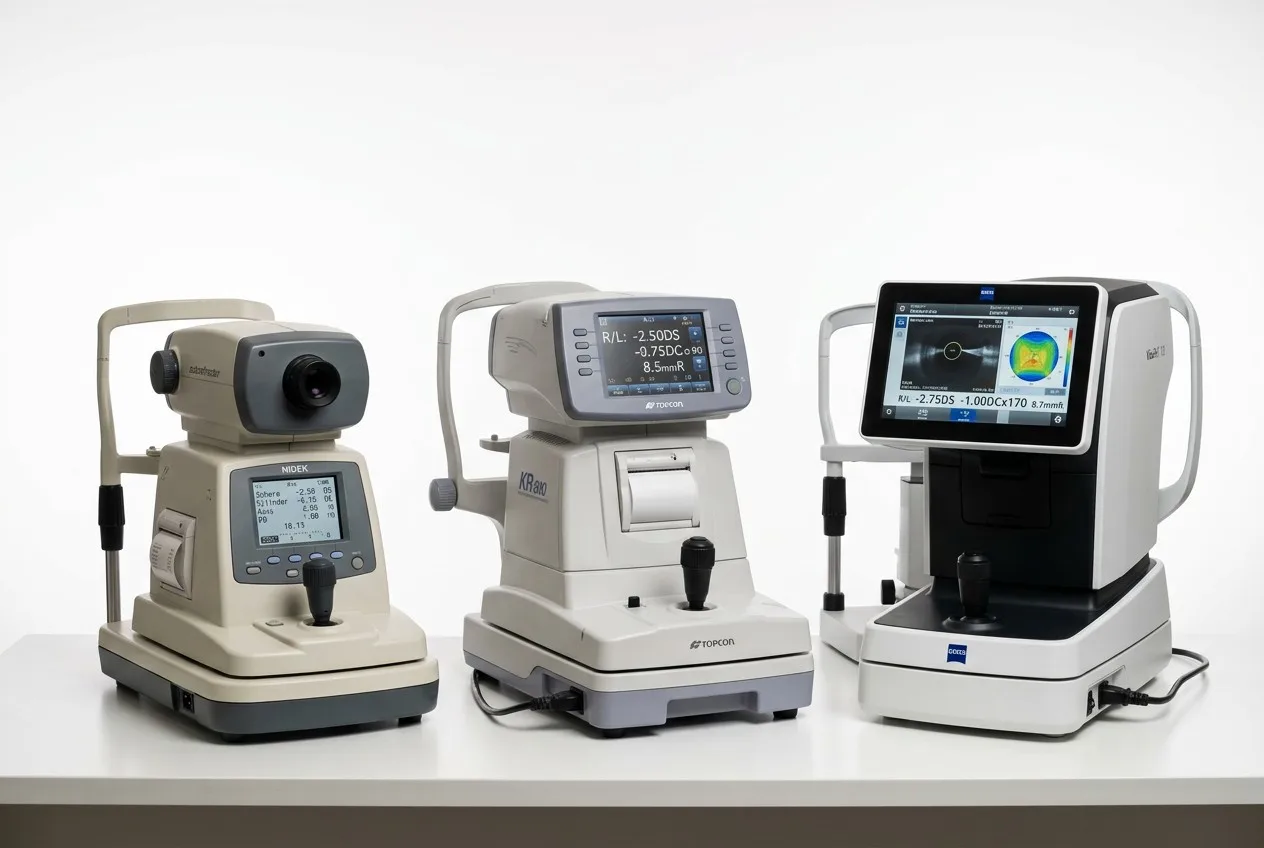
Fully automated refractometers find the eye and take measurements without operator input, making them perfect for clinics with less-experienced staff. Semi-automated models require the user to align the crosshairs but fire automatically. Manual units are the most affordable but require a skilled hand to operate efficiently.
The Rise of Full Automation
I recently helped a large clinic group in Algeria switch to fully automated units. Their staff was changing frequently, and training new technicians to use manual joysticks was taking too long. With our Hongdee Fully Auto model, they just pressed “Start,” and the machine did the rest. This “one-touch” technology removes human error from the equation. If you have high staff turnover, automation is your best friend.
The Value of Semi-Auto
If you are the one operating the machine, a semi-auto unit is often the “sweet spot.” You get the satisfaction of manual control with the speed of an auto-fire sensor. It’s also significantly cheaper than the fully auto version. We offer three tiers of automation at Hongdee because we know every clinic has a different workflow. I personally love our semi-auto model for its tactile joystick—it feels like a high-end camera.
Choosing Your Level
| Automation Level | Skill Required | Price Point | Best For |
|---|---|---|---|
| Manual | High | $1,800 – $2,500 | Solo practitioners |
| Semi-Auto | Medium | $2,500 – $4,000 | Most optical shops |
| Fully Auto | Low | $4,500 – $7,000 | Hospitals / High-volume |
How Much Does a Reliable Auto Refractometer Cost — And What Are the Hidden Fees?
Price is always the first question I get. “Why is yours $3,000 while the Japanese one is $10,000?” The answer involves more than just the brand name.
A reliable, clinical-grade auto refractometer should cost between $2,500 and $5,000 in 2026. Hidden fees often include shipping insurance, customs duties, and the cost of thermal printer paper or replacement chinrest covers. Buying direct from a manufacturer like Hongdee can save you 40% by cutting out the middleman markup.
Breaking Down the Cost
When you buy from a big-name brand, you are paying for their massive marketing budget and their local distributor’s office rent. At Hongdee, we focus on the engineering. We’ve been in this for 15 years and have 300+ happy customers because we provide the same specs without the “brand tax.” But remember, price isn’t everything. A $1,500 machine from a random website will likely have no FDA certificate and no way to get parts when a motor fails.
Negotiating Your Deal
Don’t just look at the machine price. Ask about the MOQ (Minimum Order Quantity) and if you can get a “clinic package” discount. If you buy a slit lamp and a refractometer together, I can usually work out a better deal. Also, check the warranty terms. We offer free repairs and a CEO-direct line for any major issues. We even offer a 2-3% discount if we ship late—though we almost never do.
Hidden Cost Checklist
- Customs Duties (varies by country)
- International Shipping (Sea vs. Air)
- Calibration Tools (Model-dependent)
- Consumables (Printer paper, chinrest tissues)
What After-Sale Service Should I Get for My Auto Refractometer?
A refractometer is a complex machine with moving parts, sensitive optics, and complex software. It WILL need service eventually. The question is: will your supplier be there?
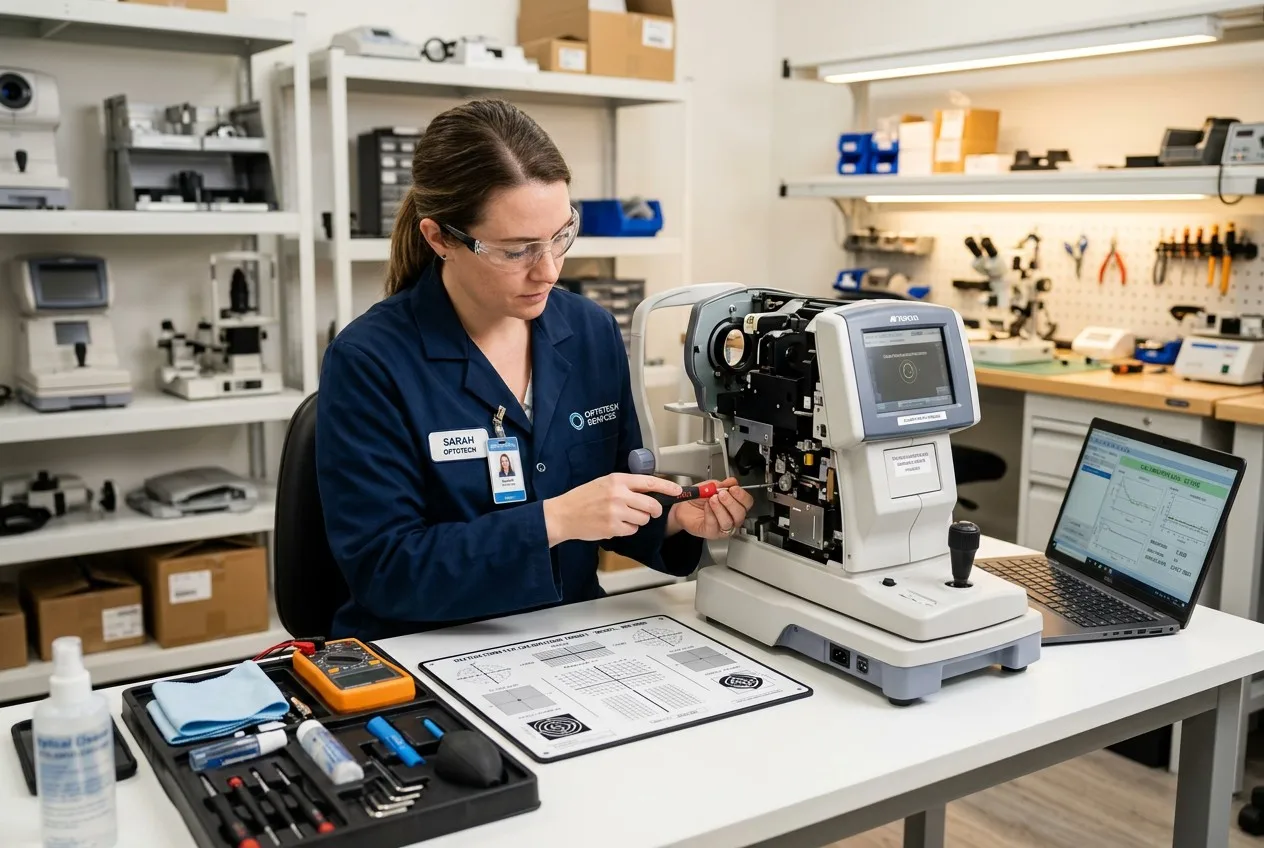
Insist on a minimum 2-year warranty that covers both parts and labor. Your supplier should offer remote firmware updates and have a 5-year guarantee on spare parts availability. At Hongdee, we provide free repair service and live video support to walk your staff through simple calibration or troubleshooting steps.
Firmware and Software Updates
In 2026, your machine is basically a computer with a camera attached. Sometimes accuracy can be improved just by updating the software. Many cheap suppliers sell you a “dead” machine that can never be updated. We provide regular firmware updates to all our 60+ distributors worldwide. This keeps your machine “young” and ensures it works with the latest electronic medical record (EMR) systems.
Pediatric and Special Cases
One insight I always share: ask about the “Children’s Mode.” Kids have high accommodation and can’t sit still. A good after-sale support team will show you how to use the “Quick Measure” settings to capture data in children before they look away. We have special training videos for this because we want you to succeed with every patient, not just the easy ones.
Service Expectations
- Response Time: Should be under 24 hours for email.
- Parts Shipping: Should be via express air (DHL/FedEx).
- Technical Support: Should be available via video call (WhatsApp/Zoom).
- Life Expectancy: A quality machine should last 8-10 years.
Conclusion
Buying an auto refractometer is an investment in your clinic’s efficiency. By focusing on accuracy, choosing the right level of automation for your staff, and partnering with a manufacturer that provides real long-term support, you can ensure your practice stays profitable and professional. I’m proud of the machines we build at Hongdee, and I’m even prouder of the service we provide to the doctors who use them.