


Are you struggling to choose between a classic manual phoropter and a modern automated system? Choosing the wrong refraction tool can slow down your clinic and frustrate your patients every day. We help you find the perfect balance between speed, cost, and clinical accuracy.
The choice between an auto and manual phoropter depends on your patient volume and budget. Auto phoropters offer faster testing and digital integration for high-volume clinics. Manual phoropters remain the gold standard for tactile control and reliability in pediatric or geriatric exams where fine-tuning is critical.
Transitioning from manual to digital is a big step for any practice. I have seen many doctors make this switch over the last 15 years at Hongdee. It is not just about the technology, but how it fits your daily workflow. Let us break down the differences so you can make an informed decision for your business.
What Is the Core Difference Between Auto and Manual Phoropters?
You might think the only difference is a motor and some buttons. But the core difference lies in how the refraction data flows from the patient to the final prescription.
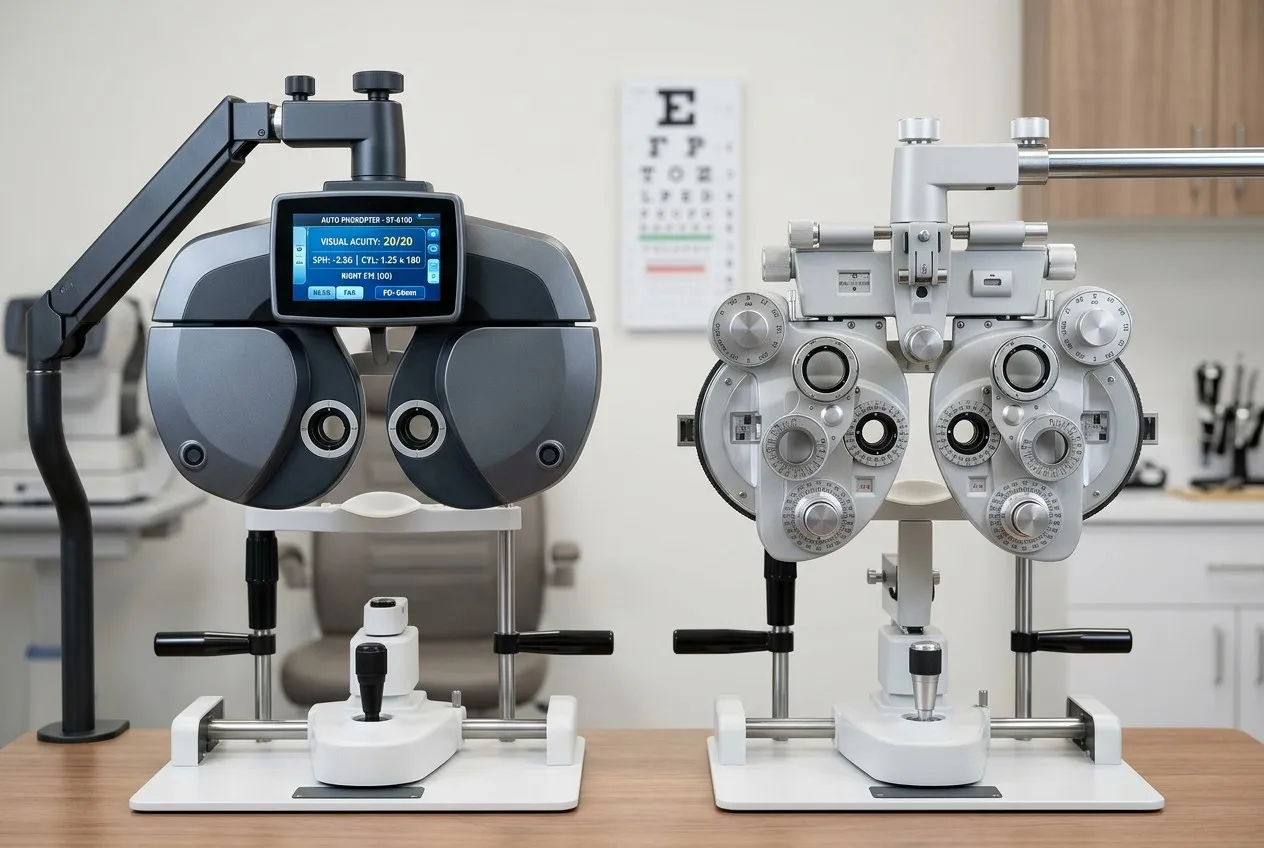
An auto phoropter uses electronic motors to switch lenses via a console or tablet interface. A manual phoropter requires the doctor to physically turn dials and flip knobs to change lenses. The manual version relies on mechanical precision while the auto version focuses on digital automation.
Understanding the Mechanical vs. Electronic Split
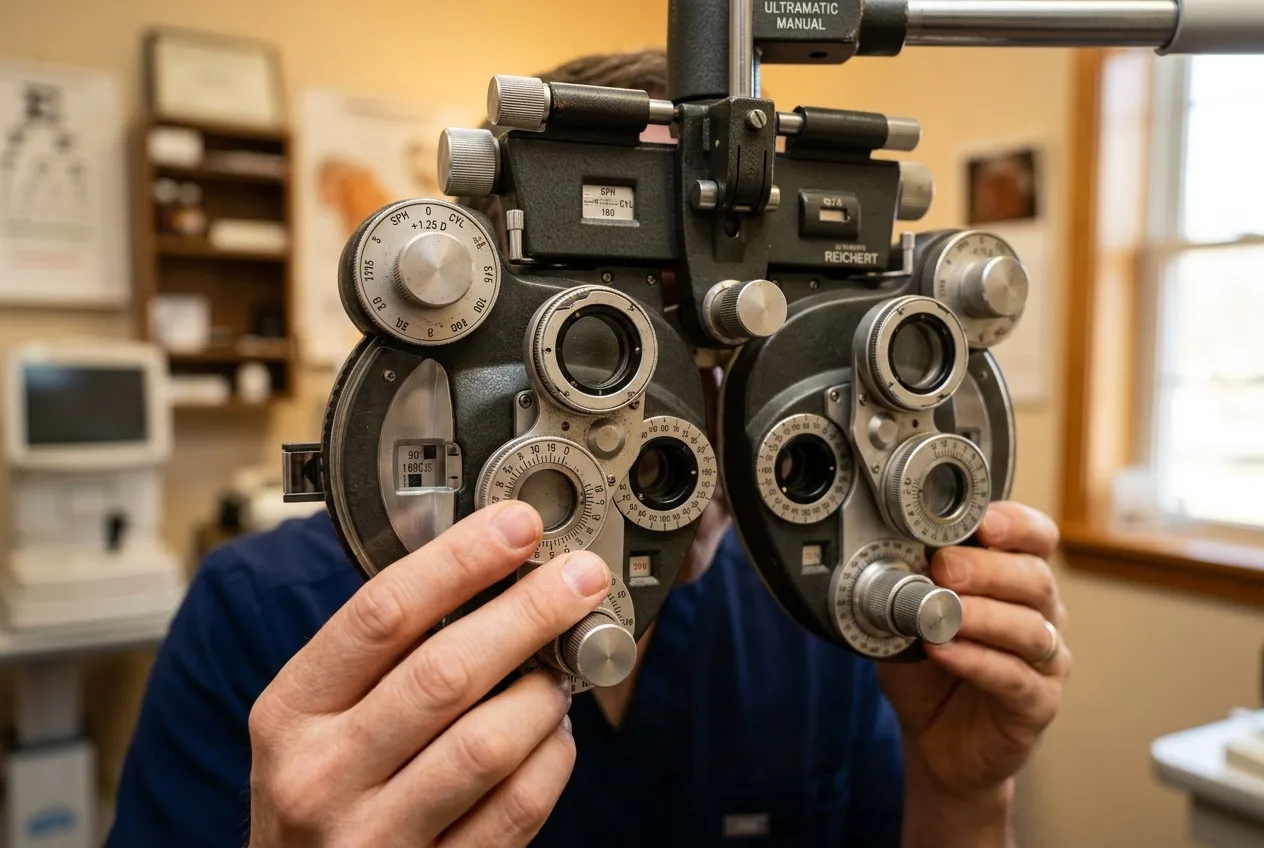
I often tell our distributors that manual phoropters are like a high-quality mechanical watch. They are built to last for decades. At Hongdee, we offer manual models with a 48-80mm PD range. This is wider than many standard models. It allows you to treat more patients with a single device. Manual units do not need electricity. This makes them perfect for mission trips or areas with unstable power.
On the other hand, auto phoropters are the “smartphones” of the eye clinic. They connect to your auto refractometer and lensmeter. When you push a button, the data moves instantly. You do not have to dial in the starting points. This reduces human error during data entry. But it also means you have more electronics that could fail. That is why we offer free repairs and direct CEO contact at Hongdee. We know your uptime is your revenue.
Table: Core Specifications Comparison
| Feature | Manual Phoropter | Auto Phoropter |
|---|---|---|
| Power Source | None (Mechanical) | Electricity / Battery |
| Lens Switching | Manual Dials | Electronic Motors |
| Data Integration | Manual Entry | Seamless Digital Sync |
| Maintenance | Low (Cleaning/Oiling) | Moderate (Software/Electronics) |
| Weight | ~5kg | ~8kg (incl. console) |
| Lifespan | 20+ Years | 8-12 Years |
Which One Gives More Accurate Prescriptions?
Many doctors worry that automation might lead to sloppy results. You want to give your patients the most comfortable vision possible without redo exams.
Both auto and manual phoropters provide high accuracy when used by a trained professional. Manual phoropters allow for more “artistic” fine-tuning in difficult cases like children or seniors. Auto phoropters provide better consistency across different staff members because they follow a programmed, standardized testing protocol.
The Human Factor in Refraction Accuracy
I have noticed that accuracy is often about the connection between the doctor and the patient. In a manual exam, you are standing close to the patient. You can see their facial expressions. You can tell if they are squinting or confused. This “touch” is very important for complex cases. For example, if a patient has low vision, you might need to make larger lens jumps that a computer might skip.
However, auto phoropters eliminate “transcription errors.” In a busy clinic, it is easy to write down a “minus” instead of a “plus” for cylinder power. With an auto system, the computer does the recording. It also allows for “instant comparison.” You can show the patient the difference between their old prescription and the new one with one click. This “before and after” feature is a powerful tool. It helps patients understand why they need new glasses.
Consistency Across Multiple Doctors
If you own a clinic with three or four doctors, you want the same quality from everyone. An auto phoropter allows you to program your favorite refraction routine. This ensures every patient gets the same level of care. It doesn’t matter who is performing the test. We see many US distributors buying our auto systems for this exact reason. It makes training new staff much faster.
How Do Auto and Manual Phoropters Compare on Speed and Workflow?
Time is money in any medical practice. If you can see two more patients a day, your equipment pays for itself in months.
Auto phoropters are significantly faster, reducing refraction time by 30% to 50% compared to manual methods. They allow you to stay seated and control everything from a screen. Manual phoropters require more physical movement and manual data logging, which slows down the overall patient throughput in high-volume clinics.
Breaking Down the Exam Time
We tracked the workflow in a partner clinic using our equipment. With a manual phoropter, the doctor spent a lot of time “clicking.” Each lens change takes a second or two. Over 50 changes, that adds up. Then the doctor has to stand up, write the notes, and move to the next room. It is a workout. Some doctors love this. Others find it exhausting by 4 PM.
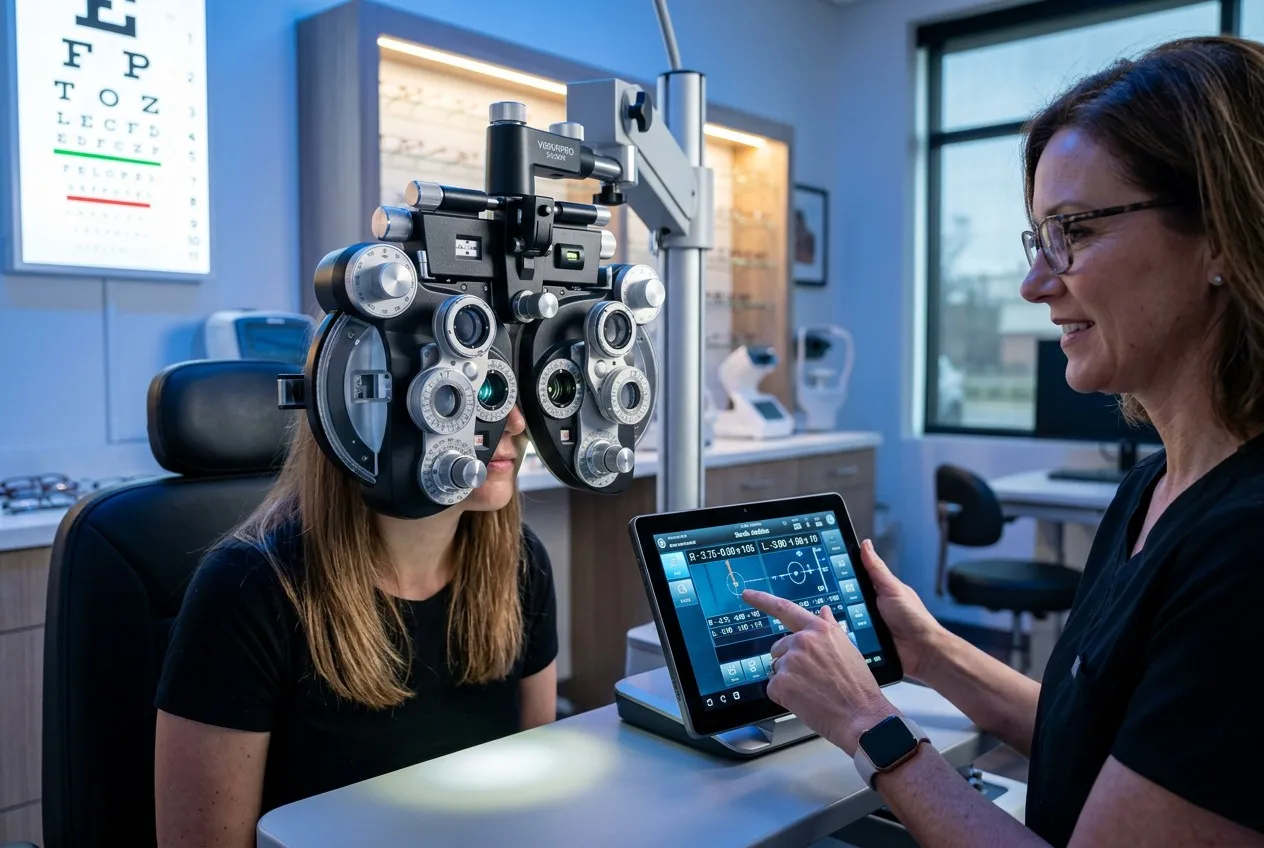
With our Hongdee auto phoropter, you just tap the screen. The lenses change in milliseconds. You can also import the data from the auto refractometer directly. This saves about 3-4 minutes per patient. In a clinic seeing 20 patients a day, that is over an hour of saved time. You can use that hour for more complex consultations or just to take a break.
Training and Learning Curves
But there is a catch. You need to train your team. A manual phoropter is simple to understand. Every optometry student learns on one. An auto system has a software interface. It has menus and settings. At Hongdee, we provide detailed video training and live factory tours via video call. We want to make sure your staff is comfortable before the first patient walks in.
Table: Workflow Efficiency Metrics
| Metric | Manual Phoropter | Auto Phoropter |
|---|---|---|
| Avg. Exam Time | 10-15 Minutes | 5-7 Minutes |
| Physical Strain | High (Standing/Turning) | Low (Sitting/Tapping) |
| Data Entry | Manual Charting | Automatic Upload |
| Training Time | Low (Industry Standard) | Moderate (Interface Learning) |
| Patient Throughput | Standard | High (Best for Groups) |
What Is the Price Gap and When Is It Worth Paying?
Budget is the biggest hurdle for most clinics. You have to decide if the extra features are worth the extra thousands of dollars.
A high-quality manual phoropter usually costs between $800 and $2,500. An automated phoropter system can cost anywhere from $5,000 to $15,000. It is worth the investment if you see more than 15 patients per day or if you want to market your clinic as a “high-tech” premium practice.
Calculating Your Return on Investment (ROI)
I often talk to clinic owners about the “hidden costs” of cheap equipment. If a manual phoropter breaks, your clinic stops. That is why we emphasize our 15-year manufacturing history. We were an OEM for Topcon for 3 years. We know how to build gear that lasts. Our manual phoropters are priced competitively, but we don’t cut corners on the internal gears.
For the auto phoropter, the ROI comes from speed and “wow factor.” Patients in 2026 expect digital experiences. If they see you using a tablet to change their vision, they perceive the exam as more accurate. They are more likely to pay a higher consultation fee. Plus, we offer a 2-3% discount if there is any delay in shipping. We value your time. We also offer free repairs to keep your long-term costs low.
The MOQ and Customization Factor
For our distributor partners, we have a very flexible MOQ. We can even add your logo to the devices. This helps you build your own brand in your local market. Whether you buy one unit for a new clinic or fifty for a hospital group, you get the same CEO-level support. We want to be your partner, not just a vendor.
Which Phoropter Should a New Clinic Buy First?
Starting a new practice is stressful. Every dollar counts, and you don’t want to overspend on day one.
Most new clinics should start with a high-quality manual phoropter to minimize initial debt and ensure reliability. As the patient volume grows beyond 10-12 refractions per day, you should then upgrade to an auto phoropter. This strategy keeps your overhead low while allowing for future technology scaling.
Why Manual is the “Safe” First Choice
I believe every clinic needs at least one manual phoropter. Even if you have the best auto system, what happens if the power goes out? Or if the software needs an update? A manual unit is your “fail-safe.” It is also easier to maintain in the first year of business. You don’t need a service contract for a manual phoropter. You just need a dust cover and some basic cleaning.
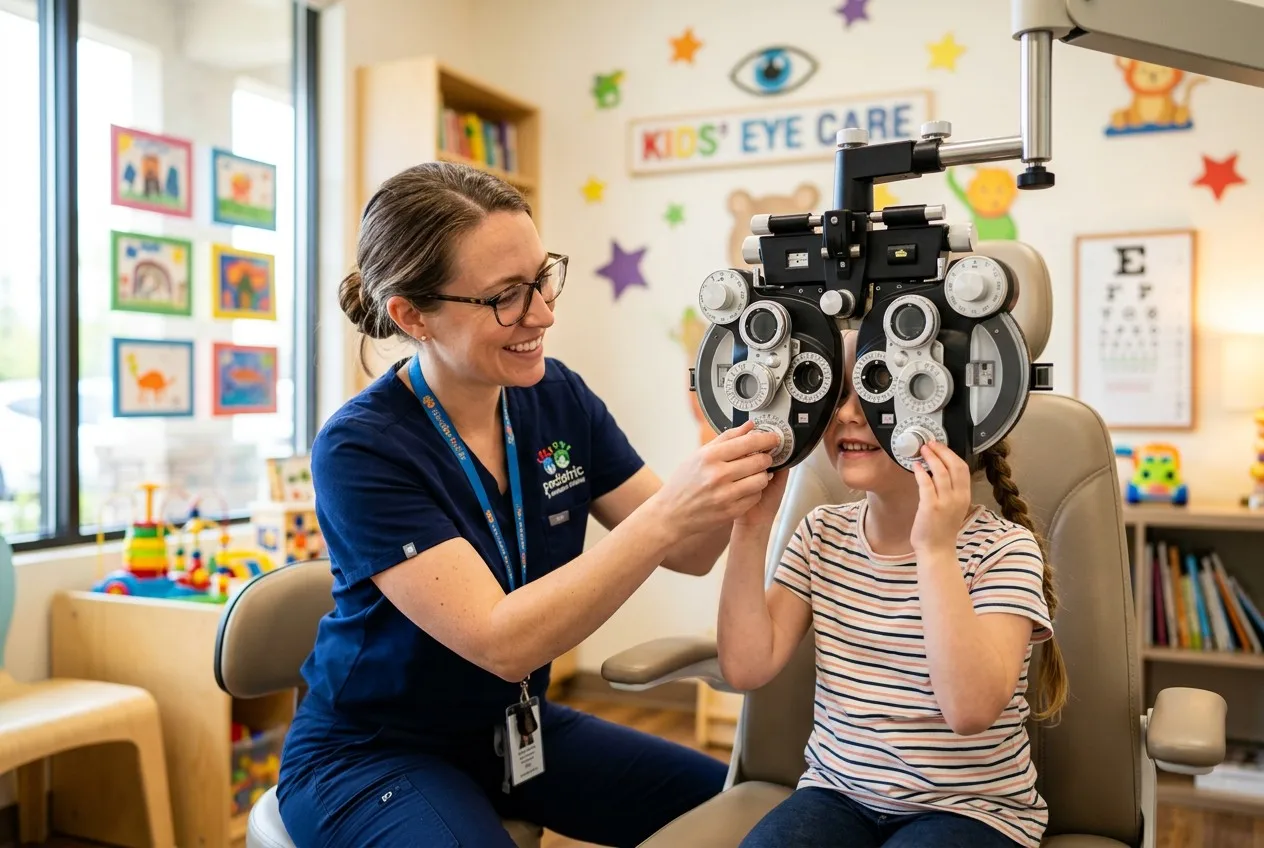
Our manual phoropters have a very wide PD range. This makes them versatile. You can use them for kids and adults without needing two different sets. For a new clinic, this versatility is a huge advantage. You can handle any patient who walks through the door.
Scaling Up to Automation
Once your schedule is full, the manual phoropter becomes a bottleneck. That is when you call us for the auto version. We can ship from our factory with all the necessary ISO, CE, and FDA certificates. This makes customs clearance easy in the US and Europe. We handle the hard part so you can focus on your patients.
Why Should You Source Your Phoropters From Hongdee?
You have many choices for equipment. But not every manufacturer understands the needs of a growing clinic or a busy distributor.
Hongdee stands out by offering a direct connection to our CEO and a 15-year track record of manufacturing excellence. We provide free repairs and a unique delay discount to ensure your business stays profitable. Our experience as an OEM for top-tier brands means you get premium quality at factory-direct pricing.
The Hongdee Advantage: More Than Just Machines
I know that buying from China can feel risky. That is why we offer live factory tours. You can see the assembly line. You can see the quality control checks. We don’t hide behind a website. You can talk to us directly. If you have a problem, you don’t talk to a bot. You talk to a person who knows the machine.
We also understand the logistics. We provide clear shipping costs and timelines. If we are late, we pay you. This “delay discount” of 2-3% is our promise to you. We know that if your equipment is late, you are losing money. We share that risk with you. This is why our distributors in the US and Latin America stay with us for years.
Frequently Asked Questions (FAQ)
What is the MOQ for Hongdee phoropters?
We are very flexible. For standard models, the MOQ can be as low as 1 unit. For customized logos, we usually require a small batch, but we can discuss this based on your needs.
Do you provide certificates for US and EU markets?
Yes. All our core products come with ISO 13485, CE, and FDA registrations. We have a dedicated team to keep these updated every year.
How do you handle shipping and freight?
We work with top-tier logistics partners. We provide door-to-door shipping for many regions. We give you a firm quote before you pay, so there are no hidden fees.
Can I get my logo on the device?
Yes. We offer OEM services. We can print or engrave your logo on the phoropter and the packaging. This is perfect for distributors looking to build their brand.
Conclusion
Choosing between an auto and manual phoropter is a balance of volume and budget. Manual units offer lifetime reliability and low cost. Auto units offer speed and a modern patient experience. At Hongdee, we provide both with the best service in the industry. Contact us today for a quote or a live factory tour to see the difference for yourself.