

Are you tired of patient anxiety during eye pressure checks? Choosing between rebound and applanation tonometry can change your clinic’s workflow and how your patients feel about their visits.
The right choice depends on your patient demographic. Goldmann Applanation Tonometry (GAT) remains the clinical “gold standard” for accuracy in specialty clinics. However, Rebound Tonometry is the preferred choice for primary care, pediatrics, and veterinary medicine due to its no-anesthesia, no-air-puff, and portable design.
At Hongdee, we have been manufacturing and supplying both types of tonometers to over 300 customers globally. We know that a distributor in Brazil has different needs than a veterinary clinic in Australia. In this guide, we share our expertise on how to choose the right IOP (Intraocular Pressure) measurement method for your specific practice.
How Do Rebound and Applanation Tonometers Measure IOP Differently?
Understanding the physics behind these tools helps you explain the process to your patients. If they know what to expect, they are less likely to flinch and cause errors.
Rebound tonometry uses a tiny, lightweight probe that briefly touches the cornea and “rebounds” back, measuring the deceleration to calculate pressure. Applanation tonometry (GAT) calculates IOP by measuring the force required to flatten (applanate) a specific area of the cornea using a prism.
The Rebound Mechanism
Our rebound tonometers work on an induction-based principle. A magnetized probe is launched toward the cornea. When it hits, it slows down. The device measures how fast it stops and bounces back. If the eye is “hard” (high pressure), the probe bounces back quickly. If it is “soft” (low pressure), it bounces back slowly. The beauty is that this happens in milliseconds. It is so fast that the patient barely feels it. No numbing drops are needed, which saves you 5-10 minutes per patient.
The Applanation Mechanism
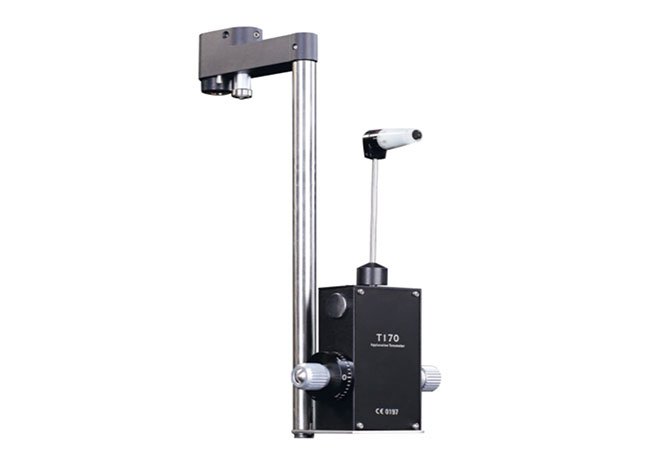
Goldmann Applanation Tonometry (GAT) is different. It is usually attached to your slit lamp. You must apply fluorescein and anesthetic drops first. Then, you move the prism forward until it flattens exactly 3.06mm of the cornea. You look through the oculars and align the “mires” (the green semicircles). This is a manual, skill-heavy process. While it takes longer, it is extremely reliable because it directly measures the physical resistance of the eye.
Patient Experience
Patients generally hate the “air puff” (non-contact tonometry). Rebound is the “gentle” alternative. There is no puff of air and no bright flash. For GAT, the patient has to be comfortable with a physical object touching their eye while they are awake. This is why many of our partners in Singapore and the US are moving toward rebound for initial screenings.
| Feature | Rebound Tonometer | Applanation Tonometer (GAT) |
|---|---|---|
| Contact Type | Micro-probe (Disposable) | Prism (Reusable/Disinfectable) |
| Numbing Drops | Not Required | Required |
| Learning Curve | Low (Technician can do it) | High (Doctor usually performs) |
| Portability | Handheld / Battery | Slit Lamp Mounted |
| Patient Comfort | Very High | Moderate |
What Do Clinical Studies Say About Their Accuracy?
We often get asked: “Can I trust a handheld device for glaucoma management?” Accuracy is not just about the numbers; it is about clinical confidence.
Clinical studies show a high correlation between rebound and applanation tonometry, especially within the normal IOP range (10-21 mmHg). While GAT remains the benchmark for surgical decisions, rebound tonometers provide reliable, repeatable results that are excellent for routine screening and monitoring.

Correlation and Consistency
In our three years of OEM work for brands like Topcon, we have seen data comparing GAT and rebound. For most patients, the difference is less than 1-2 mmHg. This is well within the acceptable margin for clinical care. Rebound tonometers are particularly good because they reduce “operator error.” Because the machine calculates the bounce, the doctor’s technique has less impact on the final number compared to GAT.
Factors Affecting Readings
Both methods can be affected by Central Corneal Thickness (CCT). A very thick cornea might give a falsely high reading on both. However, GAT is more sensitive to the “surface tension” of the tear film. If the patient has very dry eyes or too much fluorescein, GAT readings can be off. Rebound is less affected by the tear film because the probe is so small and fast. We recommend our 60+ distributors to always suggest a pachymeter (to measure CCT) alongside any tonometer purchase for the most accurate results.
Repeatability
One of the biggest advantages we see with our rebound units is repeatability. You can take 6 measurements in 10 seconds, and the device will give you an average. This filters out “outliers” caused by the patient blinking or holding their breath. In GAT, repeating the test takes much longer because you have to reset the prism and realign the patient.
| Accuracy Metric | Rebound Tonometer | Applanation Tonometer |
|---|---|---|
| “Gold Standard” Status | No (Screening/Monitoring) | Yes (Diagnostic Benchmark) |
| Operator Dependency | Low | High |
| Repeatability | High (Auto-averaging) | Manual (Single Readings) |
| CCT Sensitivity | Yes | Yes |
| Tear Film Impact | Low | High |
Why Are Rebound Tonometers Gaining Popularity in Pediatric and Veterinary Care?
This is where rebound tonometry truly shines. If your practice includes kids or animals, a tabletop applanation tonometer is almost impossible to use.
Rebound tonometers are the top choice for pediatric and veterinary care because they don’t require the patient to stay perfectly still for long periods. The lack of anesthesia and the “gentle” touch mean children don’t cry and animals don’t need sedation for routine IOP checks.
The Pediatric Advantage
Children have a “fight or flight” response to medical equipment. A large slit lamp moving toward their face is scary. A small, handheld rebound tonometer looks like a thermometer. At Hongdee, we’ve heard from pediatricians in the UAE and Europe that their “success rate” for IOP checks went from 40% to 95% after switching to rebound. You can even use it while the child is sitting on their parent’s lap.
Veterinary Differentiation
This is a huge growth market for our distributors. We have developed specific software modes for our tonometers to support both humans and animals. Dogs, cats, and even horses can suffer from glaucoma. You cannot put a horse’s chin in a slit lamp. Rebound tonometry allows vets to check eye pressure in the field or in a standard exam room. Because no drops are needed, it is faster and safer for the animal.
No-Anesthesia Workflow
In a busy clinic, waiting for numbing drops to take effect is a bottleneck. It takes 1-2 minutes for the drops to work and another few minutes to ensure the patient is comfortable. With rebound, you skip this entirely. For a high-volume screening camp in Algeria or a busy optical shop in Thailand, this “time saved” equals more patients seen per day.
Comparison for Specialized Use
- Pediatrics: Rebound is mandatory for high compliance.
- Veterinary: Rebound is the only practical option for most species.
- Emergency Room: Rebound is easier for bedridden or trauma patients.
- Glaucoma Clinic: Applanation (GAT) is still needed for surgical planning.
What Key Specs Should You Compare: Range, Anesthesia, and Portability?
Ready to order? Don’t just look at the price. Look at the specs that will determine if the device survives five years of daily use in your clinic.
Focus on the measurement range (typically 3-60 mmHg), the requirement for anesthesia, and the cost of consumables. Rebound tonometers require disposable probes, while applanation tonometers require anesthetic drops and fluorescein, which adds to the long-term operating cost.
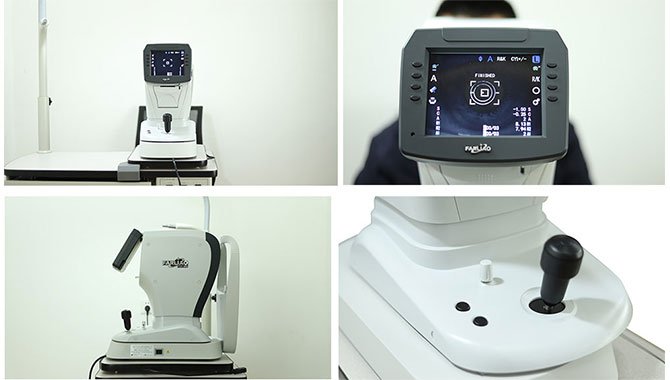
Measurement Range
Most glaucoma patients will be in the 20-40 mmHg range. However, you need a device that can measure very low (post-surgery) or very high (acute glaucoma) pressures. Check the range. Our units typically cover 3 mmHg to 60 mmHg. This covers almost every clinical scenario. Some cheap “no-name” brands fail at the extremes, which is dangerous for patient safety.
Consumables and Hidden Costs
Distributors often forget about the “razor and blade” model.
- Rebound: You need a new probe for every patient. This ensures zero cross-contamination. It’s hygienic and safe. You should factor the cost of probes into your screening fee.
- Applanation: You need drops (anesthetic and fluorescein). These have expiration dates. You also need to disinfect the prism head between every patient using alcohol or specialized solutions. This takes time and carries a small risk of corneal irritation if not rinsed properly.
Portability and Battery Life
If you choose a rebound unit, check the battery. We use standard or rechargeable AA batteries in some models to ensure you can find replacements anywhere in the world. If you are a distributor in a region with unstable power, like parts of Africa or Latin America, a battery-powered unit is a life-saver. For applanation tonometers, check the mounting style. Does it fit your specific slit lamp (Type R or Type T)?
| Specification | Rebound Tonometer | Applanation Tonometer |
|---|---|---|
| Measurement Range | 3 – 60 mmHg | 0 – 80 mmHg |
| Power | Battery (Rechargeable) | None (Mechanical) |
| Anesthesia Needed | No | Yes |
| Consumable Cost | Moderate (Probes) | Low (Drops/Cleaner) |
| Weight | ~300g | ~1kg |
How Do You Choose Based on Your Patient Demographics and Practice Size?
We don’t believe in “one size fits all.” Your practice’s identity should drive your equipment choice.
Choose a Rebound Tonometer if you run a pediatric, veterinary, or high-volume primary screening clinic where speed and patient comfort are priorities. Choose an Applanation Tonometer (GAT) if you are a glaucoma specialist or a hospital-based ophthalmologist who needs the “gold standard” for surgical decisions.

Small to Mid-Sized Optical Shops
If you are an optometrist in a retail setting, space and time are your enemies. You likely don’t want to deal with medical drops. A rebound tonometer allows your technician to perform the IOP check before the patient even sees you. This streamlines the “pre-test” phase. We have seen 300+ customers use this model to increase their daily patient throughput by 15%.
High-Volume Public Hospitals
In large hospitals in China or India, durability is key. You might see 100 patients a day. In this case, having a slit-lamp mounted GAT is essential for the doctors, but having 2-3 rebound units for the “triage” area helps move the crowds. Many of our distributors in Italy and Singapore buy “bundles” — they get the applanation for the main exam room and the rebound for the screening rooms.
The Shipping and Support Factor
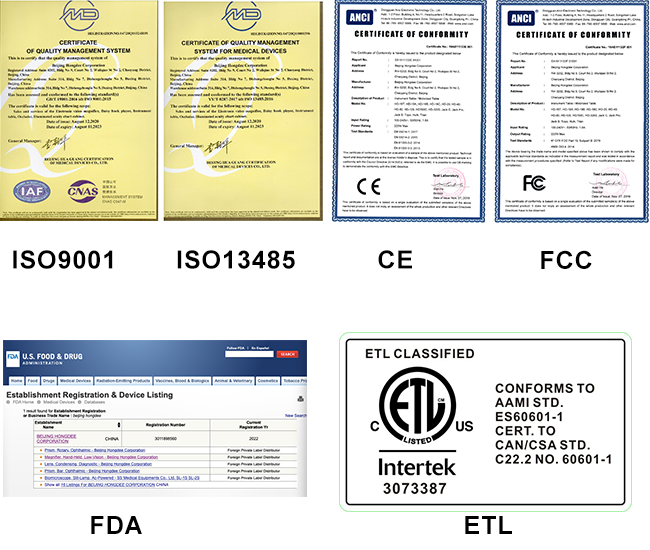
When you buy from Hongdee, we handle the logistics to 60+ countries. We know that shipping a delicate GAT prism requires different packaging than a rugged rebound unit. We also provide the CE, FDA, and ISO 13485 documentation you need for your local regulations. Whether you are in California or Algeria, we ensure your investment is protected with global-standard support.
Decision Matrix
- Do you treat kids? -> Buy Rebound.
- Do you treat animals? -> Buy Rebound.
- Are you a Glaucoma Specialist? -> Buy Applanation + Rebound (for home monitoring).
- Limited Budget/High Speed? -> Buy Rebound.
- Traditional Clinical Setting? -> Buy Applanation.
Conclusion
Both rebound and applanation tonometers have a place in modern eye care. Rebound offers unmatched comfort and speed for screening, while applanation remains the diagnostic gold standard. Choose based on your patient needs and your practice’s daily workflow goals.