

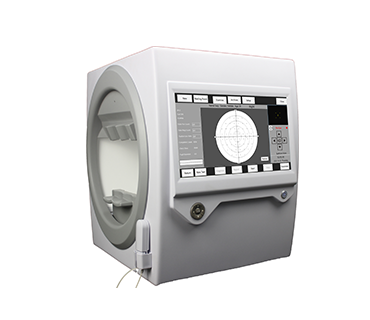
Are you worried about missing early signs of glaucoma in your patients? Investing in the right auto perimeter is the only way to accurately map visual field defects and prevent irreversible vision loss.
An auto perimeter is essential for detecting “silent” vision loss from glaucoma and neurological issues. When buying, look for testing speed, normative database size, and software compatibility. Modern units offer “Fast” strategies like SITA, which reduce testing time from 15 minutes to under 3 minutes per eye.
At Hongdee, we have spent years manufacturing diagnostic tools for 300+ customers worldwide. We understand that for a distributor or a clinic owner, a perimeter is a major investment. It takes up space and requires technical know-how. In this guide, we will help you navigate the specs, the new “VR” trends, and the ROI of adding a perimeter to your practice.
What Is an Auto Perimeter and How Does It Detect Visual Field Defects?
Before you spend your budget, you need to understand the technology. Many doctors find perimetry “boring” or “slow,” but it is the most critical functional test in ophthalmology.
An auto perimeter, or automated visual field analyzer, measures a patient’s peripheral and central vision by flashing lights of varying intensity at different points. It detects defects (scotomas) that indicate damage to the optic nerve or visual pathways, often before the patient notices any symptoms.
Static vs. Kinetic Perimetry
Most modern machines use “Static” perimetry. The light stays in one spot, but it gets brighter or dimmer (changing the threshold). This is the standard for glaucoma. “Kinetic” perimetry moves a light from the outside in until the patient sees it. This is better for neurological cases or driving tests. We ensure our Hongdee perimeters support both, giving our distributors in Europe and Australia a versatile tool that covers all patient needs.
The Normative Database
The machine doesn’t just show “blind spots.” It compares the patient’s results to thousands of “normal” people of the same age. This is the “Normative Database.” If the database is too small, you get false positives. We work with global standards to ensure our databases reflect a diverse population, from patients in California to those in Singapore. This makes the “Probability Maps” you see on the printout much more reliable.
Fixation Monitoring
A common problem is the patient “cheating” by looking at the flashing light instead of the center target. Good perimeters use infrared cameras or “Heijl-Krakau” blind spot monitoring to track the eye. If the patient moves too much, the machine flags the test as unreliable. This saves you from making diagnostic mistakes based on bad data.
| Feature | Importance | Why It Matters |
|---|---|---|
| Static Testing | High | Standard for glaucoma management |
| Kinetic Testing | Moderate | Essential for neurological/driving exams |
| Normative Database | Critical | Prevents false positives/negatives |
| Fixation Control | High | Ensures the test results are valid |
| Background Illumination | High | Maintains constant sensitivity (31.5 apostilbs) |
What’s the Difference Between SITA Standard, SITA Fast, and SITA Faster Testing Strategies?
Testing time is the biggest enemy of a busy clinic. If a test takes 15 minutes, the patient gets tired, and the data becomes messy.
SITA (Swedish Interactive Thresholding Algorithm) strategies use smart math to predict what a patient will see, significantly cutting test time. SITA Standard is the most precise, SITA Fast is ideal for screening, and SITA Faster is the latest “ultra-quick” mode that finishes a test in about 2 minutes.

SITA Standard: The Balanced Choice
This was the original “quick” test. It takes about 4-7 minutes per eye. It is very accurate and is the standard for most glaucoma specialists. It uses information from nearby points to “guess” the threshold of the next point. This means the patient doesn’t have to click as many times. For our 60+ distributors, this is the “default” setting they show to most doctors.
SITA Fast and Faster: Speed is King
As the names suggest, these are even quicker. SITA Fast takes about 3-4 minutes. SITA Faster is the newest trend, often finishing in under 2 minutes. While “Faster” is great for patient comfort, we always remind our customers in the Middle East and Southeast Asia that it might be less sensitive for very advanced glaucoma cases. It is perfect for routine screening in a busy optical shop but maybe not for a surgical hospital.
Why Speed Matters for ROI
In a high-volume hospital in China or Brazil, if you can save 5 minutes per patient, you can see 10 more patients a day. If each test generates a small fee, the machine pays for itself months earlier. We have calculated that switching from “Full Threshold” (12 mins) to SITA Standard (5 mins) can double the revenue of a perimetry room without hiring more staff.
| Testing Strategy | Avg. Time (per eye) | Best Use Case |
|---|---|---|
| Full Threshold | 10 – 15 Minutes | Research / Specific Clinical Cases |
| SITA Standard | 4 – 7 Minutes | Routine Glaucoma Management |
| SITA Fast | 3 – 4 Minutes | Initial Screenings |
| SITA Faster | < 2 Minutes | High-Volume Triage / Tired Patients |
Who Actually Needs an Auto Perimeter in Their Practice?
We often see small clinics hesitate because of the cost. But perimetry is not just for “big hospitals.”
Every comprehensive eye care practice, including independent optical stores and primary care optometrists, needs access to perimetry. It is required for glaucoma diagnosis, monitoring progression, determining eligibility for driving licenses, and screening for side effects of certain medications like Plaquenil.
The “Silent Thief” of Sight
Glaucoma is called the silent thief because patients don’t feel it until it’s too late. By the time they notice a “tunnel vision” effect, they have already lost 40% of their optic nerve fibers. If you don’t have a perimeter, you are referring those patients (and that revenue) to your competitors. We have seen 300+ customers grow their practices by keeping these diagnostic services in-house.
Beyond Glaucoma: Neurological Health
The visual field is a map of the brain. Strokes, brain tumors, and pituitary issues often show up on a visual field test before they show up on a physical exam. If a patient has an unexplained headache and a “quadrant” defect on the perimeter, you could be saving their life. This “medical” level of care elevates your practice’s reputation, whether you are in Algeria or Singapore.
Legal and Occupational Requirements
In many regions, like Europe and the US, specific “Esterman” tests are needed for commercial drivers. If you are the only one in town with a perimeter that can do these tests, you become the go-to provider for local transport companies. This is a “recurring revenue” stream that many distributors overlook when they pitch perimeters to their clients.
Who Should Buy?
- Ophthalmologists: Absolute necessity for glaucoma care.
- Optometrists: Essential for full-scope primary care.
- Optical Stores: Great for “Premium Screening” packages.
- Neurology Clinics: Used for tracking brain injury recovery.
Should You Choose a Tabletop or Head-Mounted Perimeter?
This is the newest debate in the industry. VR (Virtual Reality) is changing how we think about “the big white bowl.”
Tabletop perimeters use a large, standardized bowl (Goldmann size) and are the clinical standard for research and surgery. Head-mounted (VR) perimeters are portable, require no darkroom, and take up zero table space, making them ideal for small clinics or bedridden patients.
The Tabletop “Gold Standard”
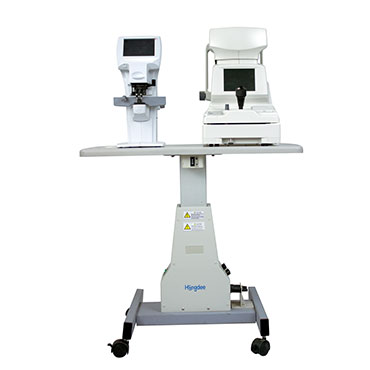
The large bowl perimeter (like our main Hongdee model) is what all the clinical trials are based on. It controls the background light perfectly. It is sturdy and lasts 10-15 years. However, it needs a dedicated corner of the room that must be kept dark. For large hospitals in Thailand or Italy, this is usually the preferred choice because of its long-term reliability and standard “look.”
The Rise of VR Headsets
We are seeing a massive trend toward “wearable” perimetry. You put a headset on the patient, and they click a button. You don’t need a darkroom because the headset blocks out all light. You can even test the patient while they are sitting in a regular chair. This “zero-footprint” approach is perfect for startups in New York or London where rent is high.
ROI and Procurement Logic
From a procurement perspective, VR units are often cheaper to ship and don’t need a motorized table ($300-$500 savings). But, the software is often subscription-based. Tabletop units have a higher upfront cost but lower recurring costs. We suggest distributors in Australia and Brazil offer both, as “traditional” doctors still prefer the bowl, while “modern” tech-focused clinics want the VR.
| Factor | Tabletop Perimeter | VR Head-Mounted |
|---|---|---|
| Space Required | High (Dedicated Desk) | Zero (Lives in a drawer) |
| Darkroom Needed | Yes | No |
| Durability | Very High (10+ years) | Moderate (Electronics/Straps) |
| Patient Comfort | Moderate (Neck strain) | High (Any position) |
| Standardization | Goldmann Bowl Standard | Emerging Standards |
What Software and Service Support Should You Ask Your Supplier About?
A perimeter is a “software-heavy” machine. If the software is buggy or hard to use, your staff will hate it.
Always ask about DICOM compatibility, the ability to perform “Progression Analysis,” and local technical support. Without progression software, you can only see a “snapshot” of today; with it, the machine can tell you exactly how fast the patient’s vision is declining over years.

Progression Analysis (The “Trend” Report)
The most important question for a glaucoma doctor is: “Is it getting worse?” Good software takes 3-5 tests over two years and plots a “Slope of Decay.” If the slope is steep, the doctor knows to change the medication. At Hongdee, we prioritize software that makes these reports easy to read. This is a key selling point for our distributors when they compete with “no-name” brands that only offer simple printouts.
DICOM and Networking
You don’t want to be carrying USB sticks around. Your perimeter should “talk” to your EMR system. Ask your supplier if they provide DICOM “Modality Worklist” and “Storage.” This allows the patient’s name to show up on the perimeter automatically and the results to go straight to the doctor’s screen. We support these integrations for our 300+ customers to ensure a paperless workflow.
Shipping and Warranty
Since we ship from China to 60+ countries, we know that perimeters are sensitive. They have “optical mirrors” inside that can misalign if dropped. Check the warranty. Does it cover the internal projector? What happens if the software needs an update? We provide remote technical support and robust shipping crates to ensure that whether you are in Algeria or California, your machine arrives ready to work.
Key Support Questions to Ask
- “Is the software included, or is there a monthly fee?”
- “Can I export reports as PDF and DICOM?”
- “How many years of normative data updates are included?”
- “Is there a local technician, or do you offer remote login support?”
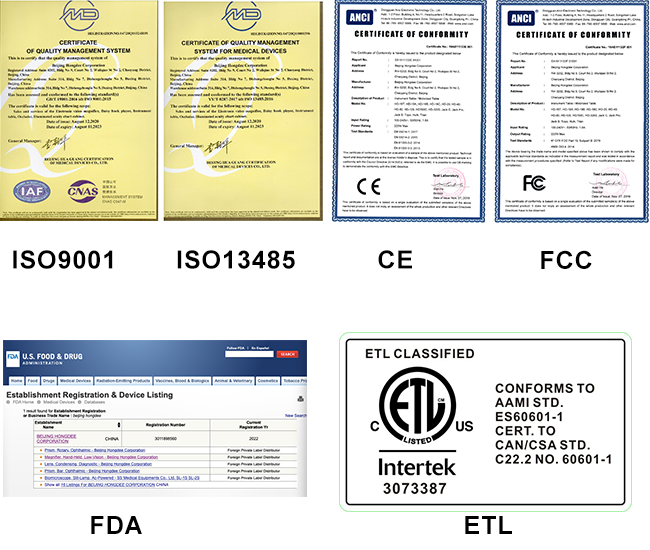
- “Do you have the CE and FDA certificates for my region?”
Conclusion
Buying an auto perimeter is a move toward “Medical” eye care. Focus on testing speed (SITA strategies), software depth (Progression Analysis), and the physical footprint (Tabletop vs. VR). With the right choice, you protect your patients’ vision and your clinic’s growth.