


Choosing a trial lens set seems like a simple task. But low-quality lenses lead to wrong prescriptions and unhappy patients. We show you how to identify professional-grade materials for your clinic.
A quality trial lens set uses high-transmission optical glass with anti-reflective coatings and precise power calibration. Look for durable metal or high-grade plastic rims. Manufacturing precision ensures consistent vertex distance and power accuracy across the entire lens surface for reliable refraction results.
Investing in the right refraction tools is the foundation of any successful eye care practice. At Hongdee, we understand that every diopter matters when you are trying to help a patient see clearly.
What Makes a Quality Trial Lens Set: Materials, Coating, and Manufacturing Precision?
Buying cheap equipment often leads to hidden costs later. Scratched lenses and inaccurate powers will frustrate your workflow and hurt your reputation. We help you understand the technical specs that define a premium set.
A professional trial lens set features K9 optical glass for superior clarity and reduced chromatic aberration. High-quality sets include multi-layer anti-reflective coatings to minimize glare. Precision manufacturing ensures that the optical center of each lens perfectly aligns with the trial frame for maximum accuracy during testing.
The Importance of Optical Glass
Not all glass is created equal. Many budget manufacturers use standard window-grade glass which has internal imperfections. We use K9 optical glass at Hongdee because it provides the highest level of light transmission. This is critical when testing patients with low vision or cataracts. If the glass is not pure, the patient may see “ghost” images, making it impossible to find the correct cylinder axis.
Coating and Durability
Lenses are handled hundreds of times a week. Without a hard coating, they scratch easily. Scratches scatter light and reduce contrast. We recommend looking for lenses with vacuum-deposited coatings. These coatings do more than just stop reflections; they make the surface easier to clean. When comparing suppliers, ask if their lenses are “AR coated.” This small detail makes a huge difference in patient comfort during a long refraction session.
Manufacturing Tolerances
Precision is the heart of optometry. A lens marked as -2.00D should be exactly -2.00D. Even a small deviation of 0.06D can cause issues for sensitive patients. We follow strict ISO standards to ensure every lens in our 266-piece set meets global medical requirements. This level of precision is why we have supported over 300 customers worldwide with reliable refraction tools.
| Feature | Professional Grade | Budget Grade |
|---|---|---|
| Glass Type | K9 Optical Glass | Standard Soda-Lime Glass |
| Coating | Multi-layer AR Coating | No Coating or Single Layer |
| Power Tolerance | ±0.02D to ±0.05D | > ±0.12D |
| Transparency | > 98% | < 92% |
Full Aperture vs. Reduced Aperture: How Does Rim Design Affect Refraction Accuracy?
Do you prefer a wide field of view or a lighter trial frame? Rim design changes how patients perceive the world during testing. We explain which design fits your specific refraction workflow best.
Full aperture lenses offer a 36mm clear view, which significantly reduces peripheral distortion and mimics natural vision. Reduced aperture lenses use a 26mm lens mounted in a wider rim to save weight. Choose full aperture for comprehensive exams and reduced aperture for pediatric or elderly patients who need comfort.
Why Full Aperture Matters
Many experienced optometrists prefer full aperture lenses. The 36mm diameter provides a much larger viewing area. This is helpful when the patient needs to move their eyes to look at different parts of the vision chart. It also helps you detect peripheral issues during subjective refraction. Because the glass goes almost to the edge of the rim, there is less “tunnel vision” effect. This makes the testing process feel more natural for the patient.
The Benefits of Reduced Aperture
On the other hand, reduced aperture lenses are the industry standard for a reason. By reducing the lens diameter to 26mm, the total weight of the lens set is cut by nearly 30%. When you stack three or four lenses in a trial frame, weight becomes a major factor. If the frame is too heavy, it will slide down the patient’s nose, changing the vertex distance. Reduced aperture lenses help maintain the correct position, especially during long exams.
Choosing for Your Clinic
Your choice depends on your patient demographic. If you see many children, the lighter weight of reduced aperture is a lifesaver. If you specialize in high-precision contact lens fittings or low vision, full aperture is superior. At Hongdee, we provide both options to ensure you have the right tool for the job. Our sets are designed to fit perfectly into our adjustable trial frames, preventing any lens rotation during the exam.
| Aspect | Full Aperture (36mm) | Reduced Aperture (26mm) |
|---|---|---|
| Field of View | Excellent / Wide | Limited / Narrower |
| Weight | Heavier | Lightweight |
| Patient Comfort | Lower (for long exams) | Higher (less pressure) |
| Best Use Case | High Precision / Research | General Practice / Pediatrics |
What Should a Complete Trial Lens Set Actually Include?
Missing a single cylinder lens can ruin a complex exam. Buying a partial set causes unnecessary frustration and delays your workflow. We list the essential components every complete trial lens kit must have for a professional setup.
A complete trial lens set must include at least 232 to 266 pieces. This covers a full range of sphere lenses, cylinder lenses, prisms, and accessory lenses like cross cylinders and occluders. Ensure your set includes a matching trial frame and a secure, organized carry case for professional use.
Spheres and Cylinders Breakdown
A standard professional set should cover spheres from ±0.12D to ±20.00D. The increments should be 0.12D or 0.25D in the lower ranges where precision is most needed. For cylinders, you need a range from ±0.12D to ±6.00D. Having “plus” cylinders is also important if you use a specific refraction method, though “minus” cylinders are more common in modern clinics. We ensure our sets are organized by color (usually red for minus, black for plus) to help you work faster.
Essential Accessory Lenses
It is not just about the power lenses. You also need functional accessories. A complete Hongdee set includes:
- Maddox Rod: For testing eye muscle balance and phorias.
- Red/Green Filters: Essential for Worth 4-Dot tests.
- Pin-hole: To determine if a vision drop is refractive or pathological.
- Occluder: For covering one eye during testing.
- Cross Cylinder: For fine-tuning cylinder axis and power.
Case and Organization
The case is more than just storage; it is a workspace. A professional aluminum case with a removable tray allows you to keep the lenses organized during the exam. If lenses are scattered, you lose time. Our cases are designed with soft lining to prevent glass-on-glass contact, which is the primary cause of chips and scratches. When you open a Hongdee trial lens set, your patients see a professional, high-end tool.
| Component | Quantity (Standard 266 Set) | Purpose |
|---|---|---|
| Sphere Lenses | 160 Pieces (Plus & Minus) | Primary vision correction |
| Cylinder Lenses | 80 Pieces (Plus & Minus) | Astigmatism correction |
| Prism Lenses | 12 Pieces | Muscle imbalance / Strabismus |
| Accessory Lenses | 14 Pieces | Specialized testing (e.g., Pin-hole) |
Metal Rim vs. Plastic Rim Trial Lenses: Which One Delivers Better Long-Term Value?
You want equipment that lasts for decades, not just months. Plastic rims are cheaper, but metal feels more professional and durable. We compare the durability and long-term costs of both materials to help you decide.
Metal rims offer superior durability and a premium feel, making them the best long-term investment for busy clinics. Plastic rims are lightweight and more affordable initially but can crack or warp over time. We recommend metal rims for heavy daily use and plastic for portable screening kits.
The Case for Metal Rims
Metal rims, usually made of chrome-plated brass or aluminum, are the “gold standard.” They have a weight that feels significant in the hand, which many doctors prefer. More importantly, they are almost impossible to break. If a metal-rimmed lens falls on a hard floor, the rim protects the glass. Metal also handles sterilization better. You can wipe them down with alcohol thousands of times without the material becoming brittle or discolored.
Understanding Plastic Rims
Plastic rims are popular for mobile clinics and field work. They are significantly lighter, which reduces the overall weight of the carry case. Modern high-grade plastics are quite durable, but they cannot match the lifespan of metal. Over 5 to 10 years, plastic can become brittle due to UV exposure or chemical cleaners. However, for a startup clinic on a tight budget, plastic rims offer a functional way to get started without sacrificing optical quality.
Comparing Long-Term Value
While the upfront price of metal is higher, the “cost per year” is often lower. We have customers who have used their Hongdee metal trial lens sets for over 10 years. If you have to replace a plastic set every 3 years because of cracks, you end up spending more. We suggest choosing metal for your main refraction lane. If you need a backup set or a portable kit for home visits, plastic is a smart, cost-effective choice.
| Feature | Metal Rims | Plastic Rims |
|---|---|---|
| Lifespan | 10+ Years | 3-5 Years |
| Weight | Heavier | Very Light |
| Durability | High (Drop Resistant) | Moderate (May Crack) |
| Professional Feel | Premium | Standard |
How Do You Evaluate a Trial Lens Set Supplier: Certification, Warranty, and Case Design?
A cheap set from an unknown source is a major risk for your medical practice. You need reliable support if a lens goes missing or the case breaks. We help you vet manufacturers based on certifications and global service standards.
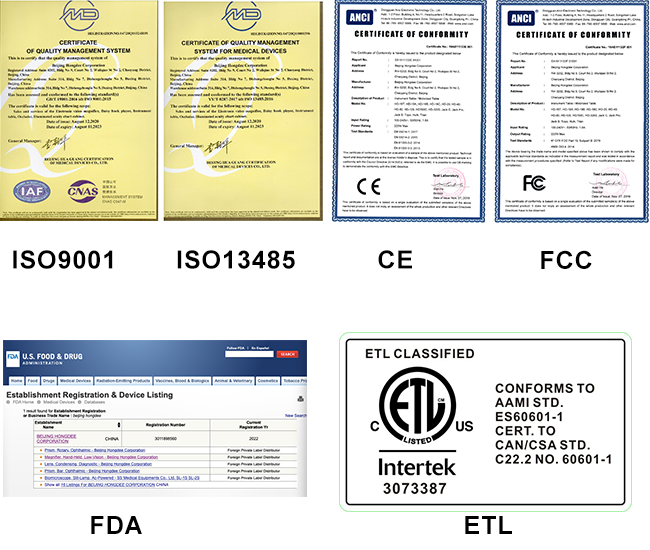
Evaluate suppliers by checking for CE, FDA, and ISO 13485 certifications to ensure medical-grade quality. Look for at least a 1-year warranty and a sturdy case design. Reliable manufacturers like Hongdee provide global shipping, secure packaging, and long-term spare part support for all customers.
Why Certifications Matter
In the medical world, “cheap” can be dangerous. Without ISO 13485 certification, you have no guarantee that the manufacturer follows a quality management system. CE and FDA marks are essential if you want to import equipment into Europe or the USA. At Hongdee, we maintain all these certifications to ensure our equipment meets international safety and performance standards. This protects your clinic from legal issues and ensures patient safety.
Shipping and Support
Shipping fragile glass lenses across the world requires expertise. We use specialized foam-padded packaging to ensure your set arrives without a single chip. We also offer a 1-year warranty on all our trial lens sets. If a lens is lost, we can ship individual replacements quickly. This is something many “anonymous” online sellers cannot provide. We have 60+ distributors worldwide, so local support is often just a phone call away.
Comparing with Competitors
When you compare Hongdee to other brands, look at the completeness of the package. Does the set include a trial frame? Is the case made of flimsy plastic or reinforced aluminum? We have been an OEM for Topcon for over 3 years, which means our manufacturing processes meet the highest Japanese standards. We offer the same high quality but at a factory-direct price, giving you the best value for your investment.
| Evaluation Factor | What to Look For | Hongdee Standard |
|---|---|---|
| Certifications | CE, FDA, ISO 13485 | Fully Certified |
| Experience | Industry Longevity | 15+ Years / OEM Experience |
| Global Support | Distributors / Parts | 60+ Distributors Worldwide |
| Packaging | Reinforced / Padded | Double-Boxed Secure Shipping |
Conclusion
A trial lens set is the most used tool in your clinic. By choosing high-quality materials and certified suppliers, you ensure accurate prescriptions and long-term durability. We are here to provide the reliable equipment your practice deserves.