


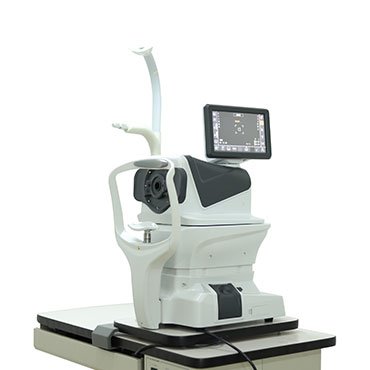
A clinic can buy a myopia-control device and still lack a safe service. The common failure is confusing a refraction result with evidence of how the eye is growing.
Myopia-control equipment includes tools for repeatable refraction, ocular measurements, documentation, and follow-up. Axial-length monitoring is distinct from ordinary refraction and helps qualified professionals assess change over time.
At Hongdee, we frame myopia management as a workflow. Equipment supports decisions. It does not choose treatment, replace professional judgment, or prove that a particular intervention will work for every patient.
Which measurements belong in a myopia-control baseline?
A prescription can change without telling the whole story, while a child’s measurements can be difficult to repeat. Without a baseline, follow-up becomes guesswork.
Build a baseline with a qualified clinician’s history and examination, repeatable refraction, and—when available and appropriate—ocular biometry such as axial length. Record method, operator, date, and conditions so later results are comparable.
Separate refractive status from eye growth
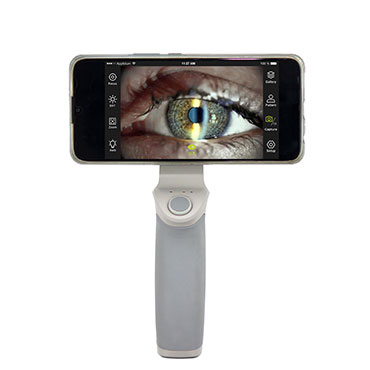
An auto refractor measures refractive information. It is useful within a broader refraction workflow, but it is not an axial-length biometer and should not be presented as one. A slit lamp supports anterior-segment examination, yet it also does not measure axial elongation. A myopia service may use these tools together, but each has a different job.
We ask buyers to define the baseline fields before selecting hardware. These can include unaided and corrected visual acuity, subjective or objective refraction as appropriate, ocular history, family and behavioural history, examination findings, and the instrument used. If axial length is part of the service, record the measurement technology, eye, repeat readings, operator, and any quality indicator available from the system.
The International Myopia Institute’s resources discuss myopia management as a clinical process rather than a single product purchase. The World Council of Optometry’s measurement guidance also reinforces the value of consistent follow-up. We link to professional sources for education, not to prescribe a protocol. Qualified eye-care professionals must select measurements and intervals for the patients they manage.
| Measurement | What it can inform | What it cannot replace |
|---|---|---|
| Refraction | Refractive status and prescription workflow | Ocular biometry or full examination |
| Axial length | Front-to-back ocular growth trend | Clinical judgment and risk assessment |
| Corneal or anterior-segment assessment | Relevant ocular findings | A complete myopia-management decision |
| Visual acuity | Functional vision check | Cause of reduced vision |
Design for repeatability
A baseline is only valuable if follow-up is comparable. Use the same instrument where practical. Record alignment, fixation, operator, and unusual conditions. Repeat questionable readings according to the device instructions and professional protocol. Do not turn a single difference into a progression claim.
How is axial-length monitoring different from ordinary refraction?
Many buyers search for “myopia-control equipment” and receive a list of refractors. That shortcut can leave the clinic unable to track the measurement it says matters.
Refraction describes optical power. Axial-length monitoring measures the eye’s front-to-back dimension with biometry equipment. Neither measurement alone is a complete diagnosis or treatment decision, and one should not be marketed as a substitute for the other.
Ask what the instrument actually measures
We recommend a plain-language question in every quotation: “What anatomical or optical variable does this model measure, and by what method?” Then ask for the user manual, measurement range, acquisition workflow, fixation requirements, repeatability guidance, data export options, and service process. A supplier should identify whether the system is an optical biometer, ultrasound biometer, refractive instrument, or another diagnostic tool. Buyers should not infer function from the phrase “myopia control.”
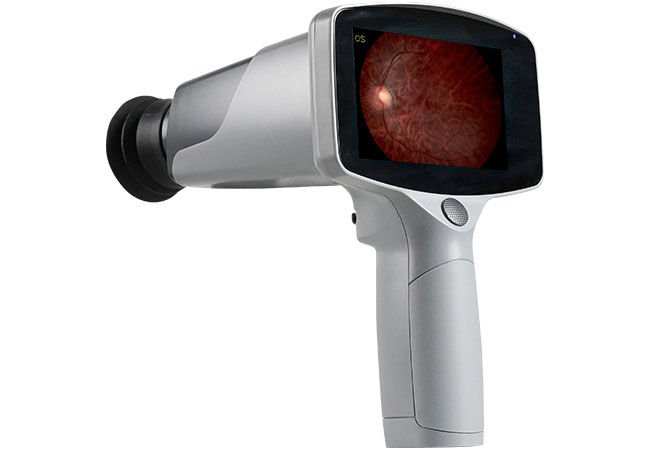
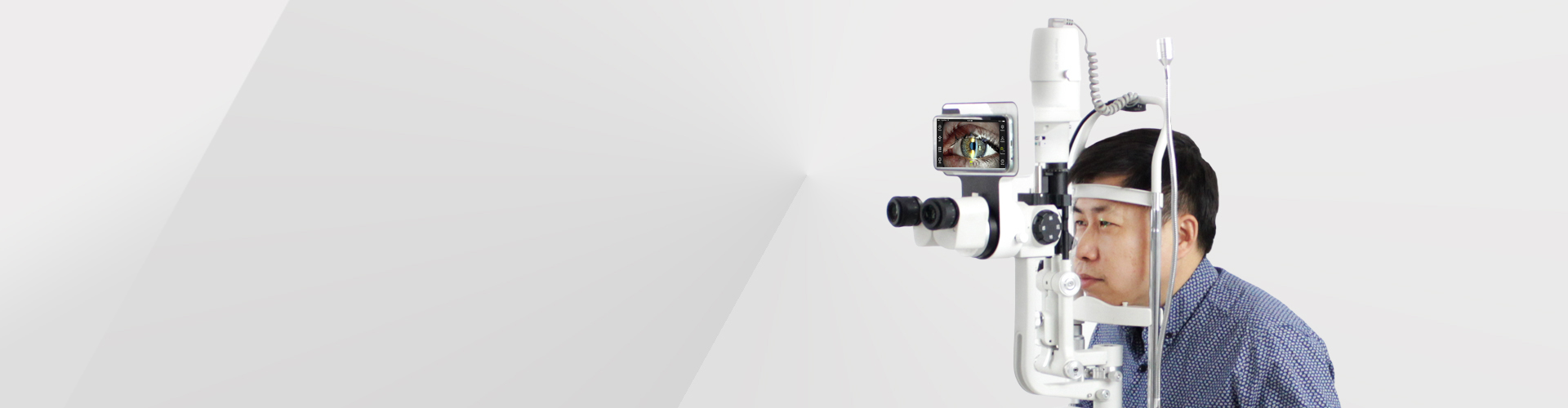
The difference affects service design. Refraction can be central to prescribing and monitoring refractive change. Axial length can add a structural growth measure. A clinic may need both, plus examination and history. A camera image can support documentation or referral, but a fundus camera is not automatically an axial-length instrument. The Hongdee image used here illustrates an available product category conservatively; it does not prove that this product performs every myopia-management measurement.
Interpret trends, not isolated marketing numbers
A trend requires time, consistent technique, and professional interpretation. Measurement noise, fixation, accommodation, instrument differences, and operator technique can affect comparison. We advise clinics to create a report that shows date, eye, method, value, quality notes, and clinician interpretation. Avoid promising a specific outcome or fixed growth rate.
For procurement, ask whether software stores raw observations or only a final summary. Ask how records are backed up and corrected. If the instrument cannot support the clinic’s documentation needs, a technically impressive feature may not improve the service.
Which equipment and people turn measurements into a real clinic service?
A myopia programme is more than an instrument at the end of an examination lane. It needs roles, consent, education, follow-up, and escalation.
Combine examination tools with trained staff, a defined patient pathway, consistent records, follow-up scheduling, communication materials, and referral criteria. Equipment should fit the service you can safely deliver.
Assign the workflow by role
A practical service map can include registration and history, visual acuity, refraction, biometry when available, clinician examination, counselling, consent, treatment discussion by the qualified professional, and follow-up. Not every staff member should perform every step. Write who may operate each device, who checks quality, who explains limitations, and who decides whether referral is needed.
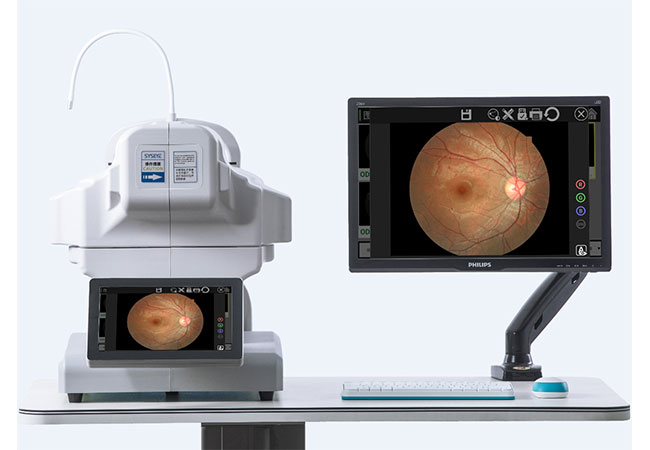
The equipment set depends on scope. A refractor and refraction accessories may support a refraction workflow. A slit lamp may support ocular examination. An optical or ultrasound biometer may support axial-length measurement if selected, installed, and used under appropriate professional governance. A fundus camera may support a defined imaging or referral pathway. These categories should not be treated as interchangeable.
We recommend a short standard operating procedure. It should cover patient identification, cleaning, fixation instruction, repeat rules, data entry, failed acquisition, privacy, and escalation. Include a downtime plan. If the biometer is unavailable, staff should know whether to reschedule, refer, or continue only with services that remain within scope.
Make follow-up understandable
Parents and patients need a clear explanation that monitoring is not a guarantee of control. Provide the date of the next review, what will be measured, who will interpret it, and what changes require earlier contact. The service should not overstate equipment output as a treatment result. This protects trust and makes the measurement clinically useful.
How should you evaluate a myopia-control equipment package before ordering?
A package can look complete while omitting the measurement, accessories, software, or training that makes it usable.
Evaluate the package by intended measurement, workflow fit, repeatability, records, training, maintenance, and regulatory documents. Request an exact model and configuration rather than accepting a category label.
Use a function-to-evidence matrix
We ask buyers to create one row per promised function. For “refraction,” request the manual and specification for that model. For “axial-length monitoring,” request evidence that the model is a biometer and clarify its method. For “progression report,” ask whether the software calculates trends, stores dates, and allows clinician review. For “remote review,” ask about export, privacy, and the actual supported file format. Never infer these answers from a photograph.
| Requirement | Evidence to request | Buyer decision |
|---|---|---|
| Intended measurement | Model-specific manual and specification | Confirm category and scope |
| Repeat follow-up | Quality guidance and repeat workflow | Judge comparability |
| Records | Screenshots or documented functions | Fit the clinic’s process |
| Training | Agenda, operator materials, competency check | Plan safe use |
| Support | Contact, parts, service boundaries | Manage downtime |
| Compliance | Destination-market documents | Review before deposit |
Check the entire life cycle
Ask how the device is installed, updated, cleaned, calibrated or checked, and repaired. Ask who owns the data and how a corrected record is handled. If the device includes a separate computer or printer, include those dependencies in the quotation. Confirm the exact accessories, warranty terms, packaging, delivery documents, and acceptance tests in writing. Do not promise a universal approval route; the importing market decides its own requirements.
Hongdee’s ophthalmic auto refractometer and digital slit lamp pages can help buyers identify questions about those categories. They do not establish that every listed product measures axial length or provides a complete myopia-control programme.
For professional context, see the International Myopia Institute clinical management guidance, the World Council of Optometry measurement resource, and the discussion of axial length measurement in Review of Myopia Management. Sources checked 2026-10-12; clinical protocols and destination-market rules require professional and local confirmation.
Conclusion
Myopia-control equipment is a measurement-and-follow-up system, not a magic category. At Hongdee, we help buyers clarify functions, model evidence, training, and service boundaries before requesting a quote. Contact Hongdee.