


A specification sheet may show fine diopter steps, but that alone does not tell a buyer whether readings repeat or agree with a reference.
Compare mid-range auto refractors across three separate questions: displayed resolution, repeatability under repeated measurements, and agreement with a defined reference method.
We recommend a verification plan, not an unsupported ranking. A device can display small increments and still need careful alignment, focus control, and professional clinical interpretation.
What does auto refractor resolution actually tell you?
Resolution looks attractive in a table because it is easy to print. Buyers can mistake a smaller displayed step for greater measurement accuracy.
Resolution is the smallest displayed or selectable increment; it describes reporting granularity, not whether the measurement is close to truth.
Separate display from measurement behavior
A model may report sphere, cylinder, and axis in fine increments. That helps record or compare values, but it does not prove that the instrument can reliably distinguish adjacent increments. Rounding can make two devices appear different even when their underlying readings are similar. Conversely, two instruments can show the same value while one has more variation across repeated tests.
The relevant product literature should identify the available measurement step and operating conditions. We would record whether the specification applies to sphere, cylinder, axis, or another output. We would also note the measurement range, pupil or fixation requirements, and any automatic averaging behavior. Do not turn a single resolution field into a claim of clinical superiority.
| Metric | What it answers | What it does not answer |
|---|---|---|
| Resolution | How finely is an output displayed? | Is the output true or repeatable? |
| Range | Which values can the device report? | How it performs at every range edge |
| Averaging | How are repeated signals combined? | Whether alignment was consistent |
| Reference agreement | How close to a chosen standard? | Performance in every patient or setting |
Use the right language in procurement
We suggest writing “display resolution” unless the manufacturer defines the term more precisely. If a tender says “high accuracy,” ask for the test method, acceptance criteria, sample conditions, and report. A buyer can then compare like with like. If the supplier supplies only a marketing phrase, mark the item for clarification.
The ISO 10342 eye refractometer page explains that the standard specifies requirements and test methods for objective eye refractometers, together with ISO 15004. The ISO page also shows that the 2003 edition is withdrawn and points to ISO 10342:2010. That lifecycle detail matters: request the edition used by the supplier and do not cite a withdrawn edition as current proof.
How do you test repeatability across mid-range auto refractors?
One reading per model is a weak comparison. It mixes instrument variation, operator alignment, fixation, accommodation, and subject variation into one unexplained number.
Repeatability asks whether the same instrument gives similar results when the same measurement is repeated under controlled, documented conditions.
Control the measurement sequence
Define the target, operator instructions, alignment method, focus setting, ambient conditions, and time between readings before comparing models. Use a suitable calibrated reference object or a qualified test protocol where possible. If human subjects are involved, clinical professionals should design and supervise the work. We do not recommend using a blog comparison as a substitute for validation.
Repeat each condition enough times to reveal variation, and preserve the raw outputs rather than only the average. Record sphere, cylinder, and axis separately. Axis differences may be more meaningful at some cylinder powers than at others, so a single combined score can hide an important pattern. Note error messages, aborted readings, and operator interventions instead of silently excluding them.
Report spread, not a winner
A useful report can show the median, range, standard deviation, or another preselected variability measure. The chosen statistic should match the study design. Explain whether results are within one session, across operators, or across days. These are different repeatability questions. A device may be stable for one operator and more variable when alignment is less controlled.
| Repeatability record | Why keep it |
|---|---|
| Raw sphere/cylinder/axis outputs | Prevents rounding from hiding variation |
| Operator and session | Shows reproducibility conditions |
| Alignment or fixation note | Explains failed or unusual readings |
| Device settings and software version | Supports later investigation |
No result here establishes a universal ranking. It supports a buyer’s own acceptance criteria. Clinical decisions remain with qualified professionals.
How do you compare agreement with a reference standard?
Repeatable readings can still be systematically offset. A device that repeats the same wrong value is stable but not necessarily accurate against the chosen reference.
Agreement measures how closely auto refractor outputs match a defined reference method or calibrated target, using a stated analysis and acceptance limit.
Define the reference before collecting data
The reference might be a calibrated model eye, a certified test lens setup, or a qualified clinical comparator. Each has a different meaning. A model eye can control target power and repeatability. A clinical comparator introduces professional technique and patient factors. A subjective refraction is not automatically a perfect truth source; the protocol must state who performed it and how disagreements were handled.
Ask the supplier whether the claimed tolerance was measured against a reference, under which conditions, and for which outputs. Request the test report or a clear summary of method, sample size, range, and acceptance criteria when procurement decisions depend on it. If the claim is only “accurate results,” treat it as incomplete.
Analyse bias and limits of agreement
A simple mean difference can show bias, but it can hide wide individual differences. A method-comparison analysis may examine paired differences across the measurement range. The report should separate sphere, cylinder, and axis, and state how axis was handled. Do not combine incompatible units or compare a test-lens result with a patient result as if they were equivalent.
If a vendor provides no independent evidence, the responsible conclusion is “evidence not supplied,” not “least accurate.” This protects the integrity of the comparison and leaves room for a controlled site evaluation.
How should a buyer run a fair mid-range model evaluation?
A short demonstration can become a popularity contest when every supplier uses a different target, operator, or reporting format.
Use one protocol, blinded or balanced operator order where practical, predefined acceptance criteria, and a decision record that keeps resolution, repeatability, and reference agreement separate.
Create a buyer test pack
Before the demonstration, define the intended workflow, output fields, connectivity needs, available operator training, and service escalation. Ask each supplier for the same documentation: technical specification, applicable standard edition, test method, environmental limits, calibration or maintenance instructions, and warranty or authorization boundary. These are procurement facts, not evidence that one model is clinically better.
Use a scoring sheet with separate columns. Score whether evidence was provided, whether the unit met the predeclared test condition, and whether the workflow fits the site. Do not award points for a finer display step unless that step matters to the intended record. If test results conflict with documentation, pause and seek clarification.
Make the decision auditable
Record device identity, software version, operator, date, conditions, raw results, exclusions, and unresolved questions. Have qualified eye-care professionals decide what clinical relevance means. Procurement should decide value and risk from documented evidence, not a sales demonstration alone.
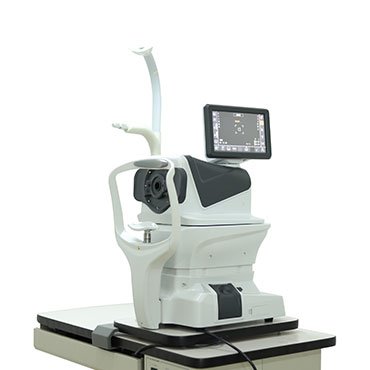
Hongdee’s ophthalmic auto-refractometer information can support a product discussion, while the quote page is the right place to request exact model documentation. We recommend reconfirming the supplied configuration and test evidence before an order.
Sources and scope
Sources checked 2026-10-12: the ISO 10342:2003 eye refractometer catalogue page describes the standard’s scope and points to a later edition; it is not evidence that the withdrawn edition is current. Request the applicable edition from the supplier and confirm its status with ISO. The WHO procurement resource guide provides foundational context for accountable purchasing, not an accuracy test protocol. ISO text is not reproduced here. This article makes no model ranking or unverified accuracy percentage.
Conclusion
Compare what a device displays, repeats, and agrees with—not marketing adjectives. Use a shared protocol and qualified review. Ask Hongdee for model-specific evidence.