


How Do You Know When to Replace Aging Ophthalmic Equipment in Your Clinic?
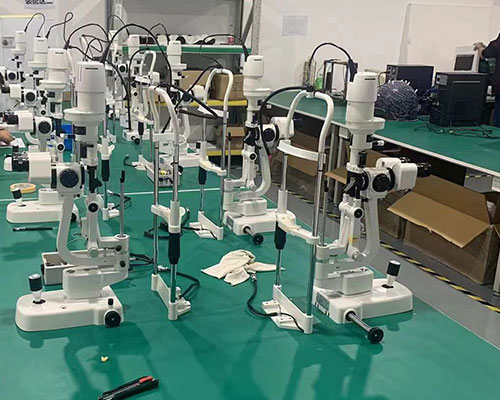
Your slit lamp still turns on, so you keep using it. But the image looks dimmer than it did years ago, and the joystick feels loose. Equipment ages slowly, and clinics notice too late.
Replace equipment when service costs exceed 15 percent of replacement value per year, when optical coatings degrade, or when failures interrupt patient care. Slit lamps run mechanically for 15 to 20 years, but their optics fade at 8 to 10 years.
Signs, costs, disposal, and reputation all point to the same moment. We break down how to recognize that moment and act on it with confidence.
What are the signs that a slit lamp or fundus camera is past its useful life?
Old machines do not stop working all at once. They fade, drift, and complain quietly, and busy staff learn to ignore the complaints.
Watch for dim images, hazy optics, loose movements, failed calibration, and rising repair calls. When a slit lamp needs constant adjustment or a fundus camera produces inconsistent color, the unit is past its useful life.

Optical signs you can see
Coatings degrade over time, so images lose contrast and color fidelity. A fundus camera whose photos look washed out or yellowed is not capturing what the eye really shows. You cannot fix faded coatings with cleaning, because the damage is inside the glass.
Mechanical signs you can feel
A slit lamp joystick should glide. When it sticks, drifts, or needs force, the mechanism is wearing out. Loose eyepieces, slipping magnification drums, and chairs that sag all point the same direction.
Service signs you can count
Track your repair calls. One failure is an event, but three failures in a year is a pattern. Add the downtime, because every day the lane sits idle costs you exams and trust.
Warning sign checklist
| Sign | What it means |
|---|---|
| Dim or hazy image | Optical coatings degrading |
| Washed-out photos | Camera optics or sensor aging |
| Stiff joystick | Mechanism wear |
| Failed calibration | Readings no longer reliable |
| Rising repair frequency | End of economic life approaching |
| Missing spare parts | Model becoming obsolete |
Trust your instincts
If you hesitate to book an important patient on a machine, that hesitation is your answer. Clinicians know when a device has lost its edge, and the machine is telling you it is done.
How do you calculate the cost of keeping old equipment vs. upgrading?
Old equipment feels free because you already paid for it. But every repair, calibration, and slow exam carries a price, and the total is usually higher than owners think.
Add yearly service, calibration, downtime, and lost image quality. When the annual total passes about 15 percent of the replacement cost, upgrading is cheaper than keeping the old unit, because repairs only repeat.

Total the visible costs
Gather last year’s repair invoices and calibration fees, then add the cost of consumables that older units burn through. Divide that total by the price of a new equivalent machine. If the ratio passes 15 percent, the old unit is eating your budget.
Add the invisible costs
Old machines run slower exams, and slower exams cut daily capacity. Faded images also cause repeat tests, because staff re-photograph patients to get a usable picture. Each repeat costs chair time and patient patience.
Compare like for like
New machines bring better light sources, digital output, and lower power use. An LED slit lamp outshines a tired halogen unit, and a new fundus camera sends DICOM images straight to your records. Include those gains in the comparison.
A simple cost comparison
| Cost item | Old unit | New unit |
|---|---|---|
| Annual service and repairs | Repeats yearly | Under warranty |
| Calibration | More frequent | Included at first |
| Exam time | Slower | Faster |
| Image quality | Fading | Current standard |
| Downtime risk | Growing | Minimal |
| Annual cost vs replacement | Over 15 percent | Fixed payment |
Run the numbers twice a year
Prices and failure rates change, so redo this math every six months. The moment the old unit crosses the 15 percent line, you have a clear decision date instead of a vague feeling.
What is the best strategy for disposing of or trading in old ophthalmic devices?
Old devices are not trash, but they are not gold either. Many clinics store retired machines in a back room, where they collect dust and lose whatever value they had.
Trade old devices in through your distributor network, because a trade-in recovers 20 to 30 percent of residual value toward a new purchase. If the unit is truly dead, recycle it through a certified e-waste channel and keep the disposal record.
Trade-in first
Distributors want your old unit because refurbished equipment has a real market. A trade-in gives you credit toward the new machine and saves the distributor the cost of finding another buyer. That shared benefit is why trade-in offers beat private sales for most clinics.
Sell when the unit still works
A working unit with a service history sells for more than a dead one. So plan replacement before total failure, not after. Selling a documented, working device also protects your reputation, because nobody wants their name on a broken machine.
Handle patient data before anything moves
Fundus cameras and digital slit lamps store patient images. Wipe all storage and reset devices to factory state before handover, and keep a written record of the wipe for your privacy files.
Disposal options compared
| Option | Recovery | Best when |
|---|---|---|
| Trade-in with distributor | 20 to 30 percent of value | Buying a replacement |
| Private sale | Market dependent | Unit still has demand |
| Donation to training | Tax benefits | Unit works, low value |
| Certified recycling | Minimal | Unit is beyond repair |
Keep your paperwork
Record the serial number, the buyer, and the date for every device that leaves your clinic. Regulators ask questions years later, and a clean disposal file answers them in minutes.
How does equipment age affect your clinic’s reputation and patient outcomes?
Patients cannot read your service log, but they can see your machines. A cracked, dim, dated device tells patients that your care is dated too.
Old equipment dims your diagnosis and your image. Missed corneal detail and washed-out photos lead to repeat visits and worse outcomes, and patients notice equipment that looks tired, so replacement protects both care and reputation.
Outcomes follow optics
Diagnosis depends on what you can see. A slit lamp with faded optics can hide early corneal disease, and a fundus camera with drifting color can miss subtle retinal change. Equipment that cannot show the detail cannot support the diagnosis.
Efficiency shapes the experience
Patients measure your clinic in wait time and confidence. When a machine fails mid-exam, the patient sees the scramble and the repeat test. Smooth, modern equipment makes the visit feel professional from the first minute.
Trust is built in small moments
Patients compare your room to the clinic across the street. Worn equipment is a silent negative review, and modern equipment is a silent endorsement. The machine you examine them with tells them how seriously you take their eyes.
How aging equipment hits your practice
| Effect | Consequence |
|---|---|
| Faded optics | Missed or delayed diagnosis |
| Slow exams | Longer waits, fewer patients |
| Failed machines | Cancelled appointments |
| Dated look | Lower patient confidence |
| Wiped-out resale value | Nothing left at replacement time |
Replace on a schedule, not in a crisis
Put every device on a replacement calendar with a budget line. Planned replacement keeps your optics sharp, your patients confident, and your resale value alive.
Conclusion
Replace equipment when service costs pass 15 percent of replacement value or optics visibly fade. Trade old units in for 20 to 30 percent credit, wipe their data, and keep records. We at Hongdee help clinics plan upgrades before machines fail.