



You win the tender, ship the unit, and only later notice the margin leaking away. Most distributors price invoices. The smart ones price exam lanes over years.
Realistic distributor margins vary widely by category, territory, and volume, so published averages are unreliable. Model margin per exam lane over several years instead, because consumables and service — not the machine alone — decide your real return.
So what should you actually expect? That depends on how you count. In this article I’ll walk through margin by product category, the hidden costs that eat your profit after the container lands, why consumables out-earn machines over time, how to defend pricing against grey-market imports, and how volume talks at the factory.
What Gross Margin Ranges Are Typical by Product Category?
You need a planning number, but published margin figures conflict and shift with exchange rates. So what can you actually count on?
Margin spreads follow product complexity. Commodity items like LCD vision charts and lensmeters sell at the thinnest spreads, while systems such as auto perimeters, fundus cameras, and auto refractometers carry the widest. Your blended result depends on your category mix.

Why Category Mix Matters More Than One Percentage
Distributors often ask for a single margin figure. There is no honest single figure, because each product family behaves differently. Simple, mature products compete mainly on price, so their spreads compress. Complex systems demand training, installation, and application support, which buyers pay for — and that support is exactly where a distributor adds value. A spread that looks thin on a digital vision chart can still fund your business when it rides alongside wider-margin systems.
Take a slit lamp as an example. A five-step Haag-Streit style unit with a camera port serves a very different buyer than a two-step entry model. The entry model faces price pressure from every direction. The advanced unit earns more, because the buyer is buying capability, training, and trust — not just glass and metal. The same logic runs through our range, from portable fundus cameras to auto perimeters.
Published industry averages also vary wildly between regions and years, which is why I treat them as unreliable. Freight cost, duty rates, and local registration fees change the number before you even sell one unit. I have watched distributors in Southeast Asia and the Middle East run the same product line with very different results. The difference was rarely the factory price. It was how they positioned the category, bundled training, and defended the spread.
Here is how the categories tend to compare in practice:
| Product category | Typical margin spread | Why it moves |
|---|---|---|
| Vision charts, trial sets, tables | Thinnest | Mature, price-sensitive commodities |
| Slit lamps, lensmeters, refractometers | Moderate | Brand and support influence price |
| Fundus cameras, auto perimeters, NCT | Widest | Training, installation, and service value |
Your real question is not “what percentage should I earn?” It is “what margin does my whole lane deliver across five years?” We’ll build that picture next.
Which Costs Quietly Erode Your Margin After Landing?
Your quote looks healthy until the invoice arrives — freight, duties, and bank fees eat the spread before you sell. Then the hidden costs start.
Landing costs and after-sales obligations erode margin more than factory price ever does. Freight, customs, registration paperwork, spare parts stock, and warranty handling can consume a large share of your spread if you do not price them in from day one.
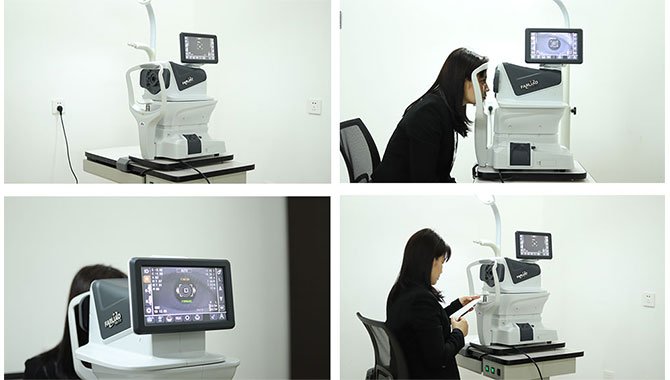
The Cost Stack Most Quotes Forget
Every order carries a cost stack beyond the ex-works price. Freight and insurance come first. Then customs duties and import paperwork. Many distributors underestimate documentation effort, especially when registering devices with CE in Europe, FDA in the US, TGA in Australia, or ANVISA in Brazil. Each market has its own rules, and missing paperwork delays shipments while your customer waits.
| Hidden cost | When it hits | How to control it |
|---|---|---|
| Freight and insurance | Before delivery | Quote as a line item |
| Customs duties and paperwork | At import | Plan registration early |
| Bank and transfer fees | At payment | Build them into pricing |
| Warranty reserve | After sale | Hold a fixed reserve per unit |
| Spare parts stock | After sale | Stock high-failure consumables |
After-sales is where margins really bleed. If a unit fails, you need spare parts on hand and a technician who knows the product. The distributor who cannot respond in days, not months, loses the next order. Hongdee keeps a 12-month warranty with free replacement inside the warranty period, which shrinks your liability — but you still need local stock and service skills.
A Worked Example
Suppose your lane sells for $10,000. A heavy cost stack of freight, duties, certification, and warranty reserve might consume a large slice of that before profit. The fix is to price the stack, not the product. Quote freight, duties, and documentation as line items. Keep a warranty reserve per unit. Track service calls as a cost centre. Distributors who skip this step discover their margin only when the year-end report arrives.
Why Do Consumables Outperform Capital Equipment on Repeat Revenue?
A fundus camera sells once. The probes, paper, bulbs, and service contracts sell for years. That is the annuity you are really buying.
Consumables outperform capital equipment on repeat revenue because they reorder continuously. Rebound tonometer probes, chin-rest paper, bulbs, and service contracts convert one customer into years of steady income — while the machine is a one-time customer-acquisition event.
Turning One Sale into a Recurring Account
Think of the capital sale as the door-opener. The clinic buys a rebound tonometer from you, and every patient measurement uses disposable probes. Each box of probes is a new invoice with a fresh margin. The same logic applies to chin-rest paper rolls, slit lamp bulbs, and preventive maintenance contracts.
This changes how you should negotiate. When a clinic asks for a discount on the machine, you can afford to give ground if the consumable and service stream is priced properly. The machine discount is marketing spend; the annuity is the business.
| Revenue type | Timing | Margin behaviour |
|---|---|---|
| Capital equipment | Once per lane | Higher risk, lumpy cash flow |
| Consumables | Continuous reorders | Lower risk, predictable cash flow |
| Service contracts | Annual renewal | Recurring, builds loyalty |
The Per-Lane Model
Here is the model I recommend: project the exam lane over five years. Machine margin once. Consumable margin per year. Service margin per year. Add them, then decide if the deal is worth it. A lane that looks thin on paper often looks excellent across five years — and the reverse is true too. Per-invoice thinking hides the truth. Per-lane thinking reveals it. We see this pattern across our distributor network in Italy, Algeria, and Singapore, where service-minded partners out-earn pure resellers on the same equipment.
How Should You Price Against Grey-Market Imports?
A parallel-imported unit costs less upfront and arrives with no support. Your customer sees the price tag, not the risk. So how do you win?
Compete on total cost of ownership, not ticket price. Grey-market units lack registration paperwork, warranty, spare parts, and local service. Present the full picture — compliance, warranty, support, and consumables — and the lower sticker price stops looking cheap.
Why Grey Market Looks Cheap
Grey-market goods arrive through unofficial channels. They skip local registration, arrive without warranty coverage, and come with no spare parts pipeline. If the unit fails, the buyer waits weeks or months with no one to call. For a medical device in daily use, downtime is expensive — a clinic cannot bill patients with a dead slit lamp.
That is your opening. Do not fight on sticker price. Show the buyer the numbers: registration status, warranty terms, spare parts availability, and service response time. Hongdee supports its distributors with the paperwork and after-sales backing needed to make that case credible. Our ISO 13485 and ISO 9001 certifications, plus CE, ETL, FDA, and SGS marks, give you documents a grey-market seller cannot produce.
The Price Comparison Table
| Factor | Authorized distributor | Grey-market import |
|---|---|---|
| Registration paperwork | Supported | Often missing |
| Warranty | 12 months, free replacement | Usually none |
| Spare parts | Available | Uncertain |
| Service training | Available | None |
| Consumables supply | Guaranteed | Not guaranteed |
Price is one line in that table. Buyers who care about uptime — and every clinic does — will pay for the full package once you explain it. The grey-market seller cannot match the rest of the table, so don’t try to match their price. Position your offer as the safe choice, and the margin follows.
What Volume Tier Unlocks Better Factory Terms?
Small orders buy samples. Container orders buy freight efficiency. Program orders buy partnership. Which tier are you negotiating from?
Factory terms improve with commitment. Hongdee produces about 5,000 pieces a month and works on a 98% advance / 2% on receipt payment term, with a 10-day unconditional return window. Larger, planned volumes unlock better pricing and priority production slots.

How Volume Changes the Conversation
A single-unit order tells the factory nothing about your future. A steady monthly forecast tells them you are a business partner worth investing in. Hongdee has shipped to distributors in the USA, Thailand, Singapore, Italy, and Algeria for over 15 years — 300+ clients and 60+ distributors worldwide. Long relationships are built on predictable volume, not occasional spikes.
| Volume tier | What you typically get | What you give |
|---|---|---|
| Sample / trial | Standard price, standard lead time | Nothing committed |
| Container-level | Better per-unit pricing, consolidated freight | Larger order size |
| Program / forecast | Priority production, flexible terms, deeper support | Volume commitment |
Negotiating the Right Tier for Your Market
Start where you are, but plan where you’re going. If your market is new, buy samples and validate demand. Once clinics reorder consumables, move to container-level orders to cut freight cost per unit. When your forecast is stable for six months, present it to the factory — that is when terms improve. Payment terms matter too. Our standard is 98% advance with 2% on receipt, which keeps pricing sharp. We also offer a 10-day unconditional return, so a wrong choice does not become a costly one. The message is simple: commitment earns better terms, and better terms earn better margins.
Conclusion
Margins on ophthalmic equipment depend on category, hidden costs, and repeat revenue, not sticker price. Model each exam lane over years, sell the full service picture, and grow volume to earn better factory terms.