


You found the tender. The deadline is close. The documents are a wall of clauses, and you are not even sure your product qualifies. Every bidder is chasing the same contract, and most will lose before the evaluation even starts. I will show you where tenders are really won.
Tenders are won in the specification, not in the price room. The bidder whose parameters get written into the draft specification has already cleared the hardest hurdle. Price matters, but a compliant, well-scored technical bid beats a cheap one that fails on paper, almost every time.
Almost nobody talks about this publicly, so let me be straight with you. This is not about bribery or collusion — never that. It is about early technical engagement: educating the hospital on what good equipment looks like, sharing real specifications, and letting your product’s parameters shape their thinking before the tender is published. That is legal, ethical, and brutally effective.
What Documents Does a Typical Tender Package Demand?
The document list looks impossible at first glance. Certificates, registrations, financial statements, references. Miss one paper and your entire bid can be rejected without a single look at your equipment. The good news: the list is predictable, and you can prepare it long before any tender appears.
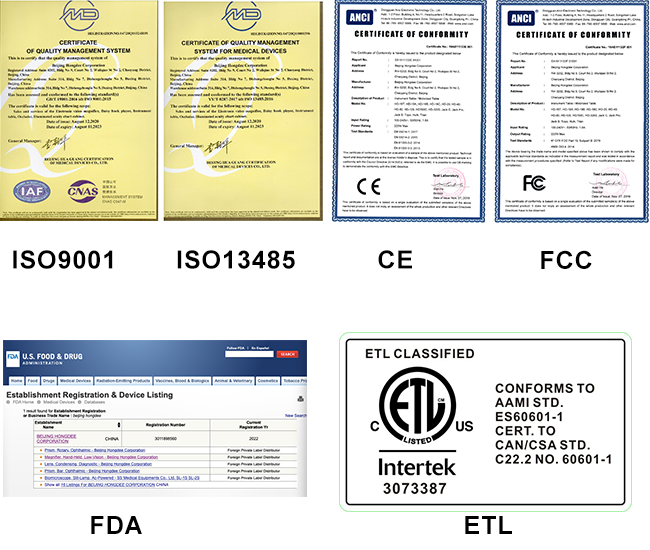
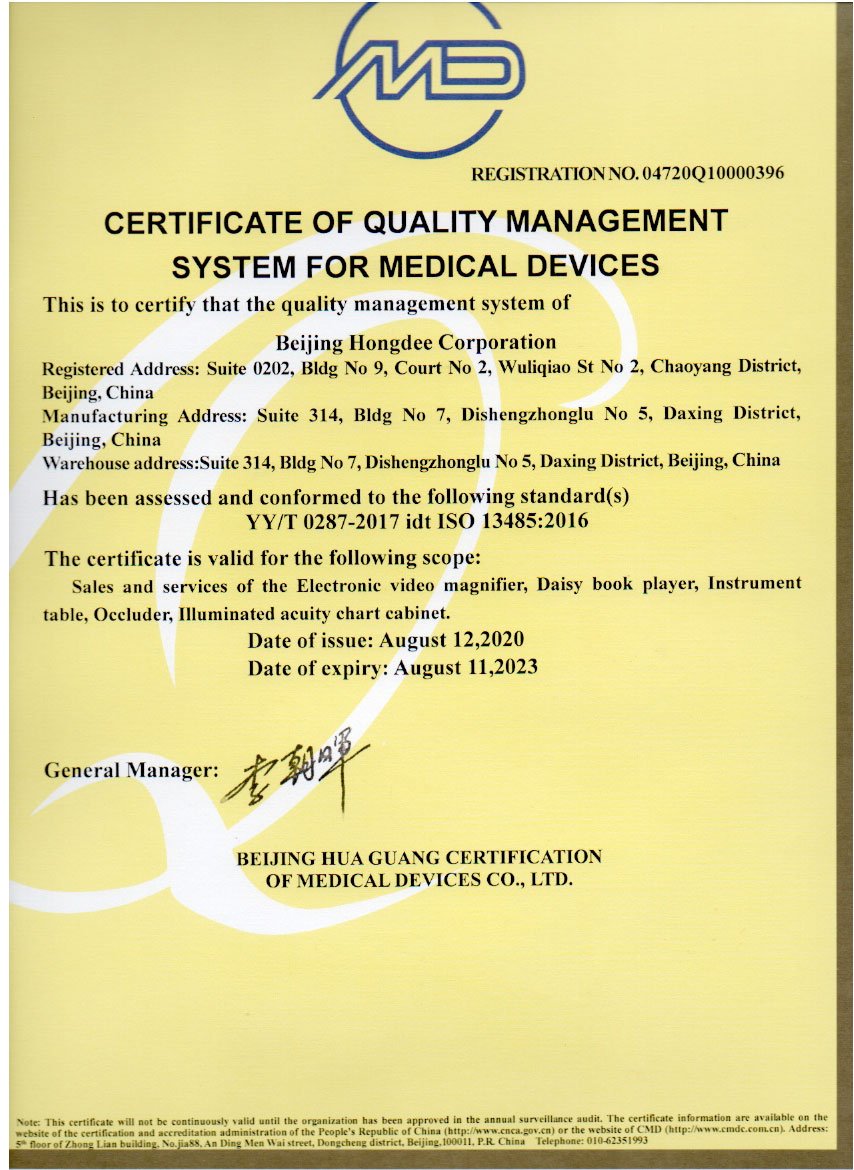
A typical package needs your company registration, ISO 13485 and ISO 9001 certificates, CE or FDA or local registration evidence, product specifications and brochures, a compliance statement, commercial terms, delivery and warranty commitments, and client references. At Hongdee we hold ISO 13485, ISO 9001, CE, ETL, FDA, and SGS certification, so we can hand these to you in days, not weeks.
Here is the mistake I see most often. Distributors wait until a tender appears, then scramble for documents. The hospital asks for a certificate that takes three weeks to obtain, and the bid is dead. The fix is simple: build a tender file once, keep it updated, and refresh it every quarter.
The master tender file
| Document | Source | Update frequency |
|---|---|---|
| Company registration | Your registry | When details change |
| ISO 13485 / ISO 9001 | Manufacturer | Each certificate renewal |
| CE / FDA / local registration | Manufacturer | Per market rules |
| Product datasheets | Manufacturer | Per model release |
| Client references | Your records | After every delivery |
| Warranty and service terms | Your policy | Annually |
| Financial statements | Your accountant | Annually |
Keep this file on a shared drive with a clear naming rule. Then any tender, anywhere, becomes a copy-paste exercise instead of a panic. A distributor in Algeria told me he used to lose two weeks on documents for every tender. Now he submits in two days, and his win rate has climbed.
How Do Technical Specifications Get Written to Exclude Competitors?
Here is the quiet truth of tendering. The hospital does not invent the specification from thin air. Someone shares reference parameters, usually from a supplier they already trust or a model they have seen. If your equipment is not in that conversation, your competitor’s is.
Technical specifications get shaped by whoever engages the hospital early. When you present your slit lamp or fundus camera parameters — illumination type, magnification range, imaging resolution, connectivity — those numbers often find their way into the draft. Then the tender is written around what you offer, and rivals must either match or be disqualified.
So how do you do this ethically? You run product demonstrations. You share datasheets. You explain to the ophthalmology department how your machine fits their patient load and their room layout. You answer their questions honestly, including the hard ones about Chinese-made precision optics, because a straight answer builds more trust than a glossy brochure.
At Hongdee we have supplied original equipment to Topcon for three years, and our own brand ships to 60+ distributors worldwide. That history gives you real stories to tell a hospital committee: proven manufacturing, certified processes, and clinics in the USA, Thailand, Singapore, Italy, and Algeria using the same models you are bidding.
How to engage early, the right way
- Offer a demonstration unit at the hospital, not just a datasheet.
- Answer technical questions in writing, so your answers become reference material.
- Share the parameters a committee would need: illumination, magnification, resolution, power supply requirements.
- Never offer money, gifts, or favours to decision-makers — that is corruption, and it will destroy your business.
The line is simple. Educate early, and you shape the spec. Pressure or pay, and you break the law. One path wins tenders; the other wins prison sentences.
How Should You Price When the Lowest Bid Does Not Always Win?
Most first-time bidders make one assumption: cheapest wins. Then they cut their margin to the bone, and still lose to a higher bid. That happens because evaluation formulas rarely give price the whole vote. They give it a weight — sometimes 30%, sometimes 40% — and the rest goes to technical score, service, and delivery.
Price to win the technical score first, then price competitively within the formula. As an illustrative assumption, if price carries 40% of the score and technical merit carries 60%, a bid that is 10% higher in price but clearly stronger on paper can still win. So price against the formula, not against your fear.
Here is the practical method. Read the evaluation criteria in the tender document carefully. It tells you exactly how points are awarded. If service commitment is worth 20 points, put real substance there — response times, spare parts availability, training hours. If delivery is scored, commit to a real date you can keep.
A simple pricing checklist
- Calculate your price score at three levels: aggressive, competitive, premium.
- Model the total score at each level using the published weights.
- Check the penalty for non-compliance — a rejected bid costs 100% of the value.
- Never bid below your real cost plus warranty reserve.
- Remember the payment reality: 98% advance, 2% on receipt is our standard, and it protects you from slow-paying hospitals.
One warning from experience. Some hospitals award the contract to the lowest bidder but then negotiate the spec down during delivery. A price that wins the tender can still lose you money. Build a small margin of safety into every bid.
What Service Commitments Carry the Most Scoring Weight?
Every tender asks for service commitments, but not all commitments are scored equally. Hospitals in many markets have been burned by importers who vanish after the sale. The committees weight the things that protect them from that risk, and you should weight your bid the same way.
The service commitments that carry the most weight are: warranty duration, spare parts availability and response time, training for clinical staff, and after-sales support within the country. A 12-month warranty with free replacement within warranty, plus a spare parts promise with clear delivery times, outscores vague promises of “good support” every time.
Let me give you the specifics we can back. At Hongdee every unit carries a 12-month warranty, free replacement within the warranty period, and a 10-day unconditional return window. Delivery by express takes 7-10 days, air 7-14 days, and sea 2-3 weeks to Asia or 6-7 weeks to America and Europe. Put those numbers in a tender response, and you are giving the committee hard facts instead of soft words.
What to put in your service section
| Commitment | What to write | Why it scores |
|---|---|---|
| Warranty | 12 months, free replacement within warranty | Reduces hospital risk |
| Spare parts | Named fast-movers, delivery windows per mode | Proves you can support |
| Training | On-site and remote, clinical and technical staff | Cuts their adoption time |
| Response time | Defined hours for service calls | Shows accountability |
| Returns | 10-day unconditional return | Removes buyer risk |
The committee is not just buying a machine. They are buying a relationship with a supplier who will not disappear when the invoice is paid. Show them you are that supplier, with numbers, and the scoring takes care of itself.
How Do You Prepare for Post-Award Inspection and Installation?
You won. Now the real work starts, and this is where weak bidders stumble. The hospital will inspect the delivered goods, verify the paperwork, check the serial numbers against the contract, and then watch your installation team work. A smooth installation cements the relationship. A clumsy one invites penalty clauses.
Prepare by having the full paperwork set ready at delivery — certificates, packing list, warranty documents, and installation checklist — and by confirming installation and training in advance. Photograph the equipment on arrival, run the standard checks, and have a clear handover document signed by the hospital. A clean handover protects both sides.

Here is the arrival protocol we recommend to every distributor. First, photograph the crates before opening, so any transit damage is documented. Second, unpack and check the unit against the packing list. Third, verify serial numbers against the contract. Fourth, run the basic function checks — illumination, mechanical travel, connectivity. Fifth, sign the handover note with the hospital’s engineer.
The handover checklist
- Photographs of crates before opening
- Packing list matched against contents
- Serial numbers verified against contract
- Function checks completed and recorded
- Warranty card and service contacts handed over
- Training session delivered and signed off
We at Hongdee supply the full installation and technical documentation with every unit, because we know the inspection is part of the sale. And when the hospital sees a distributor who runs a clean, documented handover, they remember it at the next tender. That is how a single win becomes a decade of orders.
Conclusion
Tenders are won on the specification, the documents, and the service score — not just the price. Engage hospitals early and ethically, keep a ready document file, price against the evaluation formula, and deliver a clean installation. Do that, and the next tender is already half won.