

Field screening sounds simple until the generator hiccups, dust coats the optics, and your only tonometer is dead by noon. We at Hongdee have seen it happen across Africa and Southeast Asia. Power and dust kill more units than optics ever will.
The short answer: you build the camp around battery-powered, sealed-housing instruments, not around the biggest resolution specs you can find. Field failure is almost always power instability and dust ingress, so battery runtime and dust protection matter more than any single resolution number. A portable slit lamp, a rebound tonometer on AA batteries, and a handheld fundus camera cover 80% of basic screening needs.
That answer surprises a lot of buyers, because catalogues push megapixels and magnification. But I have run enough outreach days to know that a simple instrument that works all day beats a powerful one that stops at lunch. Let me walk you through what actually matters, piece by piece.
What Constraints Define Equipment Choice in the Field?
Every clinic has a wall socket. A mobile camp has a generator, a car battery, or nothing. That single difference changes every buying decision, and it is the first thing we ask about.
Field equipment lives a harder life than lab equipment. You need low power draw, sealed or protected housings, and simple controls that work in bright sunlight and dusty wind. Weight matters too, because everything travels in your hands or a small vehicle. We at Hongdee rank battery life and ingress protection above raw optics specs for camp use.
Think about the working day. A screening team might see 150 patients between sunrise and early afternoon in a rural village in Nigeria or a remote town in the Philippines. Each patient needs a few minutes at the slit lamp, a pressure reading, and maybe a fundus check for diabetics. That is a lot of switching, a lot of carrying, and a lot of exposure to dust and heat.
This is where the classic mistake happens. A buyer sees a full-size clinic slit lamp at a good price and imagines it in the field. But it needs a stable power supply, it weighs too much to carry far, and its open design lets dust settle on the optics. Within a few camps, the technician is cleaning it more than using it.
The Real Failure Modes
I keep a mental list of what actually breaks in the field:
| Failure mode | How it shows up | What prevents it |
|---|---|---|
| Power failure | Unit dies mid-afternoon, recharge cycle too slow | Battery-powered instruments, spare batteries |
| Dust ingress | Haze on optics, sticky focusing rings | Sealed housings, protective covers, cases |
| Transport shock | Misaligned optics after rough roads | Proper hard cases, foam inserts |
| Heat | Battery swelling, screens fading | Instruments rated for warm climates, spare units |
| Operator fatigue | Slower throughput late in the day | Lightweight devices, simple controls |
None of these are optical problems. That is the key insight: the optics almost never fail. The environment fails around the optics. So you buy for the environment first, and for the optics second.
Which Portable Instruments Cover a Full Basic Screening?
A full basic screening has a simple checklist: visual acuity, anterior segment check, intraocular pressure, and a fundus look for diabetic retinopathy and glaucoma signs. Each step maps to one portable instrument.
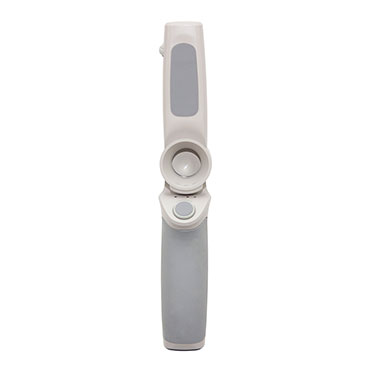
The minimum kit is a portable slit lamp, a rebound tonometer, and a handheld fundus camera, plus a vision chart and trial lenses. Our PSL-100 and PSL-150 portable slit lamps, the RT-100 rebound tonometer, and portable fundus imaging cover this entire checklist, and the whole set fits in cases you can lift into a vehicle.
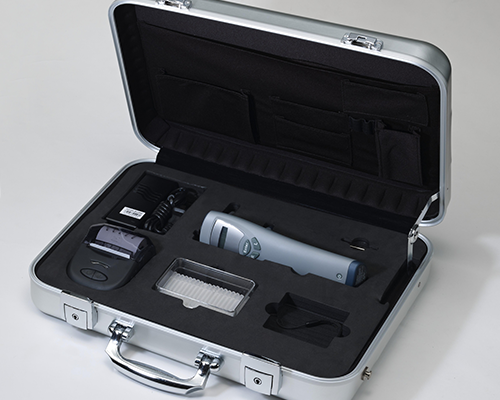
Let me go through the kit piece by piece, because the order matters.
Vision testing first. A simple digital or printed chart with a pinhole occluder catches the largest share of correctable problems. Cheap, light, and nearly unbreakable. No battery needed for the printed version, which is a genuine advantage on a long day.
Anterior segment next. This is where the portable slit lamp earns its place. Our PSL-100, PSL-150, and S150 models give you the same basic examination you would do on a clinic unit: lids, conjunctiva, cornea, anterior chamber, lens. If you are screening for cataract, trachoma, or pterygium, this is the instrument that finds them. Battery-powered versions let the team keep working even when the generator is off.
Pressure reading. The RT-100 rebound tonometer runs on two AA batteries and weighs about 200 grams, which makes it the most field-friendly option we sell. No air puff, no topical anaesthetic needed, no heavy base. A nurse with five minutes of training can use it. This is the instrument that turns a screening from “we looked” into “we measured.”
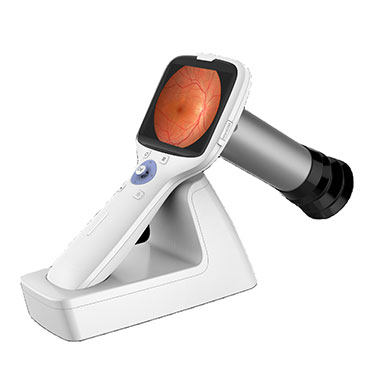
Fundus check. Handheld fundus imaging is the fastest-growing piece of this kit, because diabetic retinopathy screening depends on it. A handheld fundus camera lets you photograph the retina and store the image for later review. That image can travel with the referral, which we will come back to in a moment.
What You Can Skip
Not every camp needs everything. If the camp is purely refractive, skip the tonometer. If it is purely cataract-focused, the fundus camera can wait. Start with the minimum that answers your clinical question, and grow from there. That keeps the budget real and the kit manageable.
How Do You Manage Power, Dust and Transport Shock?
This is the section I wish every buyer read twice, because it is where the money actually goes. The instruments are the visible cost. The environment is the hidden cost.
Plan for power with batteries and spares, plan for dust with sealed instruments and cases, and plan for transport with proper packing. Our RT-100 runs on two AA batteries, our portable slit lamps are built for camp conditions, and every unit ships in packaging designed for freight, so the same habits protect your kit in the field.
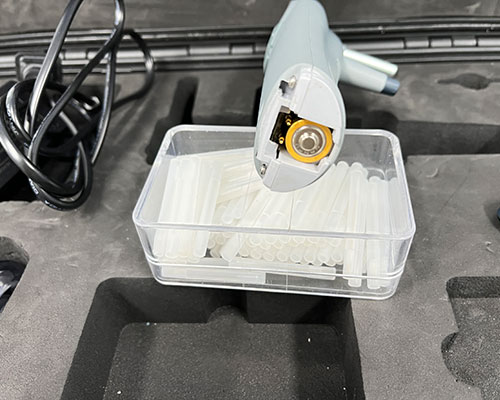
Power is the number one field failure, so let me be blunt about it. A rechargeable instrument is only as good as the charging opportunity. In a camp with a working generator, that is fine. In a camp where the generator runs four hours a day, you need instruments that do not need to charge at all. AA-battery devices are the workhorse answer here, because you can carry a box of AAs anywhere. The RT-100’s two-AA design is not an accident; it is a field decision.
Dust is the second killer. Open-hinge instruments collect dust in the hinges and on the optics. Look for sealed housings, and buy good cases. A simple rule I use: if you would not trust the instrument loose in a backpack, it needs a case. Every Hongdee unit ships in packaging built for freight, and that same packaging mentality should follow the kit into the field.
Transport shock is the silent third. Remote roads in Australia, dirt tracks in Kenya, boat transfers between islands in Southeast Asia. A hard case with foam inserts absorbs most of it. I have seen portable slit lamps arrive with perfectly aligned optics and I have seen them arrive misaligned. The difference was almost always the case, not the road.
A Simple Field Checklist
| Before leaving base | During the camp | After the camp |
|---|---|---|
| Charge all rechargeable units | Keep instruments in cases when idle | Wipe dust off all housings |
| Pack spare AA batteries | Store units out of direct sun | Clean optics with proper cloths |
| Check cases and foam inserts | Note any rough handling | Log any performance changes |
| Test one reading per device | Keep the printer paper dry | Report faults before next trip |
How Do You Record and Follow Up Referrals Without a Clinic Network?
A camp that finds a problem and then loses the patient has only half done its job. Follow-up is the part that feels like paperwork, but it is the part that makes screening meaningful.
Use paper or simple digital forms that travel with the patient, and capture one clear referral point per finding. Record the tonometry reading, the fundus image, and the camp location and date. That record lets a regional hospital or a visiting surgeon act on the finding without re-examining from zero.
The practical problem is that most camps do not have a clinic network behind them. The team packs up, moves on, and the patient is left holding a piece of paper. So the record has to be self-explanatory. A nurse at a district hospital in Zambia, or a visiting optometrist in rural Australia, should be able to read your referral and know what was found and what is needed.
This is where handheld fundus imaging earns its keep twice. The image taken at the camp can be printed or shared digitally with the referral. The hospital sees the actual retina, not just a description. For diabetic retinopathy in particular, that image can be the difference between a patient being seen promptly and a patient being told to “come back later.”
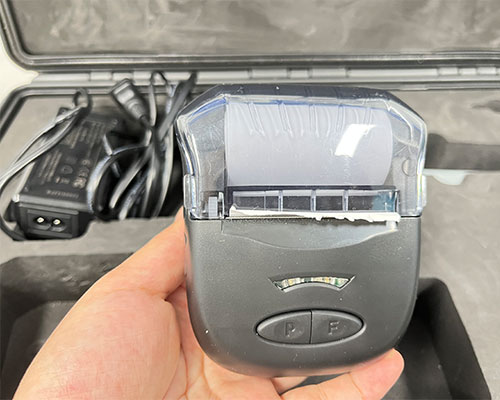
Our RT-100 with the optional printer gives you the same advantage on the pressure side. The printed reading goes with the referral. No transcription errors, no “I think it was about 24” conversations. The number is on paper.
Keeping the Record Simple
| Record element | Why it matters | Who uses it |
|---|---|---|
| Patient name, age, village | Identification and demographic patterns | Hospital, camp organizer |
| Visual acuity | Baseline for refraction referrals | Optometrist |
| IOP reading + time | Glaucoma follow-up trigger | Ophthalmologist |
| Fundus image | Diabetic retinopathy decision | Retina specialist |
| Camp name, date, examiner | Traceability and audit | NGO, ministry of health |
Keep the form to one page. If the form needs a second page, simplify the form.
What Does a Realistic Per-Unit Budget Look Like?
Money is where good intentions stall, so let me be straight about how to think about it. I will not invent prices, because they change with configuration, volume, and shipping route. But I can give you a structure.
Budget in three layers: the core instruments, the environment kit, and the logistics. The environment kit, cases, batteries, and spares, often costs as much again as the instruments if you plan honestly. For illustrative planning, assume roughly 60% of the total budget goes to instruments and 40% to power, cases, spares, freight, and training.
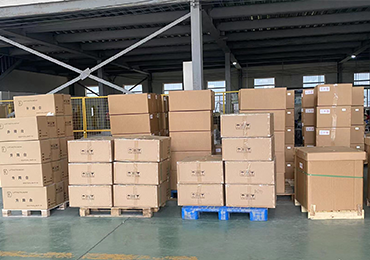
That 60/40 split surprises people, so let me explain it. The instruments are priced, published, and easy to compare. The environment kit is the silent cost: hard cases, spare batteries, a solar or generator charging setup, cleaning supplies, printer paper, and freight to the destination country. Freight alone to Africa or remote Australia is a real line item. And training is not free either, though a live-stream walkthrough from us at Hongdee is a lot cheaper than flying a technician out.
Here is a worked illustrative example, clearly an assumption, not a quote. A two-instrument starter kit might sit around 60% of budget. Adding the third instrument, cases for all three, a spare battery pack, freight, and a day of training brings the total up. The ratio stays roughly the same as you scale, because the environment scales with the kit.
Scaling From One Team to Many
| Team size | What changes | What stays the same |
|---|---|---|
| 1 camp team | Starter kit, one set of cases | Training approach, referral forms |
| 3 camp teams | Volume pricing on instruments | Environment ratio, spares policy |
| Regional program | Central spares depot, pooled training | Per-unit costs fall, planning load rises |
One more honest point: the cheapest quote is rarely the cheapest outcome. A unit that dies in month three, with a spare part that takes months to arrive, costs more than a slightly dearer unit that runs for years. That is why our 12-month warranty, free replacement within warranty, and 10-day unconditional return matter on paper, but the real protection is buying instruments built for the conditions you actually face.
Conclusion
Equip the camp for the environment, not the catalogue. Battery power, sealed housings, and hard cases beat raw specs in the field, and a portable slit lamp, RT-100 tonometer, and handheld fundus camera cover the full basic screening. Plan the budget around instruments plus environment, and we at Hongdee will help you configure it.