



You found the right slit lamp at the right price, and now the hard part starts: the payment terms, the minimum order quantity, and the fear that your deposit disappears with the container. Every buyer I meet, from the USA to Algeria, feels this. We at Hongdee think payment terms are a trust signal, not just cash flow.
The short answer: negotiate terms that share risk, not terms that just lower the price. Industry-standard payment in this sector is a large advance with the balance on receipt, which is exactly what we at Hongdee use, 98% advance and 2% on receipt. A supplier willing to hold part of the payment until you accept the goods is signalling confidence in their own quality control.
Let me be clear about one thing from the start. I am a manufacturer, and I have sold to distributors in Italy, Thailand, and Singapore, and to clinics across North America and Africa. I have sat on both sides of this negotiation. So I can tell you what is real, what is negotiable, and what you should walk away from.
What Payment Structures Are Standard in This Industry?
Before you negotiate, you need a map of the territory. Payment structures in the ophthalmic equipment trade follow a fairly predictable pattern, and knowing the pattern keeps you from being surprised.
The dominant structure is a large advance with the balance on receipt of goods. Our terms at Hongdee are 98% advance and 2% on receipt, and that is typical of the serious manufacturers in this sector. You will also see letters of credit, which protect both sides, and occasional net-term offers, which are rare and usually come with a price premium.
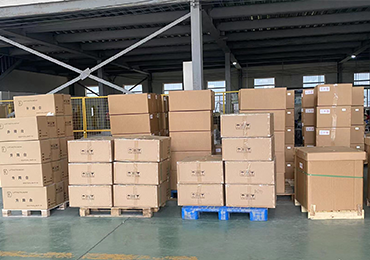
Let me walk through the structures you will actually encounter.
Advance plus balance on receipt. This is the workhorse. The buyer pays most of the order value upfront, and the last small share on receipt. At Hongdee, that split is 98% advance, 2% on receipt. The 2% is small, but it matters symbolically: the supplier will not be paid in full until the goods are accepted. That is a quality signal, and I will come back to why it matters.
Letter of credit. The bank intermediates. The supplier ships, presents documents, and the bank pays against the documents. This protects both sides, and it is common for large orders or first-time relationships. The cost is bank fees and paperwork, and some smaller suppliers simply do not have the treasury staff to handle it.
Net terms. Full payment thirty or sixty days after delivery. You will rarely see this from a first-time manufacturer, because it means the supplier funds your inventory for two months. When you do see it, ask what the price includes, because the interest cost is usually buried somewhere.
Deposit only, no balance on receipt. This is the structure to be careful with. A supplier asking 100% upfront, or a large advance with no acceptance-linked balance, is not sharing any risk. That does not make them dishonest, but it removes the strongest quality signal you have.
Payment Structures Compared
| Structure | Buyer risk | Supplier risk | When it fits |
|---|---|---|---|
| 98% advance, 2% on receipt | Low, strong QC signal | Low | Standard stock orders |
| Letter of credit | Low, bank-protected | Low, bank-protected | Large or first orders |
| Net 30/60 | High, but deferred cash | High, funds your stock | Established relationships |
| 100% upfront | High, no QC signal | None | Avoid for first orders |
How Does MOQ Differ Between Stock Models and Customised Units?
Minimum order quantity is the second fear, especially for small clinics and young distributors. The honest answer is that MOQ is not one number. It depends entirely on what you are buying.
Stock models, the catalogue standard units, carry the lowest MOQ, often one unit or a small number, because we at Hongdee build them on a running production line. Customised units, with your logo, your colour scheme, or ODM changes, carry higher MOQs, because they interrupt the line and need dedicated tooling and labelling.
Let me separate the three tiers, because buyers constantly confuse them.
Tier one: stock models. A standard slit lamp, an auto refractometer, a lensmeter from the catalogue. These are built continuously. Our factory capacity is 5000 pieces per month, so adding a few units to a production run costs almost nothing. The MOQ can be as low as a single unit. This is what a clinic buying its first tonometer needs to know: you do not need to buy ten to get a fair price.
Tier two: private label. Your logo printed on the unit, your name on the box, maybe your warranty paperwork inside. This needs label runs and packaging changes, so the MOQ rises. Logo printing is a standard service we offer, and it is the most popular tier for distributors building their own brand.
Tier three: ODM. You want a custom configuration, a different colour, a modified feature set, or a design based on your specification. This is real engineering work, tooling, and testing, and the MOQ reflects that. If a supplier quotes you a tiny MOQ for real ODM work, ask what they are actually delivering, because true customisation has real setup costs.
MOQ by Order Type
| Order type | Typical MOQ | What drives it |
|---|---|---|
| Stock models | 1 unit and up | Running production line |
| Logo printing | Small batch | Label and packaging runs |
| Custom packaging | Medium batch | Dedicated print setup |
| ODM configuration | Larger batch | Tooling, engineering, testing |
Here is the practical tip. If you are a distributor, order a mix: a larger MOQ on the stock items that sell steadily, and single units of new models to test the market. That way you build volume pricing on your real sellers without betting your cash on unproven lines.
What Should a Deposit Actually Buy You?
A deposit is not just money leaving your account. It is a purchase of specific commitments, and you should know exactly what you are buying before you pay a single dollar.
A deposit should buy you three things: a confirmed production slot, a fixed price, and a documented order specification. At Hongdee, that includes our on-sale service, where we share production progress with photos and videos, so your deposit buys visibility, not just a place in the queue.
Let me unpack those three commitments.
Commitment one: a production slot. When you pay the deposit, your order enters the schedule with a confirmed position. Ask for a production start date and a completion date in writing. If a supplier cannot give you a dated production plan, your deposit is buying a promise, not a slot.
Commitment two: a fixed price. The deposit locks the price against currency moves and material cost changes. That matters more than it looks, because a six-month lead time can see steel, glass, or electronics prices move. Confirm in writing what the deposit locks.
Commitment three: a documented specification. The deposit should trigger a formal order confirmation: model numbers, configurations, accessories, packaging, and labelling. If the spec is vague at deposit time, the delivery argument will be painful. We at Hongdee share production progress with photos and videos during manufacturing, so the spec is visibly being followed, and you can raise issues weeks before shipment, not on arrival day.
What Your Deposit Buys, Checked
| Commitment | How to verify it | Red flag |
|---|---|---|
| Production slot | Dated production plan in writing | “We will start soon” |
| Fixed price | Price locked in the order confirmation | “Prices may change” |
| Full specification | Itemised order confirmation | “Standard configuration” |
| Production visibility | Progress photos and videos | No updates until shipping |
How Do You Structure Terms to Reduce Quality Risk?
This is the section that separates smart buyers from lucky ones. The payment structure is your best quality tool, because it creates consequences. A supplier who knows part of the payment depends on your acceptance will behave differently from one who is already paid in full.
Use the balance-on-receipt share as your acceptance gate, pair it with a written inspection procedure, and add a return window and warranty that survive the payment. Our terms include a 10-day unconditional return and a 12-month warranty with free replacement, and the 2% balance on receipt means we are never fully paid until you have the goods in hand.
Here is the structure I recommend, and it maps closely to how we run our own terms.
Step one: keep an acceptance-linked balance. Even a small share, paid only after you receive and check the goods, changes the dynamic. At Hongdee, the 2% balance on receipt is that gate. It is small enough to be painless for both sides and large enough to keep the supplier honest about shipping quality goods.
Step two: define inspection in the contract. What happens when the unit arrives? Unpack, check against the itemised confirmation, power on, and test basic functions. If the unit is faulty, what happens? Our answer is a 10-day unconditional return and free replacement within the 12-month warranty. Put the equivalent in your own agreements, in writing, before the deposit.
Step three: protect yourself after payment. The warranty and return terms must survive the final payment, or they are worthless. Read the clause that describes what happens after the balance is paid. If the warranty evaporates on payment, that is not a warranty.
The Risk-Reduction Structure
| Layer | What it does | Our equivalent |
|---|---|---|
| Acceptance balance | Supplier paid fully only on your OK | 2% on receipt |
| Return window | Fast exit if goods are wrong | 10-day unconditional return |
| Warranty | Long-term protection | 12 months, free replacement |
| Delay penalty | Supplier shares the cost of lateness | 2-3% discount if shipping is delayed |
| Documentation | Your registration and certification papers | ISO 13485, ISO 9001, CE, ETL, FDA, SGS |
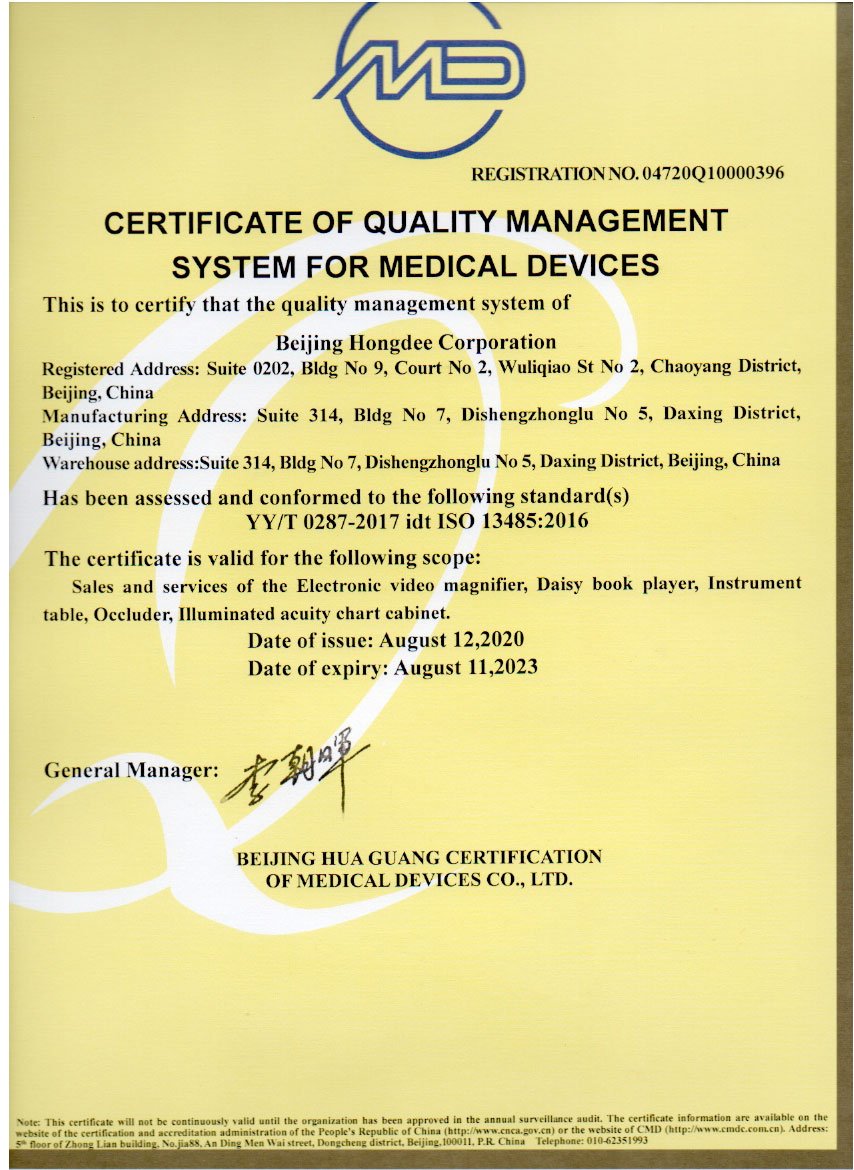
One more point about certification. A common buyer pain point is paperwork gaps, the clinic that cannot register the device locally because the supplier cannot provide the right certificates. So ask about documentation at the negotiation stage, not after payment. Our certifications, ISO 13485, ISO 9001, CE, ETL, FDA, and SGS, exist so your registration path is shorter, not longer.
What Should Trigger a Move to Better Terms?
Terms are not static. They are a relationship that evolves, and both sides benefit when it does. The question is knowing when you have earned better terms, and when you should ask.
Move to better terms when you have history, volume, and clean claims. A track record of on-time payments and zero warranty disputes earns a supplier’s trust, and trust is what unlocks lower deposits or net terms. At Hongdee, distributors who prove themselves with repeat orders and clean claim records are the ones who negotiate from strength.

Let me give you the honest trigger list.
Trigger one: repeat orders. One order is a transaction. Three orders are a relationship. After two or three clean cycles, you have data: the supplier delivers, and you pay on time. That data is worth real money to both sides.
Trigger two: clean claim history. If you have not abused the warranty and your returns are minimal, you have proven you are a low-risk customer. Suppliers price risk into terms. Low-risk customers should not pay the same as high-risk ones.
Trigger three: volume growth. When your order value climbs, your negotiating position climbs with it. Volume is the strongest single lever in this industry, and the 5000-pieces-per-month capacity means we can grow with you.
Trigger four: logistics performance. Ask for the delay discount up front. We offer a 2-3% discount if shipping is delayed, and that clause exists precisely so the buyer is compensated for our mistakes. If a supplier will not even discuss a delay penalty, that tells you how they think about risk.
The Trigger Checklist
| Trigger | What it proves | What to ask for |
|---|---|---|
| 2-3 clean repeat orders | You pay on time, they deliver | Lower deposit share |
| Zero warranty abuse | You are a low-risk customer | Faster turnaround on claims |
| Rising order volume | You are growing their business | Better pricing on stock models |
| Consistent logistics | The relationship works end to end | Net terms, if you want them |
And the final honest note. Do not ask for better terms on your first order, because you will not get them, and asking wastes goodwill. Build the relationship first. Our door is open, our terms are published, and our production is visible. The negotiation starts with the facts, and the facts are on the table.
Conclusion
Negotiate terms that share risk: an acceptance-linked balance, a real return window, a warranty that survives payment, and a delay penalty. MOQ depends on stock, logo, or custom orders. We at Hongdee publish 98% advance, 2% on receipt, a 10-day return, and a 12-month warranty, because confidence is a product too.