

A polished quotation is not enough for a first order. The real risk is a mismatch between the supplier, the legal seller, the quoted model, and the documents your market requires.
Evaluate a Chinese ophthalmic equipment supplier by tracing the company, exact model, configuration, documents, support, and acceptance terms before paying a deposit.
At Hongdee, we narrow first-order due diligence to evidence that can be checked. This is not a broad guide to buying from China. It is a file-and-model traceability exercise.
Which supplier identity and legal documents should you verify first?
Similar company names can hide different responsibilities. Identify the legal seller, manufacturer, and representative before the quotation becomes an obligation.
Match the contracting entity, invoice entity, bank beneficiary, website identity, and product documentation. Request company registration details and clarify which party is responsible for manufacture, export, service, and regulatory representation.

Build an identity chain
We recommend a one-page identity record. Write the supplier’s legal name exactly as shown on its quotation and contract. Record registered address, contact person, email domain, phone number, website, and the name that will appear on shipping documents. Then ask whether the same entity manufactures the product, or whether another named factory does so.
Do not treat a website photograph, an email signature, or a marketplace profile as independent proof. Ask for documents that are relevant to the transaction and permitted to be shared. Compare names, addresses, model references, and dates across the quotation, invoice, manual, label photograph, and regulatory file. Differences are not automatically fraud, but they need an explanation.
The supplier should also identify its responsibility after delivery. Who answers technical questions? Who issues a replacement part? Who handles a nonconformity? Who is the exporter of record? We ask these questions because a buyer can otherwise end up with a sales contact but no clear accountable party.
Verify against your market’s official route
There is no universal approval database that settles every country. A US buyer may consult FDA databases and registration resources. A European buyer must consider the applicable EU framework and economic-operator roles. Australia, Brazil, Japan, and other markets have their own authorities and rules. Registration or listing, where applicable, does not by itself prove that a specific quotation is lawful for your intended use.
Use the destination authority’s official site, and record the date checked. Ask the supplier for the exact certificate or declaration, not a generic badge. At Hongdee, we treat regulatory discussion as model- and market-specific and ask buyers to involve their local compliance professional.
How do you prove that the quoted model matches the documented model?
The word “slit lamp” or “fundus camera” names a category, not a complete product identity. Accessories, software, electrical versions, and intended uses can change the compliance and acceptance questions.
Create a model traceability table linking the quotation, product label, manual, specification, images, accessories, software, and regulatory documents. Do not release a deposit while a material model or configuration mismatch remains unexplained.

Compare identifiers, not marketing names
Ask for the exact model number, revision where relevant, electrical input, included accessories, software version or name, and serial-number format. Request a photograph of the model label on a representative unit if available, while recognising that a photograph is not a substitute for inspection. Compare those identifiers with the user manual, quotation, packing list, and declaration.
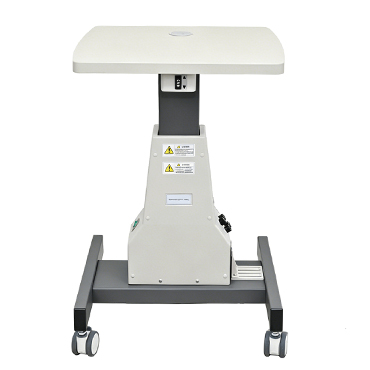
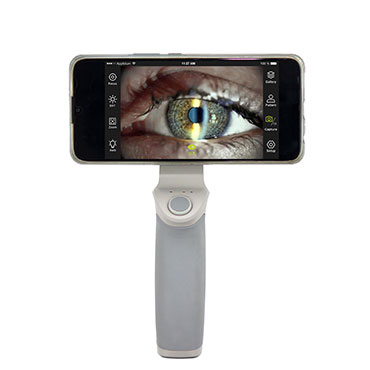
A product page may describe a family of configurations. The quotation must state which configuration you are buying. For a slit lamp, this might include illumination or imaging options. For a table, it might include movement or control options. For a camera, it might include software and storage dependencies. We do not infer technical functions from an image or assume that two visually similar models share documents.
Trace each promised accessory
Use an accessory matrix. List the main unit, power cable, adapters, chin rest or supports where applicable, software, manuals, spare items, and any country-specific component. Add a column for evidence and another for acceptance. This prevents a free-text “complete set” from hiding a missing item.
| Trace point | Evidence | Hold point |
|---|---|---|
| Exact model | Quote, label, manual | Before deposit |
| Configuration | Written accessory and software list | Before production |
| Intended use | Model-specific documents | Before import review |
| Electrical version | Specification and label | Before shipment |
| Serial identity | Packing and release records | At receipt |
Hongdee’s digital slit lamp page and ophthalmic motorized table page can help frame the questions. Buyers should still request the exact configuration in their own quotation.
What should you ask about quality records, testing, and change control?
A supplier can send a certificate and still leave the buyer unable to connect it to the ordered model. Evidence is useful only when its scope is clear.
Ask for model-specific or scope-clear quality evidence, release checks, complaint and change-control processes, and instructions for handling defects. Treat certificates as documents to verify, not as automatic proof of clinical performance.
Request a controlled evidence pack
The evidence pack may include a current manual, specification, label photograph, sample test or release record, packing list, applicable declaration, service instructions, and a change-notification route. The exact set depends on the device and destination. Ask when each document was issued and which model it covers. Redact confidential information only in a way that preserves identity and scope.
We do not invent accuracy percentages, certification status, or inspection outcomes. A supplier’s quality statement is not independent verification. If a document is important to import, registration, insurance, or clinical use, your local regulatory adviser should confirm its acceptability. The US FDA device registration and listing resources explain the agency’s official route, but US information does not automatically determine another market.
Make changes visible before shipment
Ask what happens if the model, component, software, label, or manufacturing site changes between sample approval and shipment. Require notification and a written decision on whether the change is acceptable. This matters because a buyer may approve one configuration and receive another that looks almost identical.
Set a pre-shipment document gate. The order should not move to release until the buyer has checked the final model, accessories, shipping marks, and required documents. A remote video call or inspection service may help, but neither replaces the contractual acceptance terms.
How can you test communication and service before the first order?
A supplier’s response before payment is a useful signal, but fast replies do not prove future service. Test the process with specific, answerable questions.
Run a small evidence-based communication test: ask model, document, installation, spare-part, training, and defect questions; record response quality; and put agreed service boundaries into the order.
Use a repeatable question set
Send the same written questions to the responsible contact. Ask how the unit is installed, what the buyer must prepare, which checks occur before shipment, what information is needed for troubleshooting, and how a damaged or nonconforming item is reported. Ask whether remote guidance, parts, or paid service are available, but do not convert an answer into a promise until it appears in the commercial documents.
We also ask buyers to send a sample acceptance checklist and request the supplier’s comment. A capable commercial process should be able to map the checklist to the model. If the reply changes the model number, omits an accessory, or avoids a key document, pause and resolve it.
Use contract language that can be checked
The order should identify model, configuration, quantity, documents, packaging, delivery term, inspection or acceptance method, defect notification, and the responsible parties. Avoid vague language such as “standard quality” when a functional or documentary requirement matters. Do not hardcode a universal tariff, tax, approval timeline, or clearance promise. Local experts should check those items.
Finally, save the entire due-diligence file with dates and versions. Include the quotation, correspondence, documents, review notes, and final acceptance record. That file supports future reorders and makes a later discrepancy easier to identify.
For a broader service contact, see Hongdee’s service page and quote request page. For official context, review FDA device registration and listing, the EU Medical Devices Regulation overview, and WHO’s procurement process resource guide. Sources checked 2026-10-12; destination-market review remains the buyer’s responsibility.
Conclusion
Before a first deposit, trace the party, model, documents, configuration, and acceptance route. At Hongdee, we help buyers turn those checks into a clear quotation file. Ask Hongdee for model details.