


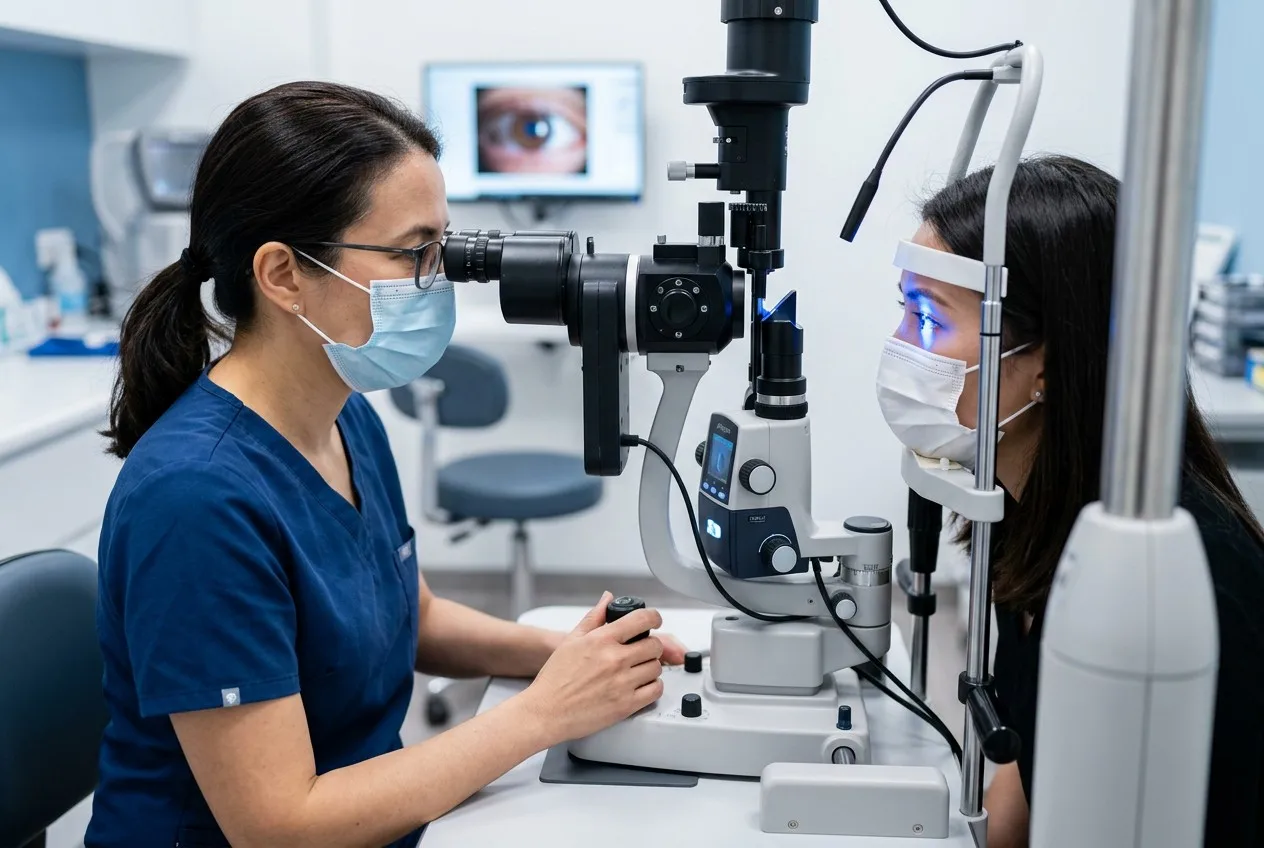
Starting a new clinic is stressful because equipment costs eat your capital fast. I know you worry about overspending on features you might never use during daily exams.
To choose the right slit lamp, you must balance optical quality with your specific diagnostic needs and budget. Focus on a reliable Haag-Streit or Zeiss style lamp with at least 10x and 16x magnification, durable LED illumination, and a comfortable mechanical base for long-term use.
I have seen many doctors buy the most expensive model only to realize they just need a solid workhorse for 90% of their patients. Let me guide you through the real-world choices we make here at Hongdee.
Why Is a Slit Lamp the First Investment for a New Clinic?
You cannot run a clinic without a clear view of the anterior segment. It is the most used tool in your office, so a cheap, shaky lamp will frustrate you every single day.
A slit lamp is the primary diagnostic tool for examining the eye’s structure and is essential for everything from contact lens fittings to detecting cataracts. It acts as the centerpiece of your exam room, establishing professional trust with your patients through detailed visual evidence.
The Diagnostic Foundation
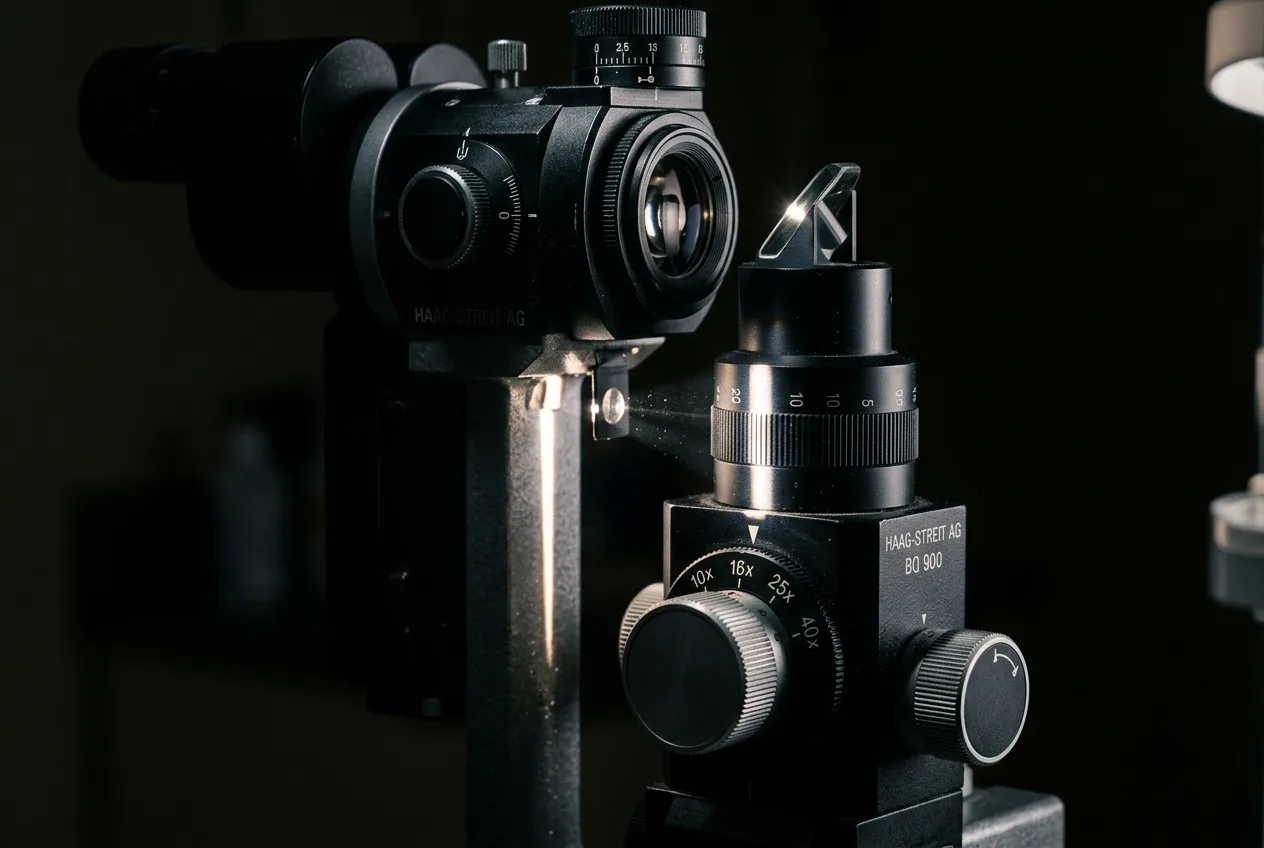
I always tell my customers that the slit lamp is like a surgeon’s scalpel. You use it for almost every patient who walks through your door. Whether you are checking for a foreign body or performing a complex retinal exam with a 90D lens, this machine is your eyes. If your optics are fuzzy, your diagnosis will be fuzzy too. At Hongdee, we have spent 15 years perfecting the lens coatings because we know how much a crisp image matters to a busy doctor.
Building Patient Trust
When a patient sees their own eye on a screen or through high-quality optics, they understand their condition better. This visual “proof” makes it much easier to explain why they need a specific treatment or a new pair of glasses. I have found that clinics using our digital imaging systems see a 30% higher treatment compliance rate. People believe what they see.
Long-term ROI
| Feature | Impact on Clinic | Value Level |
|---|---|---|
| Optical Clarity | Accurate diagnosis | High |
| Mechanical Stability | Faster exams | High |
| Digital Upgradability | Better records | Medium |
| Brand Reliability | Lower downtime | High |
What Magnification and Illumination Do I Really Need?
It is easy to get distracted by high-end specs that look good on paper but do not help in the chair. You need to know which numbers actually affect your clinical outcomes.
For a standard optical clinic, you really only need 10x and 16x magnification for 95% of your routine eye exams. LED illumination is the modern standard because it provides a cooler, whiter light that lasts for years without needing expensive bulb replacements or maintenance.
Magnification Realities
Most doctors I talk to admit they rarely go above 16x or 25x magnification. While a 5-step drum (6x, 10x, 16x, 25x, 40x) is nice to have, a 3-step drum is often more than enough for a startup. We actually manufactured for Topcon for three years, and we learned that consistency in the optical path is more important than the highest magnification number. If the image is sharp at 16x, you can see almost everything you need.
Choosing the Light Source
The debate between LED and Halogen is mostly over. LED is the winner for new clinics. Halogen bulbs give a “warmer” light that some older doctors prefer, but they burn out and get hot. LEDs stay cool, which is more comfortable for the patient, and they maintain a consistent color temperature. At Hongdee, we use high-CRI LEDs so you get the most natural color rendition possible.
Illumination Specs Comparison
- Halogen: Warm light, 200-500 hours life, high heat, frequent bulb changes.
- LED: White light, 50,000+ hours life, low heat, zero maintenance.
How Do I Compare Digital vs Optical Slit Lamps for My Budget?
You might be torn between a traditional optical-only lamp and a modern digital imaging system. The price gap can be thousands of dollars, making it a tough decision for a new business.
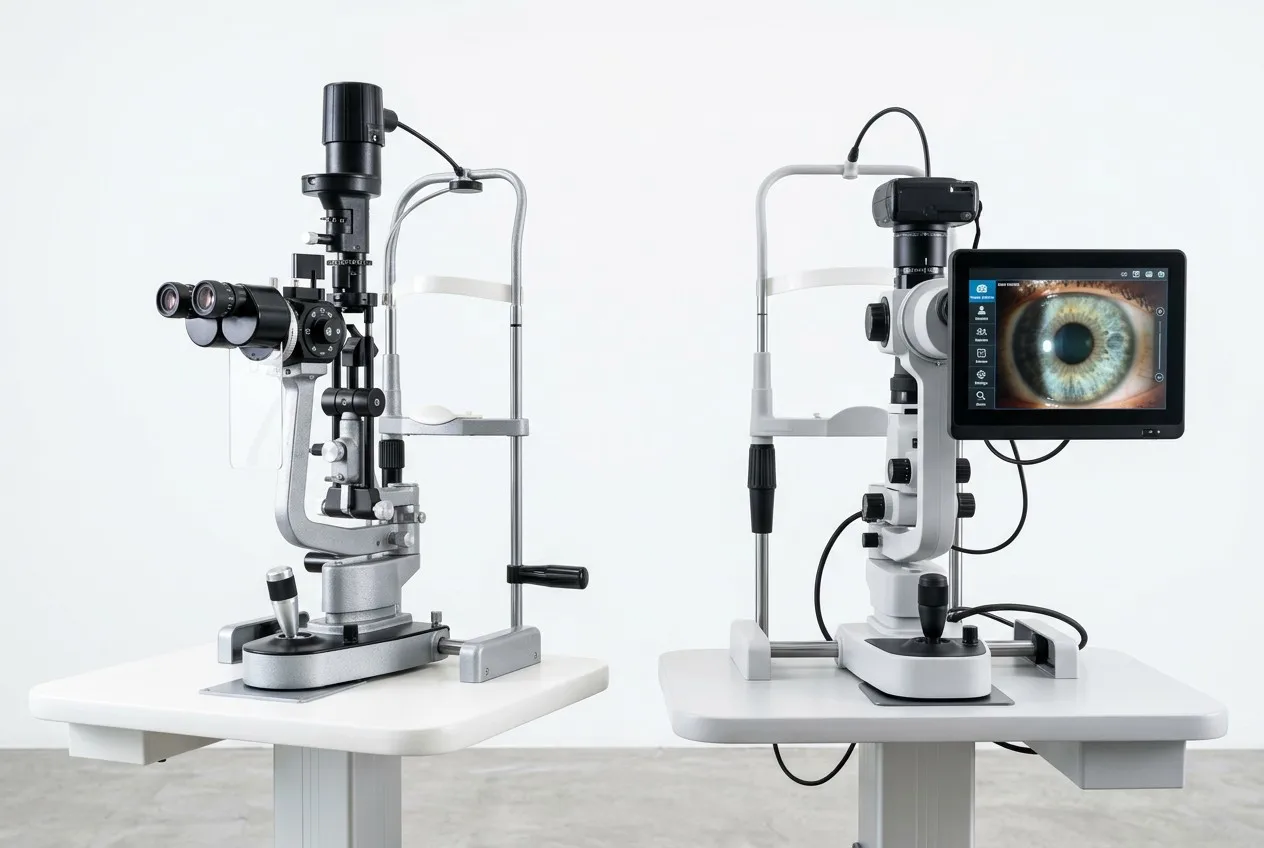
Digital slit lamps allow you to capture photos and videos for patient records and education, which is becoming a legal and professional requirement. If your budget is tight, choose a high-quality optical lamp that is “digital-ready,” allowing you to add a camera module later as your clinic grows.
Why Digital Matters Now
In 2026, patients expect digital records. If you refer a patient to a specialist, sending a high-res photo of the pathology is much better than a hand-drawn sketch. I have helped many clinics in Thailand and the US set up these systems. Our Hongdee digital modules are designed with universal adapters, so they fit almost any brand of slit lamp you might already have. This flexibility saves you from being locked into one expensive ecosystem.
The “Digital-Ready” Strategy
If you cannot afford the $5,000+ for a full digital setup today, don’t worry. I suggest buying a solid optical base that has a beam splitter interface. You can buy the camera part next year. This way, you get the best optics now without the full financial hit. Our CEO often talks to customers directly about these staged upgrades because we want you to stay in business long-term, not just sell you a box today.
Cost vs Feature Breakdown
| Setup Type | Best For | Estimated Cost |
|---|---|---|
| Optical Only | Routine Refraction | $1,500 – $2,500 |
| Digital-Ready | Future Growth | $2,000 – $3,000 |
| Full Integrated Digital | Specialized Care | $4,500 – $8,000+ |
What Should a Slit Lamp Cost in 2026 and Why Do Prices Vary So Much?
Price transparency is rare in the medical device world, and it drives me crazy. You see the same-looking machine priced at $2,000 and $12,000, and you wonder if the cheap one is junk.
A reliable, mid-range slit lamp should cost between $2,000 and $4,500 in 2026. The price variation is usually due to optical coatings, mechanical precision, and the country of origin. Premium European brands charge for their name, while quality Chinese manufacturers like Hongdee offer 90% of the performance at 30% of the price.
Understanding the Price Gap
A big part of the price is the brand markup. When we were an OEM for Topcon, the same level of engineering was sold at a much higher price point. Now, under our own Hongdee brand, we pass those savings to you. But beware of “too cheap” lamps. If a lamp is under $1,000, the mirrors are likely plastic or the mechanical tracks will wobble within six months. We use aircraft-grade aluminum and multi-coated glass because we know your reputation depends on your equipment.
Avoiding Hidden Fees
Many distributors won’t tell you about the “extra” costs. Import duties, shipping insurance, and installation fees can add 20% to your bill. I always give my customers a flat quote that includes these details. Plus, if we ever delay a shipment by even a few days, we offer a 2-3% discount automatically. We respect your timeline because opening day for a clinic is a big deal.
Typical 2026 Price Ranges
- Economy (Entry-level): $1,200 – $1,800 (Risky for long-term use)
- Value (Hongdee Range): $2,000 – $4,500 (Best for most clinics)
- Premium (European/Japanese): $8,000 – $15,000 (Overkill for standard exams)
How Do I Get My Slit Lamp Shipped and Serviced Without Headaches?
Buying the machine is only half the battle. If it arrives broken or stops working in two years, your clinic stops making money. You need a partner, not just a seller.
Look for a supplier that offers a multi-year warranty, provides free spare parts, and has experience with international shipping and customs documentation. At Hongdee, we provide free repairs and have a dedicated team to help with FDA and CE paperwork to ensure your equipment clears customs without delays.

Shipping and Logistics
I have seen too many machines destroyed by bad packaging. We use triple-walled boxes and custom foam inserts. Since we have 300+ customers and 60+ distributors worldwide, we know the “danger zones” in international shipping. We also provide “live factory tours” via video call. You can see your actual unit being tested and packed before it leaves our facility. It’s the next best thing to being here in China.
After-Sales and Maintenance
What happens if a motor fails in three years? For our clients, we ship spare parts immediately via DHL at no charge during the warranty period. We also provide video tutorials for simple calibrations. You don’t need a $200/hour technician for basic maintenance. Because our CEO is accessible and our team is responsive, we solve problems in hours, not weeks. We also keep parts in stock for at least 10 years after a model is discontinued.
Service Checklist for Buyers
- [ ] Is there a minimum 1-year warranty?
- [ ] Are spare parts readily available in your country?
- [ ] Does the seller assist with FDA/CE registration?
- [ ] Can you talk to a real person if something breaks?
Conclusion
Choosing a slit lamp doesn’t have to be a gamble. If you focus on solid optics, reliable LED light, and a supplier that stands behind their shipping and service, you will have a tool that lasts a decade. At Hongdee, we are here to help you build your dream clinic with equipment you can trust.