



Are you feeling overwhelmed by the hundreds of equipment choices for your new clinic? One wrong purchase can waste thousands and frustrate your staff. We provide this 2026 checklist to simplify your startup.
Opening a new eye clinic requires a strategic mix of mandatory diagnostic tools like slit lamps and tonometers, alongside refraction lane essentials such as phoropters and auto refractometers. By following our 2026 checklist, you can balance clinical excellence with financial efficiency, ensuring your practice is equipped for modern AI-driven screenings and digital imaging.
We have helped over 300 customers set up their clinics from the ground up. Whether you are opening a small solo practice in Singapore or a large hospital department in Italy, the foundation remains the same. Let us walk you through the essential gear you need to start seeing patients.
What Equipment Does a New Eye Clinic Actually Need: Mandatory vs. Optional?
Do you find yourself tempted by every new “high-tech” gadget you see in trade magazines? It is easy to blow your budget on “bells and whistles” you rarely use. We help you prioritize the “must-haves” that generate 90% of your clinical value.
Mandatory equipment includes a slit lamp, a tonometer, a phoropter, and an auto refractometer, which form the core of every eye exam. Optional equipment like fundus cameras, auto perimeters, and advanced AI screening software can be added later as your patient volume and specialized services grow.
The “Core Four” of Every Exam Lane
Without a slit lamp, you cannot perform a basic ocular health check. Without a phoropter, you cannot prescribe glasses. These are the tools that pay the bills. At Hongdee, we recommend starting with high-quality, durable versions of these core tools. It is better to have a reliable manual phoropter than a cheap, buggy digital one that breaks during a busy Monday morning.
Scaling for the Future
Once your core lane is running, you can look at “optional” gear that adds new revenue streams. For example, a fundus camera allows you to perform diabetic screenings. An auto perimeter lets you manage glaucoma patients. These are “optional” at day one, but “essential” for a growing practice. By 2026, we also see more clinics adding digital imaging systems to their slit lamps to show patients their own eye conditions, which significantly improves treatment compliance.
| Priority | Equipment Category | Primary Goal |
|---|---|---|
| Mandatory | Refraction & Ocular Health | Basic Vision Correction |
| Important | IOP & Retinal Screening | Glaucoma & Diabetes Mgmt |
| Advanced | Visual Field & Imaging | Specialized Diagnostics |
| Optional | AI Diagnosis & Automated Labs | High-Volume Efficiency |
What’s on the Essential Diagnostic Equipment Checklist: Slit Lamp, Tonometer, Fundus Camera, and Auto Perimeter?
Are you worried about missing a critical diagnosis because your equipment isn’t sharp enough? In 2026, diagnostic precision is the benchmark of clinical success. We provide the diagnostic foundation that helps you catch eye diseases early.
The diagnostic checklist includes a high-resolution slit lamp for anterior segment checks, a tonometer for intraocular pressure (IOP) measurement, a fundus camera for retinal imaging, and an auto perimeter for visual field testing. These instruments are the primary tools for identifying glaucoma, cataracts, and retinal disorders.

The Slit Lamp: Your Primary Window
We often say the slit lamp is the heart of the clinic. For 2026, we recommend a slit lamp with a built-in imaging system. The ability to capture 4K photos of the cornea or lens is no longer a luxury; it is the standard for modern documentation. Our Aupha series is designed specifically for this, providing the optical clarity needed for both routine exams and complex surgical follow-ups.
Managing IOP and the Retinal View
Glaucoma remains a leading cause of blindness. You need a reliable tonometer—either an applanation model for traditional accuracy or a rebound tonometer for patient comfort. Alongside this, a portable fundus camera has become a favorite for clinics in 2026. It allows you to screen patients in any room, or even take the device to nursing homes. This flexibility is a huge advantage for modern, mobile practitioners.
Visual Field Testing in 2026
Traditional “big bowl” perimeters are still the gold standard, but they take up a lot of space. We offer compact auto perimeters that fit into a standard exam lane corner. This allows you to offer full glaucoma management without needing a dedicated “dark room.”
| Instrument | 2026 Tech Trend | Clinical Impact |
|---|---|---|
| Slit Lamp | 4K Digital Integration | Better patient education |
| Tonometer | Non-contact / Rebound | No anesthesia required |
| Fundus Camera | AI-assisted screening | Faster referral decisions |
| Perimeter | Compact footprint | Better space utilization |
What Belongs on the Refraction Lane Equipment Checklist: Phoropter, Auto Refractometer, Lensmeter, and Vision Chart?
Do you find that your manual refraction process takes too long, causing a backlog in your waiting room? Efficiency in the refraction lane is the key to a profitable optical business. We build equipment that makes the “exam-to-glasses” process fast and accurate.
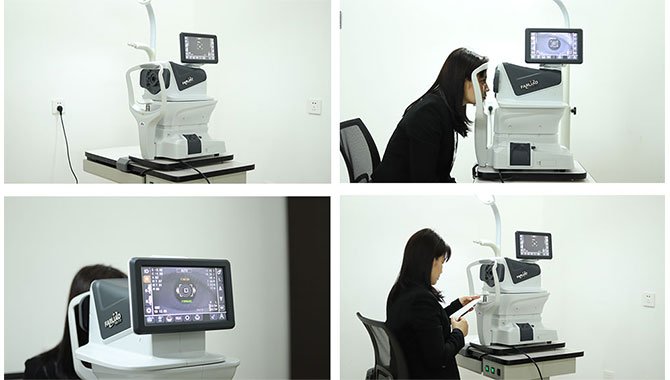
The refraction lane requires an auto refractometer for quick initial measurements, a phoropter (manual or digital) for final refining, a lensmeter to check old prescriptions, and a high-resolution LCD vision chart. Together, these tools ensure an accurate final prescription and a smooth workflow for the optometrist.
Speeding Up the Initial Assessment
An auto refractometer like our ARK-710 is a “workhorse.” In about 30 seconds, you get a highly accurate starting point for your manual refraction. This saves the doctor about 3 to 5 minutes per patient. In a busy clinic, that adds up to an extra 10 patients per day. We also recommend a digital lensmeter that can read blue-light coatings and progressive lenses instantly, as these are very common in 2026.
The Refraction Experience
While digital phoropters are gaining popularity, many veterans still prefer the “feel” of a high-quality manual phoropter. We manufacture both. The key is to have a phoropter that moves smoothly and has clear, easy-to-read markings. For the vision chart, the old “printed boards” are gone. We now use LCD charts that include specialty tests for color blindness, contrast sensitivity, and childhood vision screening.
Why Quality Matters in Refraction
If your refraction gear is slightly off-calibration, your patients will get the wrong glasses. They will come back unhappy, demanding a refund. This “re-do” cost is the hidden killer of optical profits. By sourcing precision gear from a factory that OEM’s for global leaders, you ensure that every prescription you write is perfect the first time.
| Refraction Tool | Standard Choice | Modern 2026 Choice |
|---|---|---|
| Refractometer | Manual Retinoscope | Auto Refractometer w/ Keratometry |
| Phoropter | Manual | Digital / Remote-Controlled |
| Vision Chart | Projector | LCD Screen w/ Video Loops |
| Lensmeter | Manual / Focimeter | Digital Auto Lensmeter |
What Exam Room Furniture Do You Need: Chairs, Stands, Stools, and Instrument Tables?
Are you ignoring the comfort of your doctors and patients while focusing only on the “big machines”? A tired doctor makes mistakes, and an uncomfortable patient doesn’t return. We design exam room furniture that balances ergonomics with a professional look.
Essential furniture includes a motorized patient chair, a sturdy equipment stand, an ergonomic doctor’s stool, and height-adjustable instrument tables. A unified “chair and stand” system is the most efficient way to house your instruments while providing a comfortable experience for both the patient and the practitioner.
Creating a Hub for Efficiency
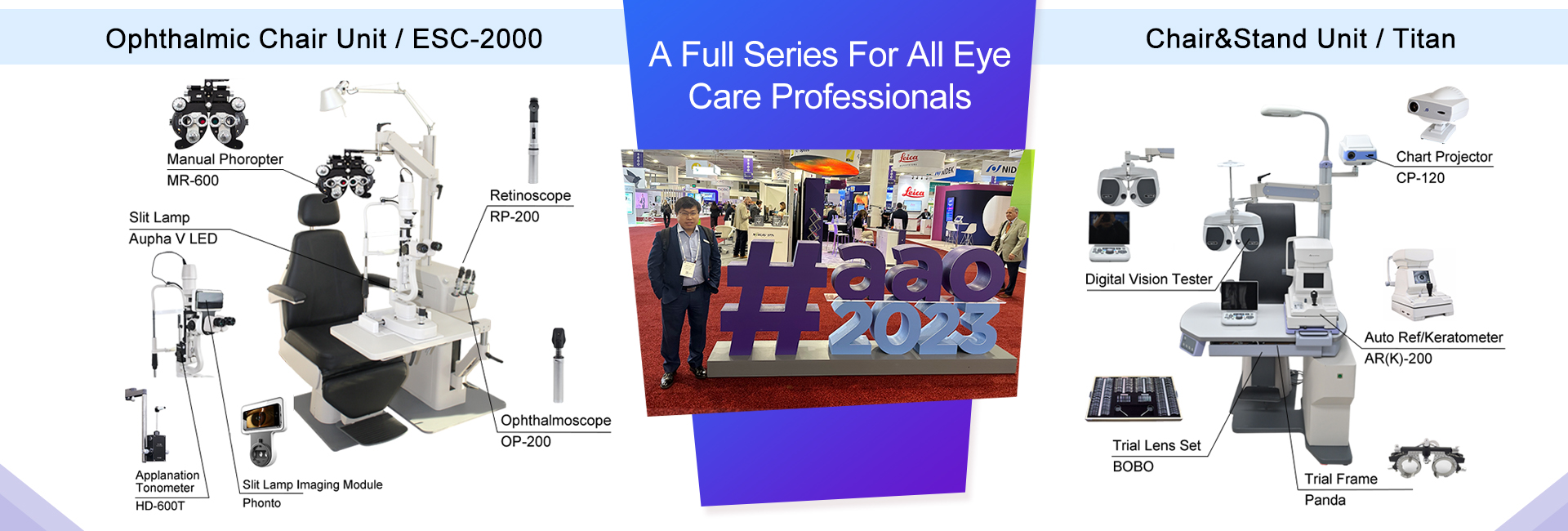
As we discussed in our earlier articles, an integrated unit like the TITAN or HULK is the foundation of a modern room. It holds the slit lamp and phoropter in a way that allows the doctor to sit in one place. You don’t want to be constantly standing up or dragging heavy tables across the floor. This “all-in-one” design is the #1 choice for new clinics in 2026 because it looks great and works even better.
Don’t Forget the Doctor’s Health
Ophthalmologists spend 8 to 10 hours a day sitting. A cheap stool will lead to chronic back pain. We provide stools with proper lumbar support and smooth-rolling wheels. Similarly, if you have standalone instruments, motorized tables are essential. They allow you to adjust the height for a child or a patient in a wheelchair in seconds.
The “Aesthetic” Factor
When you open a new clinic, your furniture sets the tone. If your chair looks old or worn, patients feel they are getting “old” care. Our modern designs use durable, medical-grade upholstery that stays looking new for years. It is a small investment that makes a big difference in how your brand is perceived in the local community.
| Furniture Item | Must-Have Feature | Benefit |
|---|---|---|
| Patient Chair | Motorized lift & recline | Accessibility for all ages |
| Equip. Stand | Balanced phoropter arm | Ease of movement |
| Doctor Stool | Ergonomic back support | Long-term career health |
| Instrument Table | Motorized height adjustment | Wheelchair patient friendly |
How Do You Estimate Total Investment by Clinic Type: Solo Practice, Group Practice, or Hospital Department?
Are you worried about running out of cash before your clinic even opens? Budgeting for an eye clinic is complex because the price range for equipment is so wide. We help our partners categorize their investment into tiers to match their business plan.
Total investment varies significantly: A “Tier 1” solo practice focusing on basic refraction requires a lower entry cost, while a “Tier 3” hospital department with advanced surgical and AI diagnostics requires a much larger budget. Understanding these tiers helps you avoid over-purchasing and ensures a faster return on investment (ROI).
Tier 1: The “Essential” Startup
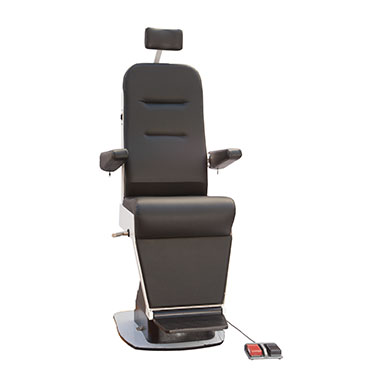
This is for the optometrist opening their first retail shop or a small community clinic. The focus is on refraction and basic eye health. You need the “Core Four” and a simple chair/stand setup. We often recommend our most cost-effective Beijing-made models for this tier. They offer the best ROI because they are durable but don’t include features you won’t use.
Tier 2: The “Advanced” Private Practice
In this tier, you are competing with established clinics. You need a fundus camera and an auto perimeter. You probably want a digital phoropter to look more “high-tech” to your patients. This setup allows you to charge more for comprehensive eye exams. This is where most of our 300+ customers sit—balancing professional gear with smart spending.
Tier 3: The “Full-Service” Center or Hospital
Here, budget is less of a concern than capability. You need multiple lanes, surgical suites, and specialized AI-driven diagnostics. You need a partner like Hongdee who can supply 10+ lanes at once and provide long-term maintenance contracts. This tier focuses on “throughput”—how many patients can we see per day with zero downtime?
| Clinic Tier | Ideal Setup | Budget Focus |
|---|---|---|
| Solo / Retail | Refraction + Basic Health | Lowest Entry Cost |
| Specialty Clinic | Full Diagnostic Suite | Clinical Capability |
| Hospital Dept. | Multi-lane + Specialized Lab | Durability & Support |
New, Refurbished, or China-Sourced: How Do You Maximize Value at Each Tier?
Are you debating between buying “used” name-brand equipment or “new” equipment from China? This is the most common question we get from new owners. In 2026, the answer has shifted toward new, high-quality Chinese manufacturing for better long-term reliability.
Choosing new, China-sourced equipment from a reputable manufacturer provides the best value by offering modern digital features, a full factory warranty, and long-term spare parts availability. While refurbished “big brand” gear may seem attractive, it often lacks current digital connectivity and comes with high maintenance risks.

The Problem with Refurbished Gear in 2026
Ten years ago, a used Topcon or Zeiss slit lamp was a great deal. But today, those older machines don’t have the digital sensors or AI compatibility needed for modern practice. You also face the risk of “hidden” wear and tear. When a used motor fails, finding a spare part for a 15-year-old machine can be impossible. We see many distributors struggling to support these “orphaned” machines.
Why “New” is the Smart Business Move
When you buy new gear from Hongdee, you get a 12-month warranty and a partner who is invested in your success. You also get a machine that is ready for the 2026 digital ecosystem. Our machines are built with the same QC standards we use as a Topcon OEM partner. This gives you the “prestige” of a new clinic and the “peace of mind” that your gear won’t quit on you.
Maximizing Your Capital
As a new business owner, cash flow is king. By sourcing from China, you can often equip two full lanes for the price of one Western lane. This allows you to double your patient capacity from day one. That is the ultimate way to maximize value—buying tools that allow you to work faster and see more people.
| Option | Pros | Cons |
|---|---|---|
| New (Western) | Highest brand prestige | Very high cost, slow ROI |
| Refurbished | Familiar brands | No warranty, aging tech |
| New (Hongdee) | Best value, modern tech, warranty | New brand to learn |
Conclusion
Opening an eye clinic in 2026 requires a smart balance of core diagnostics and modern digital tools. By following this checklist and choosing a reliable manufacturing partner, you can build a practice that is both clinically excellent and highly profitable.