


Your customers keep asking for same-day glasses, and your outsourced lab keeps saying tomorrow. Every “tomorrow” is a sale walking to the shop down the street. We at Hongdee hear this from optical retailers in Italy, Thailand, and everywhere in between. Turnaround time is the weapon, and edging in-house is how you load it.
The short answer: a minimum viable edging lab needs four machines, an auto lensmeter for verification, a lens edger, a groover, and a tracer or blocker. That chain covers most single-vision and progressive jobs, and it turns a multi-day outsourcing cycle into same-day delivery. Turnaround, not unit cost, is the real competitive advantage.
I have watched this decision from both sides. I have sold edging lines to retailers who were nervous about the investment, and I have watched the same retailers win customers they could never have reached before. Let me walk you through why it works and what you actually need.
Why Are Optical Retailers Bringing Edging In-House?
The outsourcing model looks cheaper on paper. You send the frame and the prescription out, you pay a per-job fee, and you never touch a machine. The hidden cost is time, and time is the product you actually sell.
Outsourcing trades money for time, and in a competitive retail market that trade usually loses. A same-day promise lifts conversion, because customers choose the shop that can deliver before the weekend, not the one that saves a few dollars. We at Hongdee see in-house labs paying for themselves on speed alone in well under two years.
Think about the customer’s real decision. Someone in Brisbane needs glasses before their trip, or someone in Milan needs them for a job interview on Thursday. The shop that says “tomorrow afternoon” wins. The shop that says “next Tuesday” loses. That is not a price decision; it is a speed decision, and speed is entirely within your control once you edge in-house.
There is also a quality argument that retailers rarely mention. When the job stays in the shop, you control the verification step. You check the finished lens against the prescription before the customer arrives. That one step catches the mistakes that create returns, and returns are pure cost.
And there is a margin argument hiding in the numbers. The per-job outsourcing fee adds up over a year. For an illustrative assumption, a shop doing a modest number of jobs a week might spend a meaningful share of its lens margin on lab fees. Those fees become machine payments instead, and the machine keeps working after the payment ends.
What Machines Form a Minimum Viable Edging Lab?
Start small and add later. The mistake is buying a dream lab on day one, with machines you will not use for two years. The minimum viable setup has four stations, and each one has a specific job.
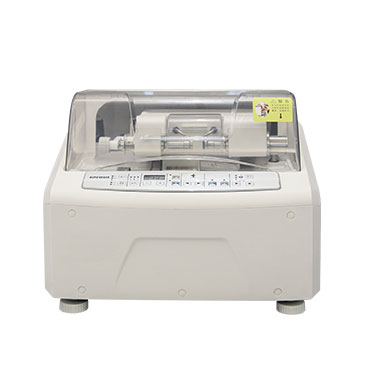
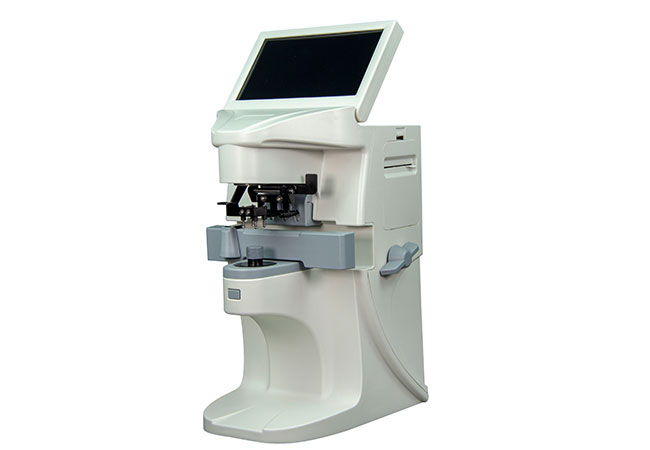
The core chain is: tracer or blocker to hold and measure the lens, edger to cut the shape, groover for grooved frames, and auto lensmeter to verify the result. Our auto lens edgers, lens groovers, and auto lensmeters cover this chain, and a digital lensmeter adds the verification depth that keeps returns low.
Let me go through the chain in the order the work flows.
First, the tracer. The tracer reads the frame shape so the edger knows what to cut. Some systems combine tracing and blocking, where the lens is mounted on a blocker before edging. If you are starting out, a combined tracer-blocker saves space and one step of learning.
Second, the edger. This is the heart of the lab. The auto edger cuts the lens to the traced shape. Modern auto edgers handle bevels automatically and switch between frame types with a touch. This is the machine that determines your throughput, so it deserves the largest share of the budget.
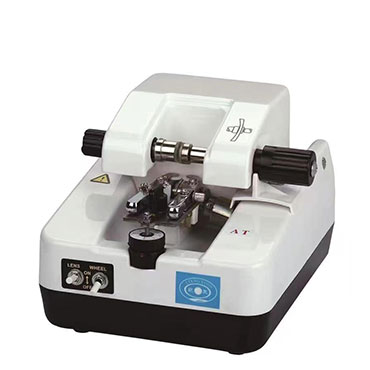
Third, the groover. Grooved frames, the nylon-cord style, need a groove cut into the lens edge instead of a bevel. If you sell any grooved frames, and most shops do, the groover is not optional. It is a small machine with a very specific job.
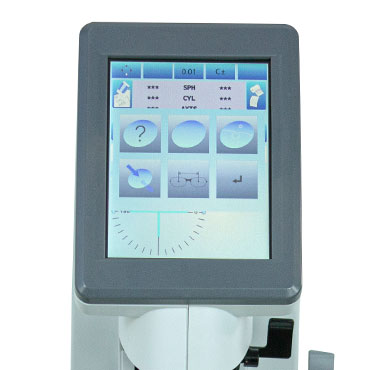
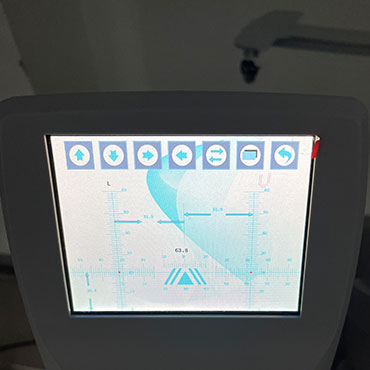
Fourth, the lensmeter for verification. Before the lens goes into the frame, you verify the prescription. An auto lensmeter reads the finished lens and tells you the sphere, cylinder, and axis. This is the quality gate. This is where you catch the job that would have come back as a return.
The Verification Habit
The most important machine in the lab is the one that checks the others. I have seen shops skip verification to save two minutes, then spend an hour on the phone with an angry customer. Build verification into the workflow, not as an occasional check, but as a step on every single job. It is the difference between a lab and a room with machines.
How Do You Calculate Payback Against Outsourcing Fees?
The payback question is the one every owner asks, and it deserves an honest, structured answer. I will not invent numbers for your market, but I can give you the framework, with an illustrative assumption clearly labelled.
Payback is the outsourcing fee per job, times your monthly job count, compared against the machine cost and running costs. For an illustrative assumption only, a shop outsourcing a few dozen jobs a week at a typical per-job fee can cover a basic edging setup within roughly a year to eighteen months. Speed and conversion lift are the upside on top of that arithmetic.
Let me structure the calculation properly.
The cost side. Your total includes the machines, freight, installation, training, consumables like polishing pads and coolant, and floor space. Our auto edgers and lensmeters ship with freight terms we can walk through, and a live-stream walkthrough from us at Hongdee covers training without travel cost.
The saving side. Every job you stop outsourcing saves the per-job fee. Multiply that by your real monthly volume. That is the core payback figure. Then add the softer savings: fewer lost sales, because same-day customers stop walking out, and fewer returns, because you control verification.
The revenue side. This is the part people forget. Same-day delivery is not just a cost saving; it is a product you can sell. A shop that advertises “glasses in one hour” prices itself differently. For an illustrative assumption, a modest conversion lift on even a small monthly customer count adds real money on top of the fee savings.
| Payback element | What it does to the number |
|---|---|
| Outsourcing fee per job | The saving per job |
| Monthly job volume | How fast savings accumulate |
| Machine + install + training cost | The investment being recovered |
| Consumables and maintenance | The ongoing cost that slows payback |
| Same-day conversion lift | Extra revenue beyond pure savings |
Which Lens Materials Demand Which Edging Capabilities?
Not all lenses cut the same way. If your shop sells progressive lenses and high-index materials, your edger needs to handle them without cracking edges or losing alignment. This is where cheap machines reveal themselves.
High-index and progressive lenses need an edger with smooth, controlled cutting and reliable axis alignment, because they are thicker at the edges and unforgiving of vibration. Our auto edgers handle these materials in normal use, and a digital lensmeter verifies the finished axis so progressive jobs go out correct.
Here is the practical breakdown. Standard CR-39 lenses are forgiving; almost any edger can cut them. Polycarbonate needs slightly more care. High-index materials, the thin, light lenses that premium customers buy, are the real test. They chip and crack if the edger vibrates or cuts too aggressively. And progressive lenses carry a hidden requirement: the axis of the finished lens has to match the prescription exactly, or the wearer gets headaches and the lens comes back.
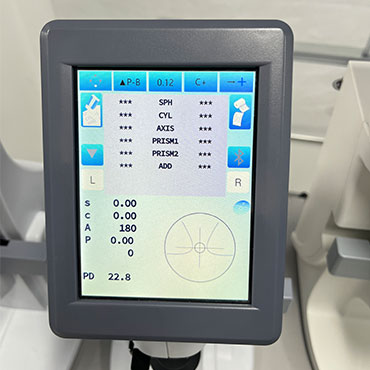
That is why the verification step matters twice for progressives. First you verify the uncut lens from the supplier, because a bad uncut lens wastes your edging time. Then you verify the finished lens, because axis errors slip in during edging. A digital lensmeter makes both checks fast and repeatable.
Material Quick Reference
| Material | Edging behaviour | What to check |
|---|---|---|
| CR-39 | Forgiving, easy to cut | Bevel quality |
| Polycarbonate | Medium difficulty | Edge chips |
| High-index | Cracks under vibration | Smooth cut, no fractures |
| Progressive (any base) | Axis-critical | Finished axis vs prescription |
| Photochromic | Normal cut, verify tint match | Tint consistency across pairs |
What Space, Water and Training Requirements Apply?
The practical questions are the ones that stop projects: how much floor space, do I need plumbing, and how long until my staff can actually run it? All three have honest answers, and none of them are as scary as owners fear.
A starter lab fits in a room of a few metres square, an auto edger needs a water connection for cooling plus a drain, and training is the part owners underestimate most. Budget real training time, because operator skill determines edge quality more than the machine price tag does. We at Hongdee provide one-to-one live-stream walkthroughs so your team learns on their own schedule.
Space first. The four-machine chain is compact. An edger takes the largest footprint, and the groover, lensmeter, and tracer stack neatly around it. Many retailers fit the whole chain into a converted back room or a corner of the dispensary. For an illustrative assumption, plan for a room roughly three by four metres and you will not feel cramped.
Water second, and this is the one that surprises people. The edger uses water to cool the lens while cutting. That means a supply line and a drain, or a recirculating system that reuses the water. Check your room for both before you commit, because retrofitting plumbing after installation is expensive.
Training third, and this is where I am most direct. The machines are capable, but the operator makes the difference. A well-trained operator on a mid-range edger beats a poorly trained operator on a flagship. So take the training seriously. Our live-stream product walkthroughs are one-to-one, so your staff ask questions in real time and practise while we watch. Video tutorials and user manuals back that up for the days after.
Space and Setup Checklist
| Requirement | Minimum | Nice to have |
|---|---|---|
| Floor space | 3 x 4 m room | Separate dirty and clean areas |
| Water | Supply line + drain or recirculator | Dedicated tap and floor drain |
| Power | Standard mains, stable supply | UPS for the edger |
| Storage | Shelf for uncut lens stock | Locked cabinet for high-value stock |
| Training | One-to-one walkthrough | Written SOPs for every machine |
One last honest point about timing. Do not open the lab on a Friday and expect full speed on Monday. Give the team a week of lower-volume work while they build the habit. The verification habit, the cleaning habit, the consumables log. Habits are what make a lab profitable, and habits take a little time to build.
Conclusion
Start with four machines: tracer, edger, groover, and lensmeter for verification. Same-day delivery pays for the lab faster than fee savings alone, and training decides whether the machines earn their keep. We at Hongdee supply the whole chain and walk your team through it live.