


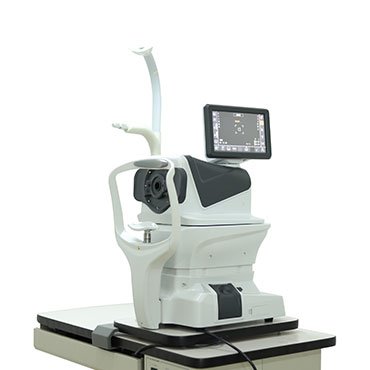
Buying the wrong instrument can leave a clinic with useful numbers but no clear workflow. We separate the measurement question from the purchase question.
A keratometer measures the curvature of the anterior cornea, while an auto refractometer estimates the eye’s refractive error. A combination auto refractor-keratometer can perform both, but it does not make the measurements clinically interchangeable.
At Hongdee, we recommend starting with the examination decision you need to support. Then we match the instrument, operator training, verification process, and service plan to that decision.
What does a keratometer actually measure?
A clinic may hear “eye measurement” and assume every device reports the same thing. That assumption creates poor specifications and confusing handovers.
A keratometer measures central anterior corneal curvature, usually expressed as radius or corneal power in principal meridians. It helps describe corneal astigmatism and supports contact-lens and clinical assessment workflows.
The surface question
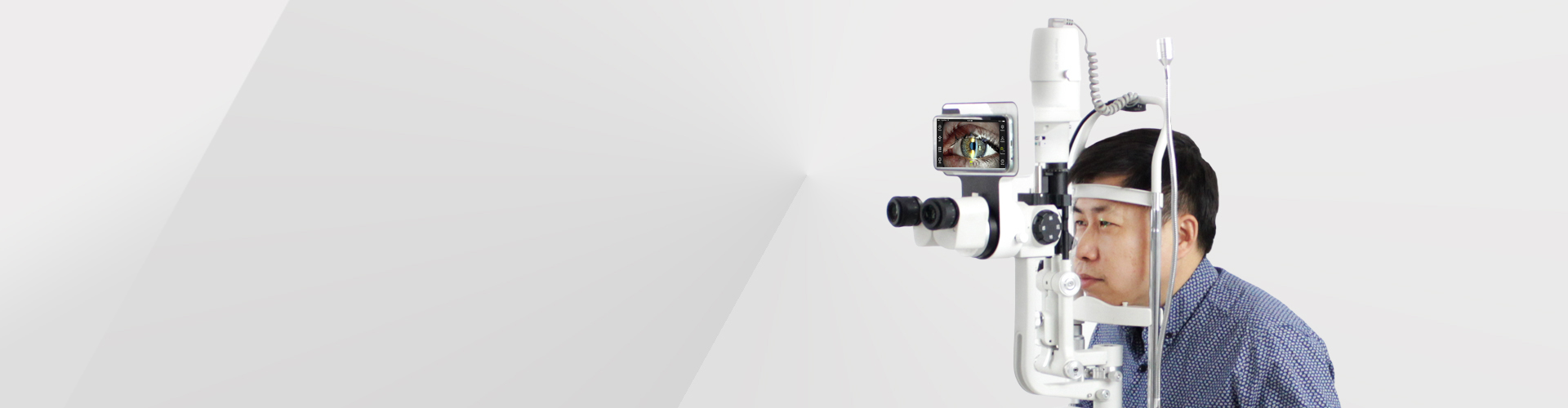
A keratometer uses reflected images from the cornea to estimate the curvature of a limited central zone. It does not measure the entire corneal shape. It also does not directly measure the eye’s total refractive error. Tear-film quality, fixation, alignment, and surface irregularity can affect the reading. Therefore, we treat the output as one measurement in a qualified professional’s examination, not as an automatic prescription.
The practical value depends on the use case. A contact-lens workflow may need principal meridians and corneal radius. A cataract or refractive assessment may need additional measurements that a basic keratometer cannot provide. A clinic that mainly performs routine refraction may need a different priority. We ask the buyer to define the measurement endpoint before comparing displays or print formats.
| Measurement question | Keratometer answer | Procurement implication |
|---|---|---|
| What surface is sampled? | Mainly the central anterior cornea | Ask about measurement zone and alignment |
| What is reported? | Curvature or corneal power in meridians | Confirm units, axis, and print fields |
| Is total refractive error measured? | No | Pair with refraction methods when required |
| What can disturb results? | Tear film, fixation, alignment, irregularity | Plan repeat checks and operator training |
Why curvature is not a prescription
Corneal power is only one component of the eye’s optical system. Lens power, axial dimensions, accommodation, ocular media, and other clinical factors affect refraction. A keratometer therefore answers “how curved is the measured corneal area?” It does not answer “what prescription should this patient receive?”
We also caution buyers about the word “automatic.” Automation can reduce manual calculation and standardise steps, but it cannot remove the need to inspect the patient, check the reading, and decide whether the result is usable. Specifications should state the intended workflow rather than promise an outcome.
For procurement, we would document the required corneal outputs, sample reports, patient positioning steps, cleaning method, calibration or verification instructions, and local service route. If the device will support contact-lens work, the clinic should confirm that the selected measurement range and reporting fields fit its qualified staff’s protocol.
What does an auto refractometer measure?
A refraction room needs an objective starting point, but a fast screen can be mistaken for a finished clinical decision. Buyers should separate speed from scope.
An auto refractometer estimates sphere, cylinder, and axis by analysing how light is returned through the eye. The result is an objective starting point for subjective refraction and clinical review, not automatically a final prescription.
The refractive-error question
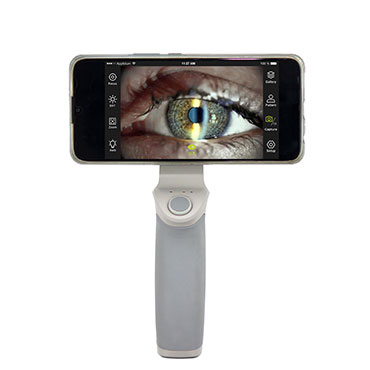
An auto refractometer is designed to estimate the eye’s refractive state. The instrument may report sphere, cylinder, and axis, depending on the model and selected mode. The operator still needs to control fixation, alignment, patient cooperation, and repeatability. Accommodation, dry eye, media opacity, unusual pupils, and other factors can influence the result.
The output is most useful when it fits a complete workflow. We ask who will review the printout, when subjective refinement occurs, and what happens when repeated readings disagree. A device that produces a neat printout but does not fit the room’s handoff process may slow the clinic down rather than help it.
Auto refractors also vary in measurement behaviour and available functions. Some combine keratometry. Some include other features. We never assume a combined label means identical performance across models. The buyer should request the exact data fields, operating modes, patient range, and user manual for the proposed configuration.
Refractometer versus keratometer
The simplest distinction is optical target. The keratometer focuses on corneal curvature. The auto refractometer estimates the eye’s refractive error. They can be used together because the questions complement one another. They should not be used as substitutes simply because both are placed near the patient’s eye.
At Hongdee, we suggest a side-by-side acceptance checklist: verify the displayed parameters, compare repeated readings under the clinic’s approved procedure, confirm print or export needs, and record the staff member responsible for final review. This protects the buyer from choosing based only on a product name.
When should a clinic choose a combination auto refractor-keratometer?
A combined instrument can save space, but one chassis does not remove the need to specify two separate measurement purposes.
Choose a combination auto refractor-keratometer when the clinic routinely needs both objective refraction and central corneal-curvature data, and when its staff can verify each output within a defined examination workflow.
Space, throughput, and handoff
Combination equipment can reduce bench changes and simplify the first measurement station. That benefit matters when room layout, operator time, and patient movement are constrained. It is not a reason to buy functions that the clinic will not use. Extra menus and reports can add training needs and create false confidence if staff do not know which result answers which question.
We recommend mapping the journey from patient arrival to qualified review. Who positions the patient? Who repeats an unstable reading? Who checks whether a corneal value is appropriate for its intended purpose? Who records the result in the clinic system? These questions often reveal that workflow design matters as much as hardware choice.
| Buyer priority | Separate instruments may fit when | Combination equipment may fit when |
|---|---|---|
| Main need | One measurement dominates | Both data types are used routinely |
| Room | There is bench space | Space and patient movement matter |
| Staff | Roles are specialised | One trained team handles the station |
| Verification | Different protocols are required | A unified checklist is practical |
Do not infer compatibility
A combined unit may offer printing, data transfer, or optional functions. We ask buyers to verify each exact configuration rather than rely on a general catalogue description. The clinic should confirm electrical requirements, language options, accessories, software interfaces, cleaning instructions, and service documentation before deposit.
The Hongdee ophthalmic auto refractometer page can help a buyer frame a product discussion, but the proposed model’s manual and configuration remain decisive. We also recommend a written question list covering measurement range, repeatability procedure, and acceptance records. A supplier can answer those questions more reliably when the buyer explains the intended workflow.
How should buyers compare the two instruments before ordering?
A specification sheet can look complete while omitting the decisions that matter during daily use. We use a workflow-led comparison instead.
Compare the optical measurement, required outputs, operator steps, verification method, integration needs, service documents, and intended clinical role. Do not rank a keratometer and an auto refractometer on one “accuracy” line.
Build a use-case test
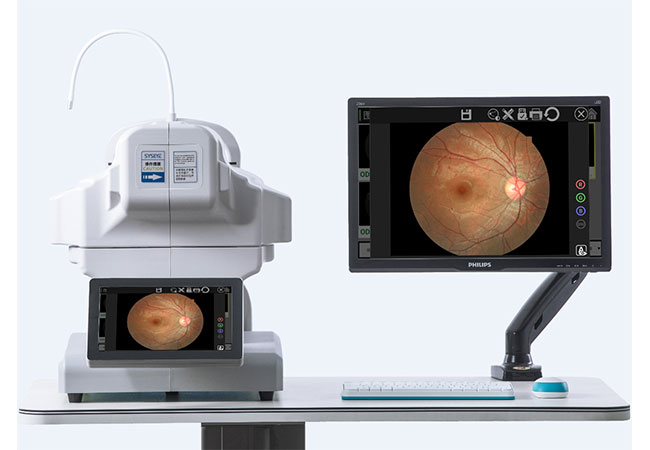
Write three or four ordinary scenarios before requesting a quotation. For example, the clinic may need a routine objective refraction, a central curvature reading for a qualified contact-lens workflow, a repeat measurement after an unstable result, and a printed record for review. Ask the supplier to show which screen, report, and operator action correspond to each scenario.
This approach exposes hidden differences. A device may display values that a buyer does not need. Another may require an accessory or software option. A third may be compact but less suitable for the clinic’s patient positioning or cleaning process. We recommend recording open questions rather than accepting verbal assumptions.
The American Academy of Ophthalmology has discussed agreement between autokeratometers and corneal topographers, while the NCBI overview of keratometry provides useful background on the measurement concept. These sources do not replace model-specific validation. They help buyers ask better questions about what the instrument measures.
A practical decision rule
If the clinic only needs objective refraction, start with the refractive workflow. If it needs corneal curvature for a defined purpose, add keratometry or select a combined device after confirming the outputs. If it needs detailed corneal mapping, do not assume a keratometer is a topographer. We keep those distinctions explicit in quotations.
Our digital slit lamp range is a separate example of why the intended examination role matters: imaging equipment may support documentation, but it does not turn every optical measurement into a diagnosis. At Hongdee, we help buyers prepare a model-specific checklist, then ask the qualified clinical team to approve the final workflow.
Sources and scope
- American Academy of Ophthalmology, “Autokeratometer, corneal topographer provide similar measurements,” https://www.aao.org/education/editors-choice/autokeratometer-corneal-topographer-provide-similar (accessed 2026-10-12; background on instrument agreement).
- NCBI Bookshelf, “Keratometry,” https://www.ncbi.nlm.nih.gov/books/NBK580486/ (accessed 2026-10-12; educational measurement background).
Conclusion
A keratometer describes central corneal curvature; an auto refractometer estimates refractive error. Choose by workflow, verify the exact configuration, and ask Hongdee for a model-specific procurement checklist.