


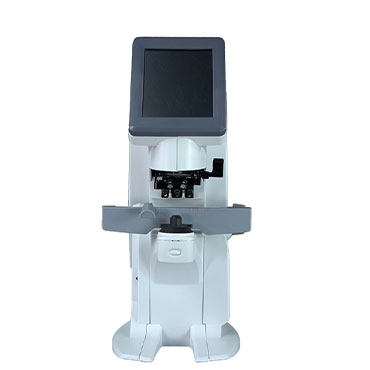
Measuring lenses by hand takes too much time and leads to staff errors. You need a fast, accurate way to check prescriptions without breaking the bank. We compare manual and auto options to help you choose.
Auto lensmeters deliver a better ROI for high-volume practices due to their speed, ease of use, and automated data entry. Manual lensmeters are more affordable and better for teaching or low-volume settings. However, the labor savings and accuracy of auto lensmeters like the Penguin Pro usually pay for themselves within 12 months.
At Hongdee, we see many clinic owners struggle with this choice. Some love the tradition of the manual lensmeter, while others want the latest tech. We have been manufacturing both for years, and we know exactly where each one fits. Whether you are in a busy optical store in the US or a small clinic in Brazil, understanding the Return on Investment (ROI) is key to your business growth.
What Does Each Type of Lensmeter Actually Measure and How Do They Differ?
Do both machines give you the same information, or does one do more? Understanding the measurement capabilities is the first step in choosing.
Both manual and auto lensmeters measure the sphere, cylinder, axis, and prism of a lens. Manual units use a target (mires) that the operator must focus by eye. Auto lensmeters use sensors to calculate these values instantly and can also measure UV protection and blue light filtering, which manual units cannot do easily.
The Manual Method: A Skilled Art
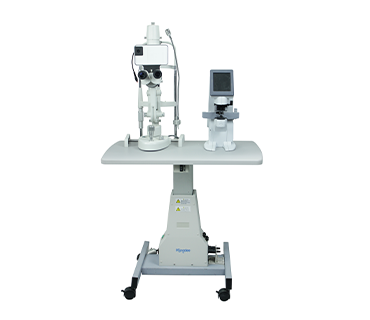
A manual lensmeter, like our standard internal model, relies on the user’s vision. You look through an eyepiece and move a dial until the “cross” or “dots” are clear. It requires a lot of skill to get an exact reading, especially for progressive lenses. We still sell many of these to schools and universities because they are great for teaching the basics of optics. But for a busy shop, they can be a bottleneck.
The Auto Method: Digital Precision
Auto lensmeters like the Penguin Pro use advanced algorithms to “see” the lens. You just place the lens on the support, and the machine finds the optical center and the power. It doesn’t matter if the operator is tired or has less experience—the machine gives the same result every time. This consistency is why modern practices are moving away from manual dials.
Extra Measurements: UV and Blue Light
One major advantage of modern auto lensmeters is the extra features. Our Penguin Pro can measure UV transmission and green light/blue light blocking. This is a great sales tool for optical shops. You can show a patient exactly how much UV their old glasses are letting through. This “show and tell” approach often leads to higher sales of premium lens coatings, which directly boosts your ROI.
| Feature | Manual Lensmeter | Auto Lensmeter (Penguin Pro) |
|---|---|---|
| Measurement Source | Human eye / Manual focus | Digital sensors / Auto-detection |
| Skill Requirement | High (Training needed) | Low (Easy for all staff) |
| Progressive Lenses | Very difficult to measure | Automatic detection and mapping |
| Extra Features | None | UV, Blue Light, PD measurement |
Speed, Accuracy, and Ease of Use: How Do They Really Compare?
How much faster is a digital machine, and does that speed lead to more mistakes? We break down the performance of both types in a real-world setting.
An auto lensmeter is 3 to 5 times faster than a manual one, taking only seconds to measure a pair of glasses. While a skilled operator can be very accurate with a manual unit, an auto lensmeter eliminates human error and eye fatigue. For most staff members, the auto lensmeter is much easier to learn and use.

The Learning Curve
We often hear from distributors in the Middle East and Australia that finding skilled staff is hard. Training someone to use a manual lensmeter takes days or weeks of practice. With our Penguin Pro auto lensmeter, a new employee can learn the basics in 10 minutes. This “ease of use” saves you money on training and lets your staff focus on selling and patient care instead of fiddling with dials.
Dealing with Progressives
If you have ever tried to find the “add” power on a progressive lens with a manual machine, you know the frustration. It is slow and prone to error. Auto lensmeters are designed for this. They recognize the lens type and guide the operator to the correct spot for the distance and near vision readings. This feature alone can save 5 minutes per pair of glasses.
Consistency Across the Team
In a clinic with three different technicians, a manual lensmeter might give three slightly different results. One person’s “clear” is another person’s “slightly blurry.” An auto lensmeter removes this subjectivity. Whether it is 9 AM or 5 PM, the Penguin Pro gives the same data. This reduces the number of lenses that are rejected or returned by the lab, which is a huge part of your ROI.
| Performance Metric | Manual Lensmeter | Auto Lensmeter |
|---|---|---|
| Time per Pair | 2-4 Minutes | 30-45 Seconds |
| Human Error Risk | High (Fatigue/Skill) | Very Low |
| Operator Fatigue | High (Eye strain) | Zero |
| Training Time | Weeks | Minutes |
When Does a Manual Lensmeter Still Make Sense for Your Practice?
Is the manual lensmeter dead, or does it still have a place in the modern eye care world? There are a few scenarios where old-school is still the best school.
Manual lensmeters still make sense for teaching environments, very low-volume clinics, or as a backup tool. They are also useful in regions with unstable power, as they do not require complex electronics to function. If you have a highly experienced optician who prefers the “feel” of manual focus, it can still be an effective tool.
The Teaching and Academic Value
For students, seeing the “mires” move and blur is the best way to learn how light behaves. You can’t learn the physics of optics just by looking at a digital screen. We continue to supply manual lensmeters to clinics in regions like Africa and Southeast Asia for this reason. They are durable, simple, and never go out of style for educational purposes.
Low Volume and Budget Constraints
If you only check one pair of glasses a day, the high price of an auto lensmeter might not make sense. A manual unit is much cheaper and will last 20 years with almost no maintenance. For a startup clinic in a developing market, saving money on the lensmeter can allow you to spend more on a high-quality slit lamp like our Aupha series. We always help our customers find the right balance for their specific budget.
Portability and Power Independence
Some of our manual models are very light and don’t need a constant power source. This makes them great for mobile clinics or remote eye camps. If you are traveling to a village to screen patients, you don’t want to worry about batteries or fragile screens. A manual lensmeter is a “tank” that keeps working no matter where you are.
| Scenario | Recommended Type | Why? |
|---|---|---|
| Optometry School | Manual | Best for learning optical theory |
| Busy Optical Shop | Auto | Maximum speed and sales features |
| Remote Eye Camps | Manual | No power needed, high durability |
| High-End Hospital | Auto | EMR connectivity and accuracy |
How Do You Calculate the Real Cost Per Lens Measurement and Payback Period?
How do you prove to your accountant that a new machine is worth the money? We show you the simple math behind the investment.
To calculate ROI, compare the time saved per day to your staff’s hourly wage. If an auto lensmeter saves 1 hour of labor per day at $20/hour, it saves $5,000 per year. With a typical price point for a Hongdee Penguin Pro, the machine pays for itself in less than 12 months through labor savings and reduced lens wastage.
The Labor Saving Calculation
Time is your most expensive resource. If you have a busy shop in the US or Europe, your optician’s time is very valuable. If they spend 2 hours a day measuring lenses manually, that is time they aren’t selling premium frames. By switching to an auto lensmeter, you cut that time to 20 minutes. The 90 minutes you saved can be used to see more customers, which is where the real profit lies.
Reducing Lab Costs and Returns
Every time a technician misreads a lens and the lab makes the wrong glasses, you lose money. Manual errors are the #1 cause of “remakes.” If an auto lensmeter prevents just 2 remakes a month, it saves you hundreds of dollars in lab fees and shipping. When we talk to our 300+ customers, they often say that the reduction in mistakes was the biggest surprise after switching to Hongdee.
Long-Term Maintenance and Value
A new Hongdee Penguin Pro comes with a full warranty. We offer free repairs and free replacements for parts. Compare this to a used “brand name” machine that might break next week. A new machine has a higher initial price, but a much lower “cost of ownership” over 5 years. Plus, our safe packaging and global shipping ensure the machine arrives ready to work from day one.
| Cost Factor | Manual (Low Initial) | Auto (High Initial) | 3-Year Total |
|---|---|---|---|
| Initial Price | Low | Moderate | Auto is higher |
| Labor Cost | High (Slow) | Low (Fast) | Auto saves $10k+ |
| Error Rate | 2-5% | <0.5% | Auto saves $2k+ |
| Training Cost | Moderate | Very Low | Auto saves $1k |
What Key Features Should You Look for in an Auto Lensmeter: UV, Green Light, and Connectivity?
Not all auto lensmeters are created equal. What are the “must-have” features that make a machine truly useful for your daily work?
Look for a green light source for higher accuracy with high-index lenses, UV measurement for patient education, and a large color touch screen. Connectivity to your EMR or digital phoropter is also vital for a modern, paperless workflow. These features ensure your equipment stays relevant as lens technology continues to advance.
Green Light Technology
Traditional lensmeters used white or yellow light. This can be less accurate when measuring modern “high-index” lenses because the light bends differently. Our Penguin Pro uses a green light source (Hartmann sensor technology). This provides a more stable and accurate reading for all lens materials, including the latest super-thin lenses. If you want to be the best in your city, you need this level of precision.
UV and Blue Light Testing
We mentioned this before, but it is a huge selling point. Patients are very worried about blue light from their computers and UV from the sun. Having a built-in sensor that can show them a percentage on the screen is powerful. It turns a boring measurement into a sales conversation. This is how you differentiate your clinic from the “big box” stores that just do basic tests.
Connectivity and Digital Lanes
The future of eye care is digital. Your auto lensmeter should be able to send its data to your computer or your digital phoropter. This stops your staff from having to write down numbers and then type them again later. It is faster and safer. All Hongdee digital equipment is designed to work together, creating a seamless flow from the front desk to the exam chair.
| Key Feature | Why It Matters | Hongdee Performance |
|---|---|---|
| Green Light Sensor | Accuracy for high-index lenses | Included in Penguin Pro |
| UV Measurement | Sales tool and patient health | 0-100% reading included |
| Touch Screen | Ease of use and speed | 7-inch color display |
| Data Output | Paperless workflow | RS-232 and WiFi options |
Conclusion
While the manual lensmeter is a classic tool, the auto lensmeter is the clear winner for ROI in a modern practice. It saves time, reduces errors, and helps you sell more premium products. We at Hongdee are here to help you upgrade your workflow today.
文件已保存到 articles/08-manual-vs-auto-lensmeter-roi.md