


Adjusting your equipment all day is tiring. If your table is too slow or too heavy, it slows down your entire clinic. We compare motorized and manual tables to help you pick the best workflow.
Motorized tables use electric motors for smooth, effortless height adjustments at the push of a button. Manual tables rely on physical hand-cranks or hydraulic pumps. Motorized tables significantly increase patient turnover in high-volume clinics, while manual tables offer unmatched reliability and portability for field work and budget lanes.
Every minute saved in an exam room adds up. At Hongdee, we have spent years perfecting table designs, including being a trusted OEM for brands like Topcon for over 3 years.
How Do Motorized and Manual Ophthalmic Tables Actually Differ in Operation?
You might think a table is just a flat surface. But how that surface moves affects your posture and your patient’s comfort. We explain the core operational differences between the two main types of tables.
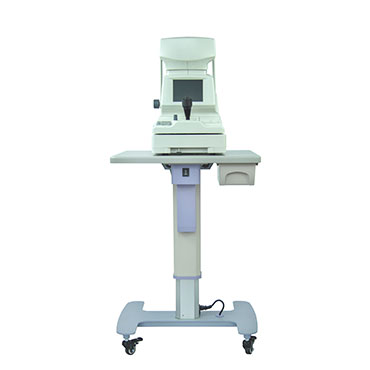
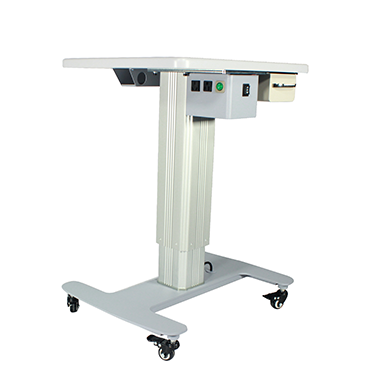
A motorized table, like our HD-18 series, uses an internal actuator to raise or lower the tabletop automatically. You control it with a toggle switch. A manual table requires you to physically turn a handle or pump a foot pedal to reach the correct height for each patient.
The Convenience of Electric Power
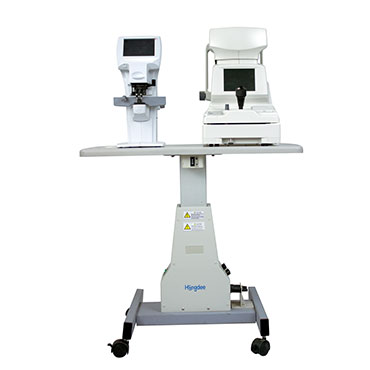
In a motorized setup, ergonomics come first. When a new patient sits down, you don’t need to lean over or strain your arms. You simply press a button, and the table moves to the exact height needed for the slit lamp or auto refractometer. This “hands-free” adjustment allows you to focus on the patient’s eyes rather than the equipment’s position. Our motorized tables are designed with “soft-start” technology so the patient doesn’t feel a sudden jerk when the motor begins to move.
The Simplicity of Manual Systems
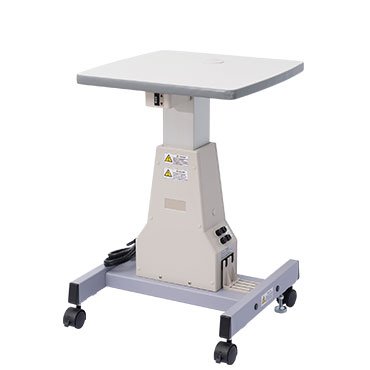
Manual tables are the “old faithful” of the eye care world. They don’t require an outlet, which makes them incredibly versatile. If you are running a clinic in a region with unstable power or doing home visits, a manual table like the Jack Pro is a lifesaver. You never have to worry about a motor burning out or a circuit board failing. However, the physical effort required for manual adjustment can lead to fatigue if you see 40 or 50 patients a day.
Operational Footprint
Motorized tables often require a slightly larger base to house the motor and electronics. This makes them very stable but a bit heavier to move around the room. Manual tables are typically lighter and easier to relocate. At Hongdee, we offer models with high-quality casters on both types, but if you need to move equipment between rooms frequently, the simplicity of a manual table is hard to beat.
| Feature | Motorized Tables | Manual Tables |
|---|---|---|
| Power Source | Electricity (Wall Outlet) | Human Power (Crank/Pump) |
| Ease of Use | High (Push-button) | Moderate (Physical effort) |
| Speed | Consistent and Fast | Depends on the operator |
| Weight | Heavier (due to motor) | Lighter and Portable |
What Are the 4 Real Factors to Compare: Adjustment Speed, Comfort, Durability, and Maintenance?
Buying a table is a long-term decision. You need to look past the price tag and consider how it will perform over five or ten years. We break down the four most critical factors you should compare before buying.
When comparing tables, focus on adjustment speed for patient flow, patient comfort during the exam, long-term durability of the moving parts, and the ease of maintenance. Motorized tables excel in speed and comfort, while manual tables often lead in durability and have nearly zero maintenance costs over time.
Factor 1: Adjustment Speed
In a busy hospital, seconds matter. A motorized table can move from its lowest to highest point in about 10-15 seconds. A manual crank might take 30-40 seconds of physical effort. If you multiply those saved 20 seconds by 30 patients, you save 10 minutes a day. That is time you can spend explaining a diagnosis or seeing an extra patient. This is why we recommend motorized tables for high-volume optical chains and hospitals.
Factor 2: Patient Comfort
Patients come in all shapes and sizes. An elderly patient or a child may feel intimidated by a noisy, jerky machine. Our motorized tables are designed to be “whisper quiet,” operating at under 50 decibels. Manual tables are also quiet, but the physical vibration of the cranking or pumping can sometimes be felt by the patient. Smooth movement is key to keeping the patient relaxed during an eye exam.
Factor 3: Durability and Factor 4: Maintenance
Manual tables are nearly indestructible. Because there are no electronic parts, there is very little that can go wrong. A bit of grease on the gears every few years is usually all they need. Motorized tables are very durable today, but they do have more “fail points.” A power surge or a spilled cup of coffee can damage the electronics. This is why we use high-quality, water-resistant switches and overload protection on all our HD-18T models.
| Comparison Factor | Motorized (HD-18 Series) | Manual (Jack Pro) |
|---|---|---|
| Adjustment Speed | Very Fast | Moderate |
| Noise Level | Whisper Quiet (<50dB) | Silent (no motor noise) |
| Maintenance | Low (Check electronics) | Zero (Occasional grease) |
| Expected Lifespan | 8-10 Years | 15+ Years |
When Does a Manual Table Still Make Sense: Budget Clinics, Field Camps, and Backup Lanes?
Despite the popularity of motorized equipment, manual tables are still the mainstream choice in many developing countries. We believe a “balanced” view is important. Manual is not “old”—it is often the smartest choice for specific situations.
Manual tables are the best choice for budget clinics, mobile field camps, and backup refraction lanes where power may be unreliable. They are significantly more affordable and easier to ship to remote locations, making them a practical solution for eye care practitioners in rural or underserved regions.
The “Go-Anywhere” Tool
If you are doing outreach work or “field camps,” you cannot rely on finding a power outlet in every village. A manual table is your best friend in these scenarios. You can throw it in the back of a truck, set it up in a tent, and it will work perfectly every time. We have sent thousands of manual tables to aid organizations and rural clinics across Africa and Southeast Asia for exactly this reason.
The Budget-Friendly Entry Point
For a startup clinic, every dollar counts. A high-quality manual table costs significantly less than a motorized one. By choosing manual, you can take the money you saved and put it toward a better slit lamp or auto refractometer. As your clinic grows and your income increases, you can then upgrade to a motorized system. We often tell our customers that it is better to have a great manual table than a cheap, unreliable motorized one.
The Perfect Backup
Even in the most modern clinics, things can go wrong. A power outage or a broken motor shouldn’t stop your clinic from running. Many of our largest hospital clients keep a manual table in their “overflow” or backup lane. It serves as a reliable insurance policy that ensures they can always see patients, no matter what happens to the building’s infrastructure.
| Situation | Best Choice | Why? |
|---|---|---|
| Remote Outreach | Manual | No power required |
| Startup Clinic | Manual | Lower initial investment |
| Modern Hospital | Motorized | Maximum patient throughput |
| Backup Lane | Manual | Maximum reliability |
How Many Extra Patients Per Day Can a Motorized Table Actually Handle?
Efficiency is not just a buzzword; it is a mathematical reality. If you want to increase your clinic’s revenue, you must look at how much time you spend on “non-clinical” tasks. We analyze how a motorized table impacts your daily bottom line.
A motorized table can save approximately 1 to 2 minutes per patient by automating equipment alignment. In a clinic seeing 30 patients a day, this adds up to nearly 45 minutes of saved time, potentially allowing you to see 2 to 3 additional patients every single day without extending your working hours.
Streamlining the Workflow
Think about the workflow for a standard auto-refraction. The patient sits down, you adjust the table, you do the test, the patient stands up. With a motorized table, the adjustment happens while you are greeting the patient. It becomes a seamless part of the conversation. If you are using a double-instrument table (where two machines sit side-by-side), the efficiency gains are even higher because you can switch between machines without resetting the height manually.
Reducing Doctor Fatigue
We don’t just care about the patient; we care about the doctor too. Cranking a table 40 times a day causes repetitive strain on your shoulders and wrists. A tired doctor is a slower doctor. By using a motorized table, you stay fresh and focused until your last patient of the day. Our HD-18 series is designed with doctor ergonomics in mind, placing the control switches exactly where your hand naturally rests.
Real-World ROI
While we don’t mention specific prices, the “Return on Investment” (ROI) for a motorized table is clear. If you see just one extra patient a day because of the time saved, the table pays for itself in just a few months. This is why motorized equipment is the standard in high-volume markets like the USA, Europe, and Singapore. At Hongdee, we help you calculate these gains so you can make an informed business decision.
| Task | Manual Time | Motorized Time | Time Saved |
|---|---|---|---|
| Height Adjustment | 45 Seconds | 10 Seconds | 35 Seconds |
| Instrument Swap | 30 Seconds | 5 Seconds | 25 Seconds |
| Patient Reset | 20 Seconds | 5 Seconds | 15 Seconds |
| Total per Patient | 95 Seconds | 20 Seconds | 75 Seconds |
What Load Capacity, Noise, and Safety Features Should You Look for in a Motorized Table?
Not all motorized tables are built to the same standard. A weak motor or a loud vibration can ruin the “premium” feel of your clinic. We give you a checklist of technical specs you must verify before you make a purchase.
Look for a motorized table with a load capacity of at least 50-75kg to support heavy instruments like fundus cameras. Ensure the noise level is under 50 decibels for patient comfort. Critical safety features include overload protection, a stable non-tip base, and CE/FDA certifications for electrical safety in a medical environment.
Load Capacity and Stability
Modern ophthalmic instruments are heavy. A high-end slit lamp with an imaging system can weigh over 20kg. If you use a “Y-type” table to hold two instruments, you need even more power. Our HD-18T series is rated for a 75kg load, ensuring that the motor never struggles even with your heaviest diagnostic tools. Stability is also vital; a table that wobbles during a high-magnification exam is useless. Our bases are made of heavy-duty steel to prevent any vibration.
Noise and Vibration Control
A noisy motor feels “cheap” and can make nervous patients even more anxious. We use high-precision worm-gear actuators that provide a smooth, silent lift. When you test a table, listen carefully. It should hum quietly, not grind or rattle. Vibration control is also important for the longevity of your equipment. Constant shaking can misalign the delicate optics inside your slit lamp or refractometer.
Safety and Certification
Electrical safety is a major concern in any clinic. You want a table that has been tested by third-party organizations. At Hongdee, we are proud to have CE and FDA certifications. Our tables include safety sensors that stop the motor if they hit an obstruction, preventing injury to the patient’s knees. We also use fire-retardant materials for our tabletops. When you buy from a certified manufacturer with 15 years of experience, you are buying safety.
| Feature | What to Look For | Hongdee Standard |
|---|---|---|
| Load Capacity | Min 50kg | 75kg High-Duty |
| Noise Level | < 55 dB | < 50 dB (Whisper Quiet) |
| Certification | CE / FDA | Fully Certified |
| Base Material | Steel or Aluminum | Solid Cast Steel Base |
Conclusion
Whether you choose the efficiency of a motorized table or the reliability of a manual one, the goal is the same: providing the best care for your patients. We are proud to offer both, backed by our years of manufacturing expertise.