



A used slit lamp costs a fraction of a new one. But savings evaporate fast when the illumination module dies and no spare part exists.
New and refurbished ophthalmic equipment both make sense, in different situations. The deciding factor is not the age of the optics, but the health of the electronics, illumination, and the spare parts chain behind the device.
Everyone assumes the optics wear out first. In our experience, they rarely do. Lenses and prisms survive decades. What dies are displays, circuit boards, light sources, and the supply chains that feed them. This article explains when refurbished really wins, when new wins, and how to inspect any used unit before you pay.
What Does “Refurbished” Actually Mean in the Ophthalmic Market?
The word refurbished means different things to different sellers. One shop’s refurb is another shop’s used unit with a wipe.
Refurbished should mean tested, repaired, and recertified by a qualified technician with a written report. In practice, the term is unregulated, so buyers must verify what was replaced and what was merely cleaned.
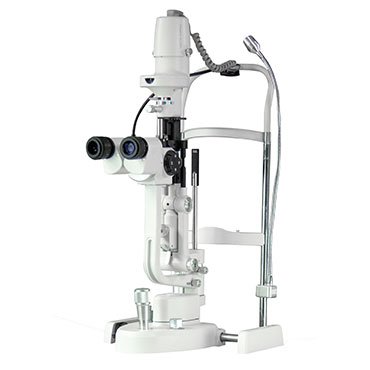
Three levels of “refurbished”
A cosmetic clean is a wipe and a polish. A partial refurbishment replaces the obvious worn parts, like bulbs and eyecups. A full recertification tears the unit down, replaces failing modules, calibrates it, and issues a written test report. These three things are not the same price, and not the same machine.
Ask the questions that sort them
Ask what was replaced, what was tested, and who did the work. Ask for the test report in writing. Ask how the unit was calibrated and against what standard. A seller who answers clearly is worth trusting. A seller who talks only about the price is telling you something.
| Claim | What it should include | What to demand |
|---|---|---|
| Cosmetic clean | Cleaning only | Discount, not trust |
| Refurbished | Replaced worn parts | List of replaced items |
| Recertified | Full test and calibration | Written test report |
This matters more in some regions than others. A refurbished unit crossing into Germany or Australia still needs to meet current registration expectations, so check how the refurbisher handles certification and paperwork before you commit.
Which Instruments Age Well and Which Ones Do Not?
Some instruments run for decades. Others die quietly at year eight when a display panel is discontinued.
Simple mechanical devices like manual lensmeters and trial sets age well. Electronic instruments — auto refractometers, perimeters, and digital lensmeters — age badly, because displays, boards, and software go obsolete.

Mechanics age gracefully
A manual lensmeter has glass, a dial, and pride. There is almost nothing to fail. The same goes for trial frames, trial lens sets, and simple chart projectors. Cleaned and calibrated, a twenty-year-old mechanical unit can still do honest work.
Electronics age in dog years
Auto refractometers and digital lensmeters carry processors and displays that manufacturers stop supporting. When a board dies, the replacement often costs more than the used machine. Illumination modules are the second weak spot: halogen bulbs, flash tubes, and LED drivers wear out on a schedule, not on a whim.
| Instrument type | What wears out | How it ages |
|---|---|---|
| Manual lensmeter | Almost nothing | Ages very well |
| Trial set and frame | Cleaning, minor dents | Ages very well |
| Slit lamp | Bulbs, knobs, coatings | Ages well if maintained |
| Auto refractometer | Board, display, software | Ages poorly |
| Perimeter | Electronics, projector | Ages poorly |
| Fundus camera | Flash tube, sensor | Ages poorly |
A clinic in Italy once showed us a fifteen-year-old slit lamp that still imaged beautifully. The problem was not the glass. It was the spare bulb that took eleven weeks to arrive. The optics were fine. The supply chain was not.
What Are the Warranty and Parts-Availability Risks?
A refurbished unit with no warranty is not a bargain. It is a lottery ticket with a heavy machine attached.
Check the warranty length, what it covers, where parts come from, and the lead time. A new mid-tier unit with a live parts chain often beats a decade-old flagship with no parts support at all.
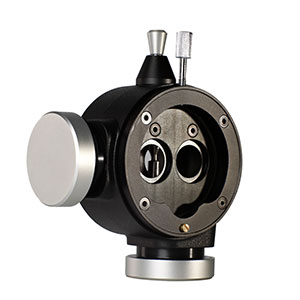
The real cost of downtime
Every week a device sits dead is a week of lost scans, lost refractions, and patients sent elsewhere. When you price a refurbished unit, add the expected cost of downtime. That changes the math more than the discount does.
Read the warranty like a contract
Ask what the warranty covers, who honors it, and where you send the unit for repair. Ask about the parts lead time in your country. A 12-month warranty with free replacement within the warranty period is a different product from “as-is, no returns.” A 10-day unconditional return window protects you from the worst surprises.
| Risk | Question to ask | Mitigation |
|---|---|---|
| No warranty | What is covered, for how long? | Demand written terms |
| No parts chain | Where do spare parts come from? | Check stock and lead time |
| Long repair time | How fast does service respond? | Confirm repair location |
| Certification gaps | Is registration paperwork current? | Ask for the documents |
| Slow shipping | How long to reach my country? | Compare express, air, sea |
For context, we ship to Asia in as little as 2–3 weeks by sea and 7–10 days by express, and 6–7 weeks by sea to America and Europe. That matters when the spare part is the product. Buyers in Algeria, Thailand, and the USA tell us the same thing: availability beats the discount.
How Do You Inspect a Used Slit Lamp or Lensmeter Before Paying?
The seller’s photos are flattering. Your own hands find the truth in ten minutes.
Check the optics, illumination, mechanics, and electronics in that order. Look through the eyepieces at a printed target, run the light across its full range, and test every knob and movement before you pay.
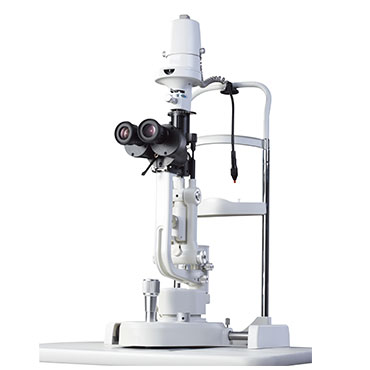
The hands-on checklist
Start with the optics. Look through each eyepiece at a printed page or a test grid. The image should be sharp, bright, and free of dark spots. Then run the illumination from the lowest to the highest setting and listen for flicker. A dying bulb flickers; a dying driver flickers too.
Feel every movement
Move the joystick, the tilt, the chin rest, and every knob. They should glide without grinding. Grinding means worn gears, and worn gears mean a costly rebuild. Check the serial number against the service records. A gap in the records is a gap in the truth.
| What to check | How to test it | Red flag |
|---|---|---|
| Optics | View a printed target through each eyepiece | Spots, haze, double image |
| Illumination | Run light low to high | Flicker, dead settings |
| Mechanics | Move joystick, tilt, chin rest | Grinding, sticking |
| Electronics | Cycle every function and button | Dead buttons, error codes |
| Cosmetic wear | Look at knobs, eyecups, body | Heavy wear = heavy use |
| Paperwork | Match serial to service records | Missing or doctored records |
Take your time. A used machine that passes this checklist is a fair buy. One that fails even a single optics test is a project, and projects always cost more than the sticker.
When Does a New Entry-Level Unit Beat a Premium Used One?
A decade-old flagship carries prestige and risk in equal measure. A new entry-level unit carries a warranty and a parts chain.
Choose a new entry-level unit when you need warranty, spare parts, current certification, and predictable support. Choose a premium used unit only when a trusted technician verifies it and parts are still available.

Run the five-year math
Suppose a premium used unit costs half of a new entry-level unit, but needs one major repair per year at a quarter of the new price each time. After two years, the savings are gone. The new unit also carries current certification, which matters when a regulator or hospital tender asks for valid paperwork.
Certification is a quiet killer
A used unit may carry a CE mark or FDA clearance that no longer matches its current state after repair. Hospital procurement teams in Singapore and Brazil now ask for current certificates, not museum pieces. When your buyer cannot register the device, the discount means nothing.
| Factor | New entry-level | Premium used |
|---|---|---|
| Upfront price | Higher | Lower |
| Warranty | Full | Limited or none |
| Parts chain | Live | Uncertain |
| Certification | Current | May be outdated |
| Support | Predictable | Depends on seller |
| Optics | Fresh | Proven if verified |
The honest rule we use ourselves: buy used only when a trusted technician has put hands on the unit and the parts chain is confirmed. Otherwise, the new mid-tier unit wins on total cost of ownership, every time.
Conclusion
Buy used when a trusted technician verifies the unit and parts exist. Buy new when warranty, certification, and support matter more. The smart buy is the one you can keep running.