

Your logo on someone else’s machine feels like a shortcut. But in most jurisdictions, that logo makes you the legal manufacturer, with all the liability.
OEM and private label manufacturing lets a distributor sell proven ophthalmic devices under its own brand. The catch is that rebranding usually transfers legal manufacturer status to the brand owner, which carries regulatory duties most landing pages never mention.
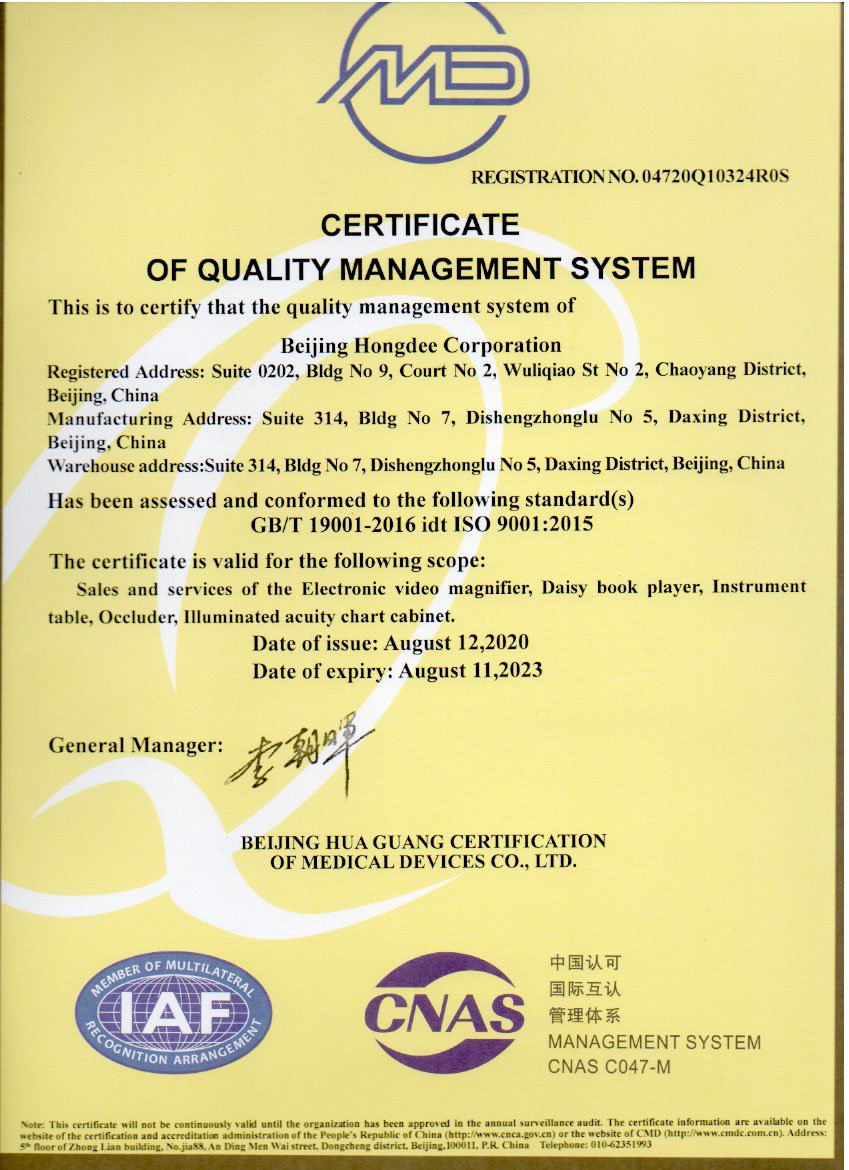
We know this ground from both sides. Hongdee built ophthalmic devices under an OEM agreement for Topcon for three years, and we still support distributors in Italy, Thailand, and the USA who run their own brands. This article explains the terms, what you can customise, what MOQ and tooling really look like, and the regulatory weight that comes with your name on the box.
What Is the Difference Between OEM, ODM and Private Label?
OEM, ODM, private label — the words get thrown around like they mean the same thing. They do not, and the difference changes your contract.
OEM means the factory builds to your specification. ODM means you take the factory’s existing design. Private label means you put your brand on a standard product. Each carries different costs, control, and responsibility.
Three models, three contracts
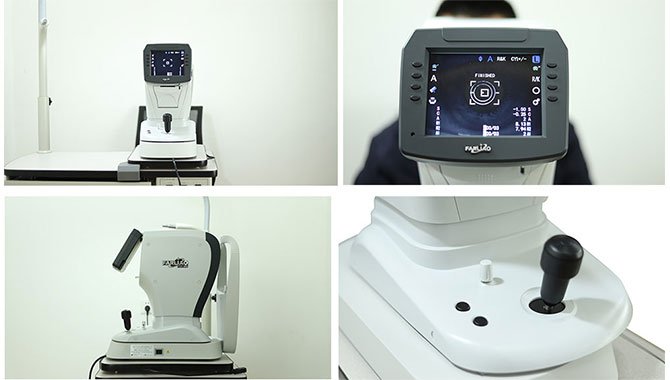
OEM is the deepest relationship. You bring a specification, and the factory builds to it. ODM is the most common: the factory has a proven design, and you buy it with your changes on top. Private label is the lightest touch — the same device other buyers get, wearing your badge.
Why the words matter
The model decides who owns the design, who fixes defects, and who faces the regulator. An OEM spec change can trigger new certification. A private label unit rarely does, because the device is already certified in its original form.
| Model | Design control | Upfront cost | Your regulatory load |
|---|---|---|---|
| OEM | Yours | Highest | Highest |
| ODM | Shared | Medium | Medium |
| Private label | Factory’s | Lowest | Low, but you are still the seller |
Most distributors start with private label or ODM, learn the market, then move toward OEM once volumes grow. That is a sensible ladder, and it keeps early risk small.
What Can Realistically Be Customised on an Ophthalmic Device?
You cannot redesign a slit lamp with a sticker. Customisation lives on a spectrum from labels to full housings.
Realistic customisation ranges from labelling, colour, and software language up to housing design for larger orders. Electronics are rarely touched, because changing them changes the certification.
The branding level
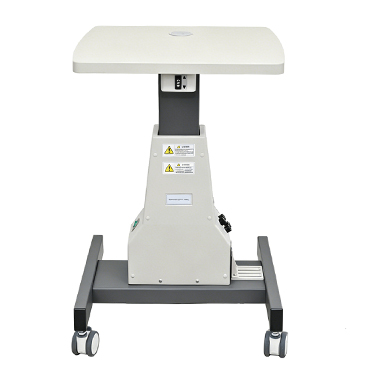
Your logo on the housing, your colours, your packaging, your software start-up screen. This is the cheapest level and the safest, because the device underneath is unchanged. Most private label deals live here.
The design level
Custom housing, custom stand, modified accessories, or a tailored software interface. This level needs real engineering and pushes MOQs up. A distributor in Latin America asked us for a Spanish-first software interface; a partner in the Middle East wanted a different housing colour for the local market. Both were doable, and both took planning.
| Customisation level | What changes | What it affects |
|---|---|---|
| Branding | Logo, colours, packaging, start screen | Nothing technical |
| Software | Language, UI, report formats | Usability, some testing |
| Hardware | Housing, stand, accessories | Tooling, MOQ, certification risk |
| Optics and electronics | Lenses, boards, sensors | Full recertification |
The rule of thumb: the deeper the change, the closer you move from private label to OEM, and the more paperwork follows. If electronics change, plan for new certification work in every market you sell to.
What MOQ and Tooling Cost Should You Expect?
MOQ pressure kills more deals than price does. The number depends entirely on how much you change.
For standard private label units, MOQs are modest and tooling costs are low or zero. For custom housings and electronics, MOQs rise sharply and tooling becomes a real investment. Ask for both in writing before you design anything.
Why MOQ scales with customisation
A standard unit uses existing moulds, existing assembly lines, and existing test fixtures. Adding your logo costs almost nothing per unit, so the factory can accept small orders. A custom housing needs a new mould, and a mould only pays back if enough units pass through it. That is the real reason MOQs jump.
Tooling is a one-time price, not a per-unit price
Tooling covers moulds, printing plates, and fixtures. It is paid once, usually before production starts. Some factories fold tooling into the unit price for a first large order. Some quote it separately. Ask which, because it changes how your first order looks on paper.
| Customisation level | Typical MOQ | Tooling cost |
|---|---|---|
| Private label branding | Low | Low or zero |
| Software changes | Low to medium | Low |
| Custom housing | Medium to high | Real investment |
| Electronics redesign | High | Highest |
Payment terms matter here too. Hongdee’s standard is 98% advance with 2% on receipt, and a shipping discount of 2–3% if we delay. Whatever terms you negotiate, get the MOQ, the tooling price, and the payment schedule written into the same contract, because surprises in any of them stall your launch.
Who Holds Regulatory Responsibility for a Rebranded Device?
This is the sentence OEM landing pages never write. Your brand on a device can make you the legal manufacturer, not the factory.
In most jurisdictions, the party that places a device on the market under its own name is treated as the legal manufacturer for that device. That means vigilance reporting, post-market surveillance, and technical documentation duties sit with the brand owner.
What “legal manufacturer” really means
Under rules like the EU MDR, FDA regulations, TGA in Australia, and ANVISA in Brazil, the named party on the label carries the manufacturer’s duties for that device. The factory may have built it and holds its own certificates, but your name on the label points the regulator at you first.
The duties you inherit
You may need to register the device under your name, hold or access the technical file, run post-market surveillance, report serious incidents, and manage complaints. This is not theory. Hospital procurement teams increasingly ask distributors who the legal manufacturer is before they approve a device.
| Duty | Factory holds it | Brand owner inherits it |
|---|---|---|
| Manufacturing quality system | Yes | Indirectly |
| Device registration | Sometimes | Usually |
| Technical documentation | Yes | Access needed |
| Vigilance reporting | No | Yes |
| Post-market surveillance | No | Yes |
Contract out the work, not the duty. Your quality agreement with the factory should give you access to technical files, test reports, and audit results. And please confirm the exact position with your regulator or legal counsel in each market, because rules differ by jurisdiction.
How Do You Protect Your Brand Once Production Starts?
The easy part is printing your logo. The hard part is keeping quality, delivery, and exclusivity under control for years.
Protect your brand with a written quality agreement, documented factory audits, exclusivity and confidentiality clauses, and a parts-and-service commitment in the contract. Verify every batch against your own standards.

Put the relationship in writing
A quality agreement sets the standards, the test procedures, and who fixes what when a unit fails. Add exclusivity for your market, confidentiality for your pricing and designs, and a clear non-compete on your customer list. Verbal promises do not survive a change of sales manager at the factory.
Verify every batch
Do not trust the shipping checklist alone. Spot-check units against your own acceptance criteria, and keep a record of every batch you accept. When a clinic in Singapore complains about a fault, you want to answer with data, not with arguments.
| Risk | Contract clause | Why you need it |
|---|---|---|
| Quality drift | Quality agreement, batch testing | Keeps the bar fixed |
| Brand copying | Exclusivity, IP assignment | Protects your market |
| Design leakage | Confidentiality, non-compete | Protects your edge |
| Parts shortages | Parts and service commitment | Keeps devices running |
| Delivery slippage | Delay penalties, written lead times | Protects your customers |
Demand the same things you would offer: a 12-month warranty, free replacement within warranty, and spare parts you can actually order. We run 15+ years of manufacturing, 300+ clients, and 60+ distributors under agreements like these, and the pattern holds everywhere: the brands that survive are the ones that wrote everything down.
Conclusion
OEM and private label can grow your brand fast, but they transfer legal manufacturer duties to you. Choose a factory with certificates, capacity, and honesty. Put the responsibilities in writing before you print the first logo.