



Inaccurate readings can lead to wrong diagnoses and unhappy patients. If you skip calibration, your clinic faces safety risks and legal issues. We help you stay accurate with a simple schedule.
Most ophthalmic equipment requires calibration every 6 to 24 months to ensure precision. Tonometers need checking every 2 months, auto refractometers every 12 months, and phoropters every 2 years. Regular maintenance prevents clinical errors, protects patient safety, and extends the lifespan of your diagnostic tools.
Maintaining a busy clinic is hard work. You have many patients to see and many machines to manage. It is easy to forget the last time a technician checked your slit lamp or tonometer. But at Hongdee, we believe that accuracy is the foundation of eye care. We want to show you exactly when and how to calibrate your gear so you never have to worry about data errors.
Why Does Regular Calibration Matter for Accuracy and Patient Safety?
Is your equipment giving you the right numbers, or are you just hoping it works? Small drifts in accuracy can cause big problems during surgery or prescription fitting.
Regular calibration ensures your equipment meets international standards like ISO 13485 and CE. It prevents diagnostic errors that could harm patients. Accurate calibration also lowers your long-term costs by catching minor mechanical issues before they become expensive breakdowns.

The Hidden Cost of Inaccuracy
When we talk to distributors in Europe or the Middle East, they often ask about the “real cost” of equipment. The price of the machine is only one part. The bigger cost is the risk of a wrong diagnosis. If your auto refractometer is off by just 0.25 diopters, your patient will not be happy with their new glasses. They might even go to a competitor next time. We have seen how small errors lead to expensive returns and bad reviews for local clinics.
Compliance and Legal Protection
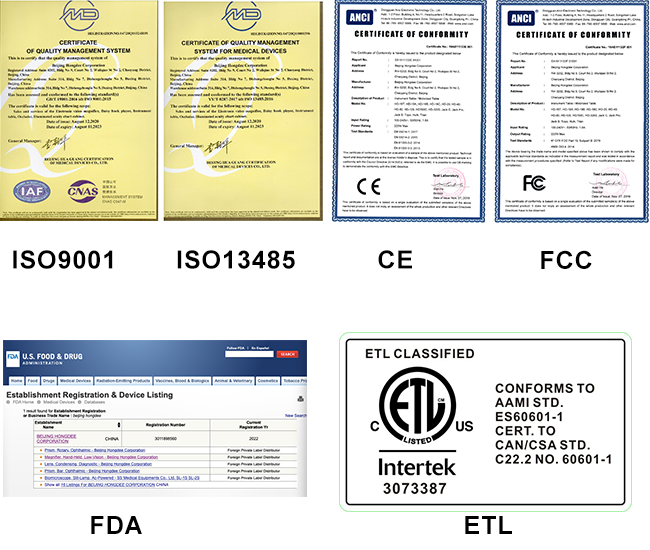
In many regions like the US or Australia, you must prove your machines are accurate. If a patient claims they received a poor outcome, your calibration logs are your best defense. We provide full documentation with every Hongdee device to help you meet these local laws. Having a CE or FDA certificate is the first step, but keeping the machine calibrated is how you stay compliant every day.
Maintenance vs. Calibration
It is important to know the difference. Maintenance is about cleaning and checking parts. Calibration is about measuring the output against a known standard. Both are needed to keep your clinic running. We suggest doing basic cleaning every week and professional calibration according to the manufacturer’s guide.
| Benefit | Impact on Clinic | Why It Matters |
|---|---|---|
| Diagnostic Precision | Better prescription accuracy | Happy patients and fewer returns |
| Safety | Reduced risk during procedures | Legal protection for your practice |
| Equipment Life | Less wear and tear on parts | Better ROI and lower long-term cost |
| Certification | Meets ISO/CE/FDA standards | Vital for insurance and licensing |
What Are the Recommended Calibration Schedules for Slit Lamp, Tonometer, Auto Refractometer, and Fundus Camera?
How do you keep track of all these different schedules without getting confused? Each device has its own rhythm based on how often you use it and how sensitive it is.
You should calibrate phoropters every 2 years, auto refractometers every 12 months, and tonometers every 2 months. Slit lamps require a basic check every year. These industry standards ensure that wear and tear do not affect your clinical outcomes or patient safety during examinations.

Auto Refractometer and Phoropter Schedules
Auto refractometers like our ARK-710 are used many times every day. The optics inside are very precise. We recommend a professional check every 12 months. For manual phoropters, the gears and lenses are robust but can collect dust. A deep clean and calibration every 2 years is usually enough. If you drop a device or move your clinic to a new building, you should calibrate it immediately regardless of the schedule.
The High Sensitivity of Tonometers
Tonometers are different. Because they measure pressure, they are very sensitive. For rebound tonometers, you should use the test eye provided in the kit every week. For applanation tonometers, a professional check every 2 months is the industry gold standard. This ensures the spring tension or sensor is always giving you the correct intraocular pressure (IOP).
Slit Lamps and Fundus Cameras
Slit lamps are the workhorses of the clinic. They don’t need calibration as often as an auto refractometer, but you should check the illumination and mechanical focus once a year. Fundus cameras rely on high-resolution sensors and software. Software updates and sensor checks every 12 to 18 months will keep your imaging crisp and useful for diagnosis.
| Equipment Type | Calibration Frequency | Key Focus Area |
|---|---|---|
| Phoropter | Every 24 Months | Lens alignment and gear movement |
| Auto Refractometer | Every 12 Months | Optical sensor accuracy and vertex distance |
| Tonometer | Every 2 Months | Pressure measurement and sensor tension |
| Slit Lamp | Every 12 Months | Illumination stability and mechanical focus |
| Fundus Camera | Every 12-18 Months | Image clarity and software alignment |
What Can You Do In-House vs. When Do You Need a Professional Servicer?
Can you handle some of these tasks yourself to save time and money? We want to empower our customers to do basic checks while knowing when to call the experts.
You can perform daily cleaning, test-eye checks for tonometers, and software restarts in-house. However, internal optical alignment and mechanical repairs require a professional technician. Attempting to open the machine yourself may void your warranty and lead to permanent damage to sensitive internal components.
Daily and Weekly In-House Tasks
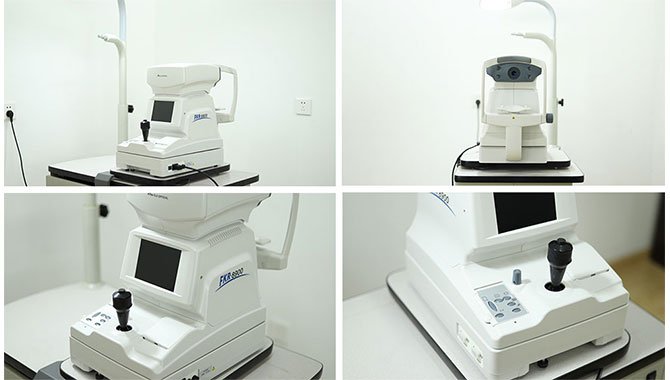
We always tell our customers that a clean machine is a reliable machine. You can easily wipe down the chin rest and forehead rest after every patient. For auto refractometers, check the lens for dust daily. For our tonometers, we provide a test tool. If the device passes the test tool check, you are good to go. These small steps prevent 90% of the “errors” that clinics report to us.
When to Call a Professional
If your machine shows an error code that won’t go away after a restart, do not try to fix it yourself. Internal mirrors and lasers are very delicate. At Hongdee, we offer free repair and free replacement for many parts during the warranty period. It is always better to contact our support team. We can often guide you through a fix via a video call, or we can send a technician to help you.
Shipping and Logistics for Repairs
Many buyers worry about shipping costs when a machine needs professional help. We work with global carriers like DHL and FedEx to make this easy. We use safe, double-wall packaging to protect the equipment during travel. Because we are a manufacturer, we keep all spare parts in stock. This means your machine spends less time in the shop and more time in your clinic.
| Task Level | Action | Who Does It? |
|---|---|---|
| Level 1: Daily | Surface cleaning and lens dusting | Clinic Staff |
| Level 2: Weekly | Calibration check with test eye/tool | Clinic Staff |
| Level 3: Monthly | Software updates and deep cleaning | Clinic Manager |
| Level 4: Annual | Internal optical alignment and calibration | Certified Technician |
| Level 5: Repair | Component replacement and mechanical fixes | Hongdee Factory/Expert |
What Warning Signs Say Your Equipment Needs Immediate Calibration?
Waiting for the scheduled date is not always enough. What should you look for if something feels “off” during a normal workday?
Warning signs include inconsistent readings for the same patient, unusual mechanical noises, or frequent error codes on the screen. If patients complain that their vision feels blurry despite a new prescription, or if the device fails its startup self-check, you must stop using it and seek immediate calibration.
Inconsistent Patient Data
If you measure a patient’s refraction and get three very different results in one minute, something is wrong. The ARK-900 and other high-end auto refractometers are designed to be stable. Wide variations usually mean the internal optical path is dirty or misaligned. We recommend checking the machine with a “standard patient” (a staff member with a known stable prescription) to verify the drift.
Mechanical and Audio Clues
Listen to your machines. A slit lamp should move smoothly and silently. If you hear grinding or clicking when you move the joystick, the mechanical parts are wearing out. This affects your ability to focus precisely on the cornea. Similarly, if an auto lensmeter takes too long to “lock in” on a reading, the sensor might be struggling with a misalignment.
Software and Display Errors
Modern ophthalmic equipment is full of sensors. If the screen shows a “Calibration Error” or “System Failure,” do not ignore it. Sometimes a simple power cycle fixes it, but if it happens twice, you need a professional look. We have helped customers in Thailand and Singapore solve these issues quickly by sending firmware updates or calibration files online.
| Warning Sign | Potential Cause | Action Required |
|---|---|---|
| Erratic Readings | Misaligned optics or dirty sensor | Stop use; perform deep clean |
| Mechanical Noise | Lack of lubrication or worn gears | Contact Hongdee for service |
| Slow Processing | Software glitch or sensor aging | Restart and check for updates |
| Visual Artifacts | Damaged fundus camera sensor | Professional calibration only |
How Do You Build a Preventive Maintenance Schedule for Your Whole Clinic?
Managing one machine is easy, but managing ten is a challenge. How do you create a system that works for your entire team?
To build a preventive maintenance schedule, create a central log for every device. List the purchase date, last calibration date, and the next due date. Assign a “machine owner” in your staff to perform weekly checks. This organized approach ensures no device is overlooked, maintaining high standards across your entire practice.
Creating Your Calibration Calendar
We suggest using a simple digital calendar or a physical logbook kept near the main equipment station. At Hongdee, we provide a basic template to our distributor partners. You should group machines by their frequency. For example, mark the first Monday of every even month as “Tonometer Day.” This makes it a habit for your staff rather than an extra chore.
Training Your Staff
Your equipment is only as good as the people using it. We recommend a short training session every six months. Show your team how to clean the lenses without scratching them. Teach them how to recognize the warning signs we mentioned earlier. When everyone knows how to care for the tools, the machines last much longer. This improves your ROI because you aren’t replacing expensive parts due to neglect.
The Value of Factory-Direct Support
Choosing a manufacturer like Hongdee gives you an advantage. We have been an OEM for Topcon for 3 years, so we understand the highest industry standards. We don’t just sell you a box; we provide the knowledge to keep that box working for years. Our global network of 60+ distributors can also offer local support in many regions, making shipping and service much faster than smaller brands.
Why Choose Hongdee for Your Practice?
We have served over 300 customers and have a deep understanding of what clinics need. Whether you are a small optical store or a large hospital, our equipment is designed to be durable and easy to maintain. We offer competitive value without sacrificing the quality you need for clinical excellence.
Conclusion
Calibration is not just a chore; it is the heartbeat of a successful clinic. By following these schedules and watching for warning signs, you protect your patients and your investment. We at Hongdee are always here to help you stay accurate.
文件已保存到 articles/06-ophthalmic-equipment-calibration-schedule.md