


Are you debating between the mobility of a handheld fundus camera and the high-resolution power of a desktop unit? Choosing the right imaging tool can define your clinic’s specialty and your community outreach potential. We help you compare the two so you can select the best fit for your patients and your profits.
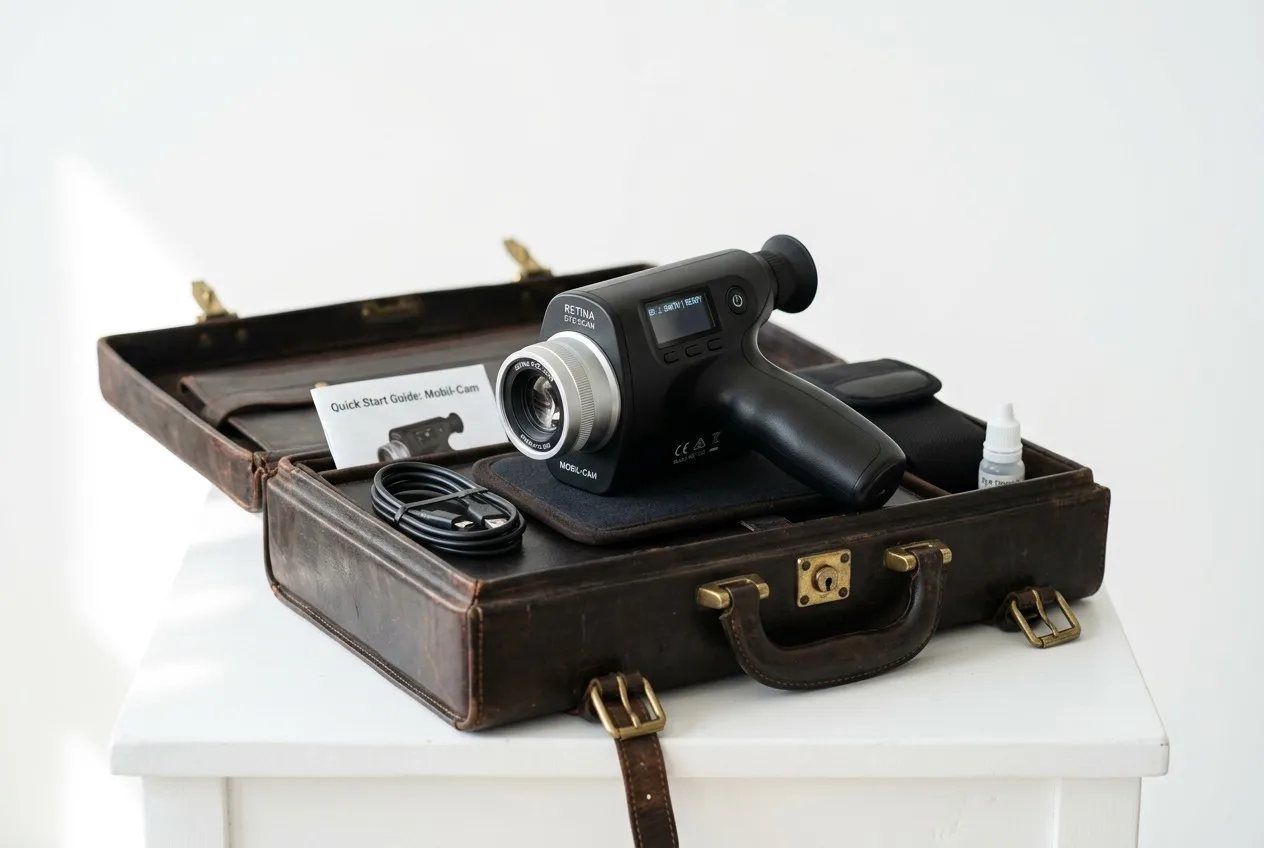
A portable fundus camera is designed for mobility, making it ideal for home visits, community screenings, and non-ambulatory patients. A desktop fundus camera offers superior image resolution and stable fixation, which is essential for detailed diagnosis and monitoring of complex retinal diseases in a fixed clinical setting.
At Hongdee, I have seen the demand for fundus imaging explode over the last 15 years. With the rise of diabetes globally, screening has become a primary revenue driver for many clinics. We manufacture both types because we know that a complete eye care service often needs both. Let us break down which one will serve your business model best.
What Is the Real Difference Between Portable and Desktop Fundus Cameras?
On the surface, it looks like a “size vs. power” debate. But the real difference is in the ergonomics and the clinical environment each device is meant to serve.
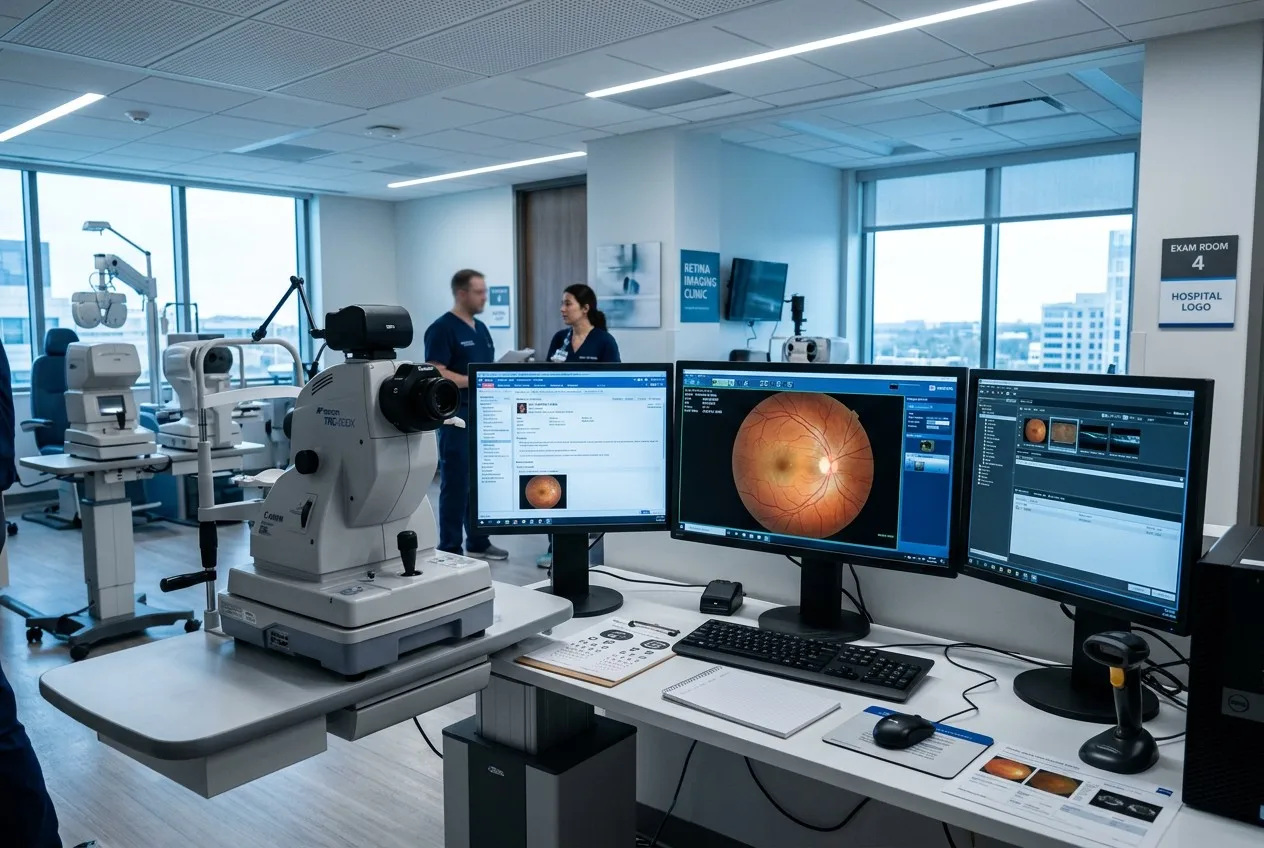
A portable fundus camera is a handheld device that allows the doctor to move toward the patient. A desktop fundus camera is a large, stationary machine where the patient must sit and remain still. Portable units focus on accessibility, while desktop units focus on image stability and high-detail diagnostic data.
Mobility vs. Stability
I often tell our distributors that a portable fundus camera is like a professional “action camera” for the eye. It is lightweight, usually under 1kg, and you can take it anywhere. This is perfect for pediatric exams where the child might not sit still at a table. It is also a lifesaver for geriatric patients in nursing homes who cannot lean forward into a desktop chinrest. At Hongdee, we design our portable units with ergonomic grips to reduce hand fatigue during long screening days.
Desktop fundus cameras, however, are the “studio cameras” of ophthalmology. They are heavy and stay in one place. But because the patient’s head is locked into a chinrest, the images are incredibly stable. There is almost no motion blur. This allows for higher magnification and better detection of microaneurysms. For a fixed clinic or a hospital department, the desktop unit is the gold standard for long-term disease monitoring.
Table: Primary Feature Comparison
| Feature | Portable Fundus Camera | Desktop Fundus Camera |
|---|---|---|
| Weight | < 1 kg | 15 – 25 kg |
| Environment | Flexible (Home/Clinic/Field) | Fixed (Exam Room) |
| Patient Position | Sitting / Reclining / Lying down | Upright (Chinrest required) |
| Fixation | Internal / External (Manual) | Automated / Internal |
| Connectivity | Wi-Fi / Bluetooth / USB | Wired LAN / DICOM |
| Image Resolution | High (Good for screening) | Ultra-High (Best for diagnosis) |
Which One Fits Field Screening and Community Programs?
If your business model involves going to the patient rather than waiting for them to come to you, your choice is clear.
Portable fundus cameras are the superior choice for field screening, community outreach, and diabetic retinopathy programs. Their ability to operate on battery power and sync data wirelessly allows for high-volume screening in remote areas where traditional clinical infrastructure is missing.
The Rise of Community-Based Screening
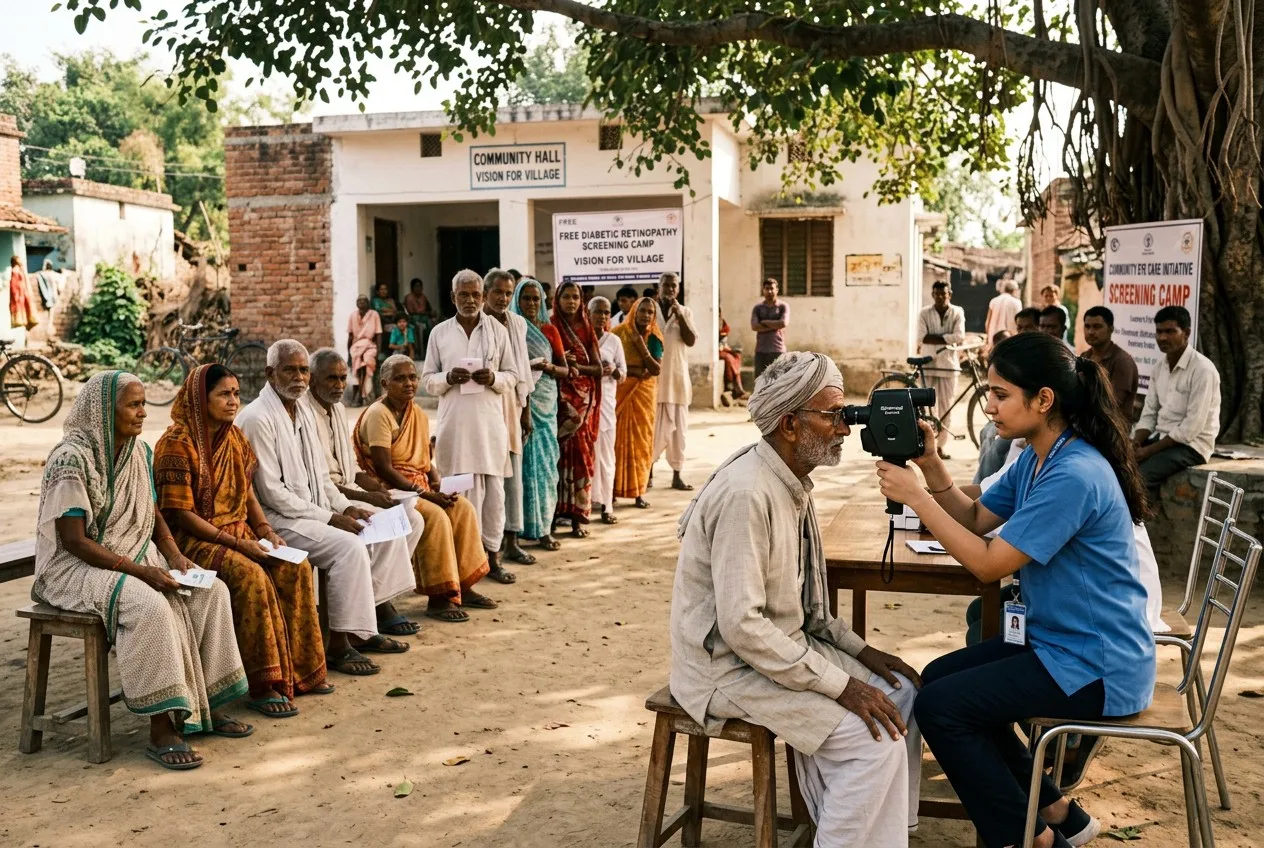
We have many partners in Latin America and Southeast Asia who use our Hongdee portable fundus cameras for massive screening projects. They go into villages, screen hundreds of people for diabetic retinopathy, and sync the images back to a central hospital for review. You simply cannot do this with a desktop unit. A portable camera fits in a small carrying case. You can carry it on a bus or a plane easily.
I have seen how this mobility changes lives. By catching retinal issues early in the community, you prevent blindness. From a business perspective, this “outreach” model brings thousands of new patients into your referral network. It is a win-win. Our portable cameras come with long-life batteries, so you can work all day in the field without searching for a power outlet.
Packaging for Distributors
For our distributor clients, we often suggest bundling the portable camera with a tablet and a portable vision chart. This creates a “clinic in a box.” You can sell this as a complete solution for government health programs or private screening businesses. Because we are an ISO 13485 and FDA-registered manufacturer, you can bid on high-level tenders with confidence in our quality.
How Do Image Quality and Diagnostic Capability Compare?
While portable cameras have improved massively, there is still a technical gap between handheld and stationary optics.
Desktop fundus cameras generally provide superior image quality with a wider field of view and better peripheral imaging. They are equipped with more powerful flash systems and larger sensors, making them more capable of capturing clear images through small pupils or dense cataracts compared to portable versions.
The Technical Edge of Desktop Systems
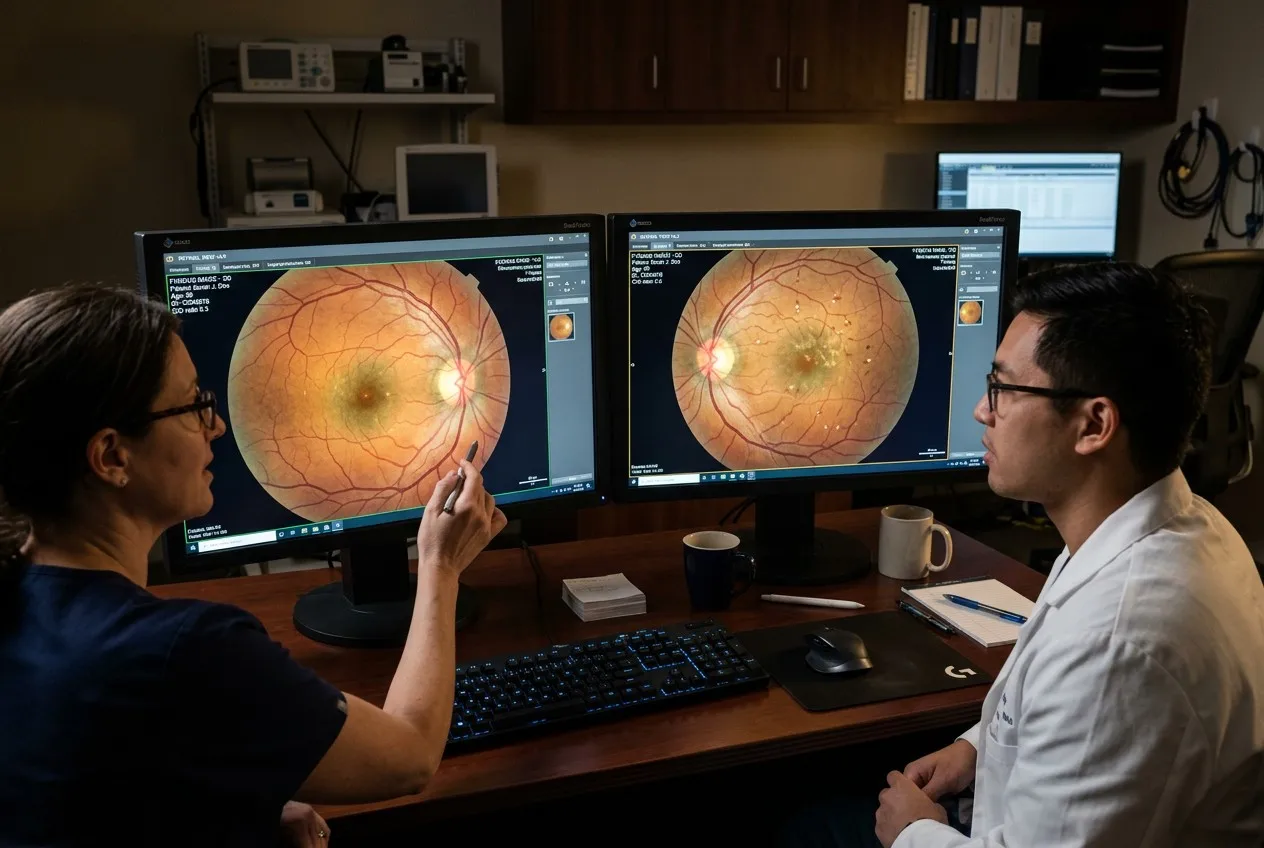
In a desktop system, we can use larger, high-precision glass lenses. These lenses are heavy, but they provide edge-to-edge sharpness that a handheld lens cannot match. At Hongdee, we use a multi-element optical path in our desktop units to minimize aberrations. This is why hospitals prefer them for surgical planning. When you need to see every tiny detail of the macula, you want the stability of a desktop unit.
Portable cameras often use digital zoom or smaller sensors to stay lightweight. They are perfect for “yes/no” screening—meaning “yes, there is a problem” or “no, there isn’t.” But for “how much” the problem has grown over 5 years, the desktop unit’s consistent positioning is better. It allows you to take the exact same photo year after year.
Handling “Difficult” Patients
Another factor I’ve noticed is pupillary dilation. Desktop units often have better “non-mydriatic” capabilities. They can see through a 3.3mm pupil more easily because they have a more controlled lighting environment. Portable units sometimes struggle if the room is too bright or the patient’s pupil is very small. However, our Hongdee portable models include a focus-assist feature to help the doctor get the best possible shot in less-than-ideal conditions.
Table: Diagnostic Capacity Metrics
| Metric | Portable (Handheld) | Desktop (Stationary) |
|---|---|---|
| Field of View | 40° – 45° | 45° – 55° (or Widefield) |
| Min. Pupil Size | 3.5 mm – 4.0 mm | 3.3 mm – 3.5 mm |
| Image Resolution | 12MP – 16MP | 18MP – 24MP+ |
| Stereo Imaging | Difficult | Integrated / Software-based |
| Fluorescein Angio | Rare | Common (Optional) |
What About Battery Life, Data Sync, and Long-Term Reliability?
When you are in the field, the last thing you want is a dead battery or a data glitch.
Portable fundus cameras require robust battery management and seamless Wi-Fi/Cloud synchronization to be effective. Desktop units are more reliable for high-volume daily use in a clinic because they run on constant AC power and have direct, hard-wired connections to the hospital network and backup systems.
Ensuring Uptime in the Field
At Hongdee, we know that reliability is everything. We offer free repairs because we stand behind our build quality. For our portable cameras, we use high-capacity lithium-ion batteries. You can typically get 4-6 hours of continuous use, which is enough for a full day of screenings. We also use standard charging ports, so you don’t need a proprietary cable if you lose yours in the field.
Data sync is another area where we excel. Our software allows the portable camera to upload images to the cloud as soon as a Wi-Fi connection is found. This protects the data. If the camera is dropped or lost, the patient’s images are already safe on your server. This “fail-safe” thinking is why we have been in business for 15 years.
Maintenance of Desktop Units
Desktop units are like tanks. They don’t move, so they don’t get dropped. However, they do have moving parts for the chinrest and the joystick. We use high-precision bearings to ensure these movements stay smooth for decades. Our 15-year history means we have spare parts for every model we’ve ever made. If you need a replacement part in five years, we will have it.
Which Fundus Camera Type Best Fits Your Business Model?
Choosing between these two depends on your primary source of revenue. You need to align your equipment with your “patient flow.”
If your business model is based on community outreach and mobile screening, a portable fundus camera is your best investment. If you run a high-traffic urban clinic or a hospital retinal department, a desktop unit is the necessary standard for comprehensive patient care and detailed diagnostic billing.
The Hybrid Model for Distributors
I often advise our larger distributors to carry both. Why? Because you can “bundle” them. A hospital might need three desktop units for their exam rooms but two portable units for their emergency room and their diabetic outreach bus. By offering both from Hongdee, you give your customer a consistent software interface. The doctors don’t have to learn two different systems.
We also offer a 2-3% delay discount. This is a big deal for large projects. If you are ordering 50 units for a government contract, you need to know they will arrive on time. We put our money where our mouth is. We also offer direct CEO contact for our key partners. You aren’t just a number to us; you are a partner in our mission to bring value to eye care practitioners.
The MOQ and Branding Opportunity
We have a very low MOQ, even for our high-tech fundus cameras. We want to help you grow. If you want to put your logo on the cameras, we can do that. This “OEM” service is something we’ve mastered over 15 years. We even spent 3 years as an OEM for Topcon, so we know what “global quality” looks like. We bring that same quality to your brand.
Why Source Both Fundus Camera Types From Hongdee?
Buying from a single source simplifies your life. It means one contact person, one shipping cost, and one warranty provider.
Hongdee provides 15 years of manufacturing excellence, offering both high-end desktop and mobile portable fundus cameras. Our ISO, CE, and FDA certifications ensure global compliance, while our unique delay discount and free repair policy protect your investment and your reputation as a distributor or clinic owner.
A Legacy of Quality and Service
I am proud of the 15-year journey we’ve taken at Hongdee. We’ve seen technology change, but our commitment to service hasn’t. We provide live factory tours via video call so you can see the assembly of your cameras. We show you the sensors, the lenses, and the final testing phase. We want you to be as confident in our machines as we are.
Our CEO-direct link is not a marketing gimmick. If you have a critical problem, you get a quick answer. We don’t have layers of bureaucracy. We are a manufacturer that moves at the speed of your business. Whether you are a solo doctor in Florida or a large distributor in Brazil, we treat you with the same respect and urgency.
Frequently Asked Questions (FAQ)
Can I get my logo on both the portable and desktop units?
Yes. We offer full OEM services. We can customize the machine body, the packaging, and the digital software splash screen with your brand.
Is the software available in multiple languages?
Yes. Our imaging software supports English, Spanish, Portuguese, French, and several other languages to serve our global partners.
What is the warranty period for Hongdee fundus cameras?
We offer a standard 1-year warranty with an option for extended coverage. Plus, our “free repair” policy for manufacturing defects is legendary among our long-term partners.
How do you handle shipping for fragile optical equipment?
We use custom-molded foam and double-walled boxes. We have a 99.9% damage-free shipping record over the last 15 years.
Conclusion
The choice between a portable and desktop fundus camera is a choice between where you want to treat your patients. Portable cameras open doors to the community and home care. Desktop cameras provide the deep diagnostic power needed for a world-class clinic. At Hongdee, we provide the best of both worlds with a level of service that other manufacturers simply can’t match. Contact us today to build your perfect fundus imaging suite.