



Starting an eye clinic is expensive. You need many specialized tools, but your budget is limited. We show you how to build a high-quality refraction lane without overspending on unnecessary features.
Building a budget refraction lane requires focusing on five core pieces: an auto refractometer, a manual phoropter, a vision chart, a slit lamp, and a patient chair unit. You can save 10-15% by purchasing bundled equipment packages from a single manufacturer rather than buying individual pieces separately.
Managing costs is the biggest challenge for new practices. At Hongdee, we help doctors worldwide set up their lanes by providing durable equipment that fits their financial reality.
What Equipment Actually Makes Up a Standard Refraction Lane?
You might think you need every new gadget on the market. But a functional lane only requires a few essential instruments to perform a full exam. We break down the absolute must-haves for your new practice.
A standard refraction lane includes an auto refractometer for objective testing, a phoropter for subjective refraction, a vision chart for visual acuity, and a slit lamp for anterior segment exams. All these instruments are typically mounted on a refraction unit which includes a motorized patient chair.
The Core Diagnostic Tools
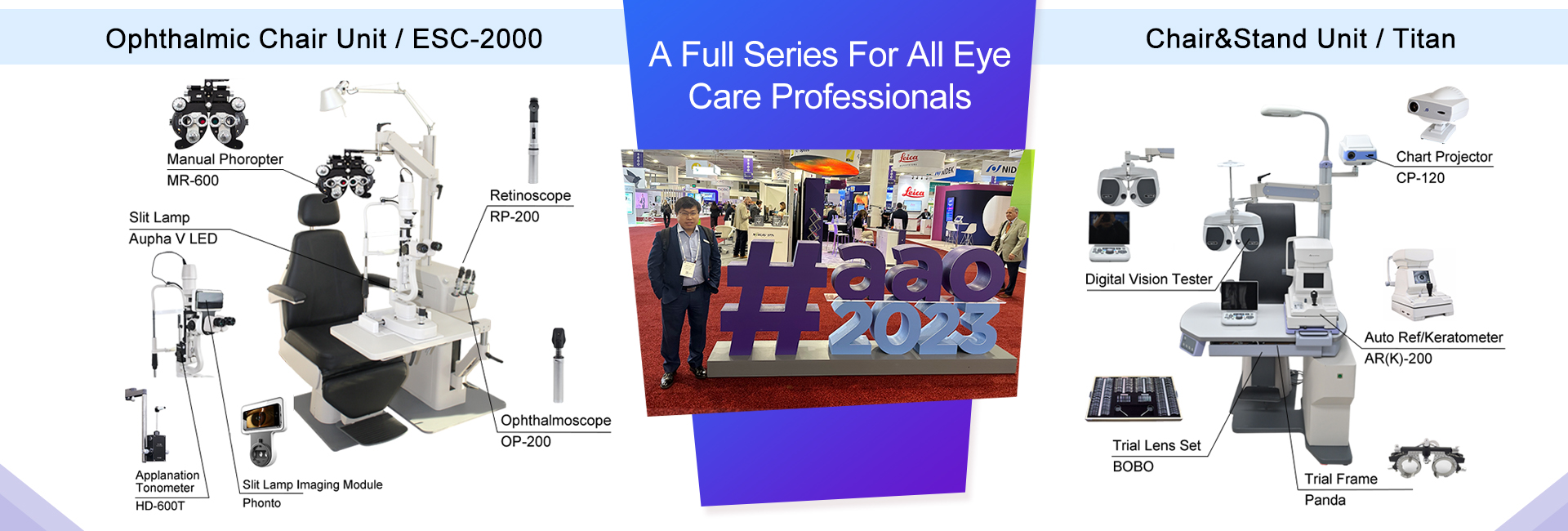
The first step is objective refraction. An auto refractometer, like our ARK-710 series, gives you a baseline measurement in seconds. This saves you valuable time during a busy clinic day. Next, you need a phoropter. While digital phoropters are fancy, a high-quality manual phoropter is still the industry standard for budget-conscious clinics. It is reliable, requires no electricity, and lasts for decades.
Vision Testing and Examination
You cannot test vision without a chart. We recommend an LCD vision chart over old projectors. They offer more variety, including polarized tests and videos for pediatric patients. For the physical health of the eye, a slit lamp is non-negotiable. It allows you to check for cataracts, corneal issues, and more. Even an entry-level slit lamp should have high-quality optics and at least 10x and 16x magnification.
The Foundation: The Refraction Unit
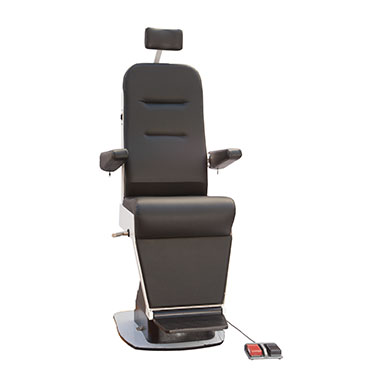
All these tools need a place to live. A refraction unit, or “chair and stand,” holds your phoropter, chart projector, and sometimes your slit lamp. It organizes your cables and provides a comfortable seat for the patient. By keeping everything in one small area, you minimize patient movement and speed up the exam process. We offer several compact units designed specifically for smaller rooms.
| Equipment | Essential Function | Budget Priority |
|---|---|---|
| Auto Refractometer | Baseline vision data | High |
| Manual Phoropter | Subjective vision testing | High |
| LCD Vision Chart | Measuring visual acuity | Medium |
| Slit Lamp | Eye health examination | High |
| Refraction Unit | Equipment support & seating | Medium |
How Do Entry-Level, Mid-Range, and Premium Refraction Lane Setups Differ?
Not all clinics have the same needs. A small rural shop has a different budget than a large city hospital. We explain the three main tiers of equipment setups to help you find your “sweet spot.”
Entry-level setups focus on manual instruments and basic auto-refractors to keep costs low. Mid-range setups add digital phoropters and improved slit lamp optics. Premium setups feature fully automated lanes with integrated EMR software, high-definition imaging systems, and luxurious patient chairs for maximum comfort.
Entry-Level: The Reliable Workhorse
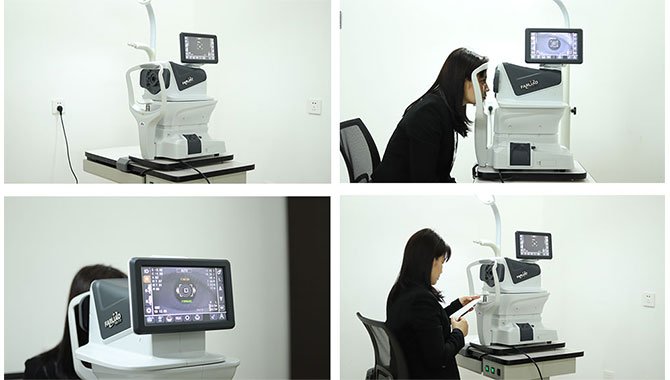
This tier is perfect for startup optical stores or rural clinics. You rely on manual phoropters and standard slit lamps. The focus here is on durability and core functionality. You won’t have all the “bells and whistles,” but you will be able to provide accurate prescriptions and basic eye health checks. Many of our customers in developing regions start with this tier and upgrade as their patient volume grows.
Mid-Range: Balancing Speed and Cost
In the mid-range tier, you begin to see more automation. You might upgrade to a slit lamp with a digital imaging system, allowing you to show patients photos of their eyes. This tier often includes more ergonomic refraction units that allow for faster patient turnover. It is the most popular choice for established private practices looking to modernize without spending a fortune on high-end brands.
Premium: The High-End Experience
Premium lanes are about the patient experience and clinical precision. Everything is digital and interconnected. When you finish the auto-refraction, the data is sent wirelessly to the digital phoropter. This setup is impressive and very fast, but the price reflects the technology. For a budget-focused clinic, we usually suggest starting at the mid-range and focusing your spending on the tools that impact your diagnosis most.
| Feature | Entry-Level | Mid-Range | Premium |
|---|---|---|---|
| Phoropter | Manual | Manual or Basic Digital | Fully Automated Digital |
| Slit Lamp | Basic 2-Step | 3 or 5-Step with Imaging | 5-Step LED with 4K Camera |
| Workflow | Manual Data Entry | Partial Digital Integration | Fully Wireless / EMR Linked |
| Patient Chair | Fixed or Manual | Motorized Basic | Deluxe Reclining / Full Power |
Where Should You Save and Where Should You Splurge on Equipment Investment?
You cannot buy the best of everything. If you try, you will run out of money before your clinic opens. We give you our professional advice on where you can cut corners and where you must invest in quality.
Splurge on your slit lamp and phoropter, as these directly affect your diagnostic accuracy. You can save money on your vision chart and instrument table. Choosing a reputable manufacturer with CE/FDA certification ensures that even your “budget” items meet international safety and performance standards.
Where to Splurge: The “Eyes” of Your Clinic
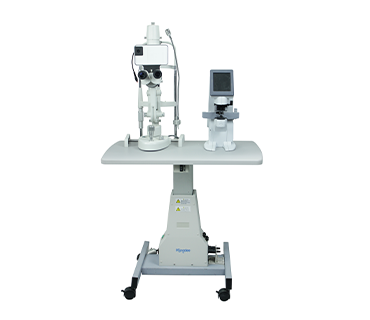
Your slit lamp is your most important tool. Do not buy the cheapest one available. Low-quality optics will cause eye strain for you and lead to missed diagnoses. Invest in a model with good light transmission and smooth movement. Similarly, a high-quality manual phoropter is worth the extra cost. It needs to feel smooth and click into place precisely every single time. A cheap phoropter with “mushy” dials will slow you down and frustrate your patients.
Where to Save: The Supporting Cast
You can save money on the “non-optical” parts of your lane. For example, a basic motorized table is perfectly fine for holding an auto refractometer. You don’t need the most expensive table with a computer interface. An LCD vision chart is another area to save. While high-end charts have many features, a basic 19-inch LCD with standard Snellen and tumbling E charts is sufficient for 95% of exams.
The Hidden Value of Certification
When saving money, never compromise on safety. At Hongdee, we maintain CE, FDA, and ISO 13485 certifications. This means that even our entry-level equipment is tested for electrical safety and medical performance. Buying uncertified equipment from unknown sources might save you money today, but a single malfunction could cost you your practice. We pride ourselves on being a factory-direct supplier that offers “peace of mind” with every purchase.
| Item Category | Recommendation | Why? |
|---|---|---|
| Slit Lamp | Splurge | Vital for clinical diagnosis |
| Phoropter | Splurge | Primary tool for vision correction |
| Vision Chart | Save | Basic charts are highly effective |
| Instrument Table | Save | Mechanical function over tech |
| Refraction Unit | Balance | Ergonomics affect your daily fatigue |
Should You Buy Bundled Packages or Piece Equipment Together À La Carte?
Shopping for equipment is like building a computer. You can buy a pre-made system or pick every part yourself. We explain why bundling is almost always the better choice for new clinics and distributors.
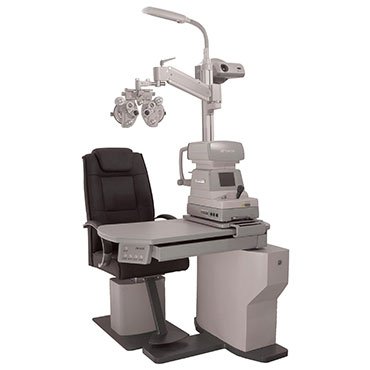
Buying a bundled refraction lane package from one manufacturer is 10-15% cheaper than buying individual items. Bundling also ensures all equipment fits together perfectly, simplifies shipping logistics, and gives you a single point of contact for technical support and warranty claims across your entire setup.
The Financial Advantage of Bundling
Manufacturers like Hongdee want to be your long-term partner. When you buy a complete “package,” we can offer significant discounts because it is more efficient for our factory to process one large order. Shipping is also much cheaper. Instead of five different boxes arriving on five different days from five different countries, everything arrives in one secure shipment. This reduces your customs fees and local transport costs significantly.
Compatibility and Peace of Mind
Have you ever tried to mount a phoropter from one brand onto a stand from another? Sometimes the holes don’t line up, or the weight is too much for the arm. When you buy a bundled set from us, we guarantee that every piece is compatible. The auto refractometer fits the table, the phoropter hangs correctly on the arm, and the chair power connects directly to the unit. This “plug and play” experience saves you days of installation headaches.
One Manufacturer, One Warranty
Imagine a scenario where your lane stops working. If you bought from five different suppliers, they might all blame each other for the problem. With a Hongdee bundle, you have one point of contact. We know your entire setup and can provide remote technical support quickly. This is especially important for our 60+ distributors who need to provide fast service to their own local customers.
| Benefit | Bundled Packages | À La Carte Purchasing |
|---|---|---|
| Price | 10-15% Lower | Retail Market Price |
| Shipping | Single Shipment (Cheaper) | Multiple Shipments (Expensive) |
| Installation | Guaranteed Compatibility | Potential Fitment Issues |
| Support | One Point of Contact | Multiple Manufacturers to Contact |
What Are the Minimum Space Requirements and Layout Tips for Small Exam Rooms?
Small rooms are a reality for many new clinics. If your space is tight, you need to be smart about your layout. We share professional space-saving tips to help you build a functional lane in any environment.
The US Air Force and major optical associations recommend a minimum of 150 square feet for a standard exam room. To save space, use a compact refraction unit with a sliding table and an LCD vision chart that can be mirrored. This allows you to perform full 20-foot (6-meter) exams in rooms half that size.
Master the Mirror Trick
You don’t need a 20-foot long room to test vision. By using a specialized mirror on the wall opposite the patient, you “fold” the optical path. An LCD chart placed behind the patient’s head reflects off the mirror, creating a virtual 20-foot distance in a 10-foot room. This is the single best way to maximize space. Our vision charts have a “mirror mode” that automatically flips the letters so they appear correctly to the patient.
Choosing the Right Furniture
A standard “L-shaped” refraction unit is great but takes up a lot of floor space. For small rooms, we recommend a linear or “single-arm” unit. These units place the patient chair and the equipment arms in a straight line against one wall. Also, consider a sliding table for your auto refractometer. When you are done with the machine, you simply slide it out of the way, giving the patient more room to move.
Workflow and Ergonomics
Think about where the door is located. You want the patient to be able to sit in the chair without walking through a forest of equipment. Keep your most-used tools (like the phoropter) within arm’s reach while you are seated. We design our chairs with small footprints and high-lift motors to accommodate patients of all sizes in tight spaces. Remember, a well-organized small room feels more professional than a cluttered large one.
| Requirement | Minimum Standard | Pro Space-Saving Tip |
|---|---|---|
| Total Area | 150 sq ft (14 sq meters) | Use a “linear” unit layout |
| Exam Distance | 20 ft (6 meters) | Use a mirrored vision chart |
| Door Clearance | 36 inches | Place chair away from the door swing |
| Lighting | Dimmable Ambient | Use integrated unit task lighting |
Conclusion
Building a refraction lane on a budget is about making smart choices, not just buying cheap tools. By prioritizing high-quality optics and choosing bundled packages, you can create a professional environment that grows with your practice.