


A rural clinic can lose months to a device that needs unstable power, rare parts, or a distant engineer. A useful purchasing plan starts with service design, not a catalogue.
Source equipment by mapping essential services, local constraints, maintenance capacity, and referral limits. Then specify a small, documented package and verify it before payment.
At Hongdee, we recommend treating every instrument as part of a care pathway. The right question is not “Which clinic has the biggest list?” It is “Which tools can this team use, maintain, and connect to the next level of care?”
Which eye-care services should your first equipment package support?
A long wish list can hide the difference between screening, diagnosis, treatment, and referral. That confusion creates idle equipment and weak handoffs.
Define the first package around the examinations you will actually provide: visual acuity and refraction, anterior-segment assessment, basic pressure assessment where clinically appropriate, and a documented referral pathway. Add imaging only when staff and referral partners can use the result.
Start with a service map
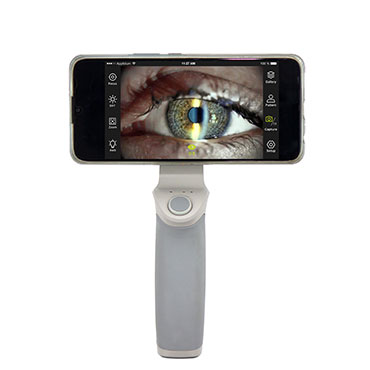
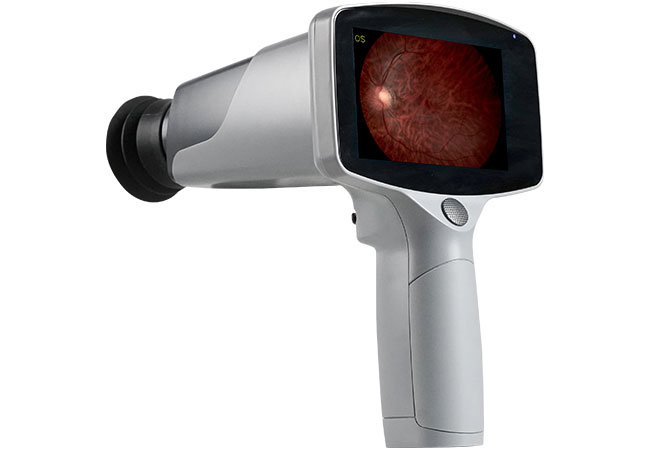
We ask buyers to write four columns before comparing brands: service, trained operator, equipment, and next action. Visual acuity may need a chart and a suitable testing space. Refraction may require an auto refractor, trial lenses, or a refraction unit, depending on the professional scope. An anterior-segment examination may require a slit lamp. A portable fundus camera may support referral information in selected pathways, but it does not replace a complete eye examination or specialist interpretation.
The World Health Organization’s Package of Eye Care Interventions is useful because it links interventions with material resources. The WHO procurement process guide also stresses clear, accountable specifications. We use those principles to prevent a “one device equals one service” assumption. A camera does not create a screening programme by itself. Staff, consent, image review, records, escalation criteria, and transport all matter.
| Service decision | Equipment question | Operational question |
|---|---|---|
| Basic vision check | Is the chart readable in the room? | Who records and repeats an unreliable result? |
| Refraction | Which method fits the operator’s scope? | How are trial lenses cleaned and stored? |
| Anterior segment | Is a slit lamp appropriate for the setting? | Can power, positioning, and cleaning be managed? |
| Referral support | Would imaging improve a defined handoff? | Who reviews and receives the image? |
Separate essential from expandable
We recommend three bands. Essential tools support the clinic’s initial service. Expandable tools address a known referral gap. Specialist tools wait until training, workload, and governance are ready. This sequencing protects cash and attention without assuming that rural care must be low quality.
The final service map should also record what the clinic will not do. A team that only screens and refers should not present a screening device as a diagnostic service. Qualified clinicians must define clinical boundaries and referral urgency.
How do you test whether equipment fits local power, space, and people?
A technically capable instrument can still fail when the room, electricity, transport route, or staffing model does not support it.
Check the operating environment before purchase: power quality, backup, temperature, dust, room size, transport, operator training, cleaning, consumables, and repair access. Ask the supplier to document each assumption.
Turn constraints into acceptance questions
We ask for written answers rather than relying on “suitable for field use.” What input voltage and frequency are specified? Is a stabiliser or uninterruptible power supply recommended? What happens after an interrupted examination? Which parts are user-replaceable, and which require a qualified technician? How should the instrument be packed for a rough road? What clearance and bench depth are needed?
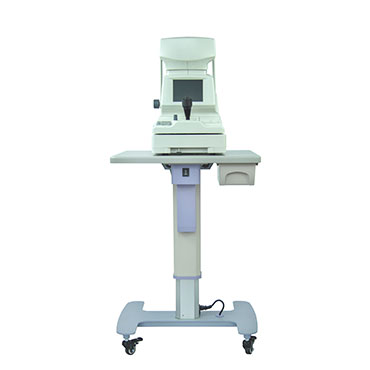
These questions are practical, not pessimistic. A portable slit lamp may solve transport and space problems, but the team still needs a stable examination position, controlled illumination, and a cleaning routine. A table may need a safe load and reliable power. A fundus camera may need a charging plan, data storage, and a person responsible for transferring images. We avoid claiming that any pictured product is automatically suitable; the exact model, configuration, and local requirements must be confirmed.
Check people as carefully as hardware
Create a simple skills matrix. Name who will unpack, operate, clean, record, and escalate. Then ask how an absent staff member will be replaced. Training should include a supervised workflow and a short competency check, not only a presentation. The service plan should state when a reading is unreliable and when the patient is referred.
Use the same matrix for maintenance. “Local service” should mean a defined contact, response route, spare-parts process, and remote troubleshooting method. It should not be treated as a vague promise. Hongdee’s service page can be used as a starting point for questions about available support, but buyers should confirm what applies to their exact destination and model.
How should you compare total ownership cost without inventing a budget?
The lowest quotation can become the most expensive choice when downtime, freight, consumables, and training are missing from the comparison.
Compare a documented total-ownership plan: purchase, delivery, installation, training, consumables, preventive care, repairs, downtime, and safe disposal. Use local quotations for taxes and logistics instead of guessing universal rates.
Use a five-year question set, not a made-up price
We recommend a spreadsheet with one row per device and separate fields for one-time and recurring needs. Ask whether a calibration check is required, whether consumables have expiry dates, and whether a service visit is realistic. Record the cost of a backup workflow when the device is unavailable. For example, a clinic may need a manual alternative, a referral arrangement, or a scheduled outreach day. We do not assign a universal price because country, configuration, freight, tax, and regulation change the answer.
| Cost area | Evidence to request | Decision use |
|---|---|---|
| Initial supply | Quotation with exact model and accessories | Compare like with like |
| Commissioning | Installation and training scope | Avoid an unusable arrival |
| Consumables | Part numbers, shelf life, reorder route | Plan continuity |
| Maintenance | Schedule and escalation contact | Estimate downtime risk |
| Compliance | Destination-market documents | Avoid a blocked shipment |
Value uptime in the care pathway
A low-cost device that sits idle is not economical. Ask how quickly a failed workflow can be detected and what the clinic does next. This is especially important for referral imaging. A delayed image may be less valuable than a timely referral based on an appropriate examination. We encourage buyers to select the smallest package that can produce a reliable service, then expand when usage and referral data justify it.
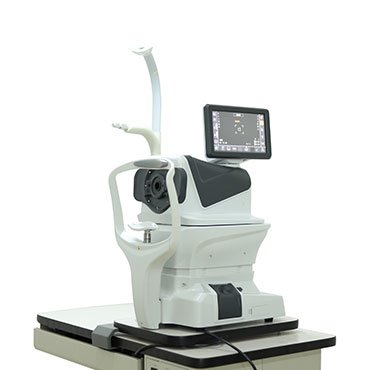
Internal links to Hongdee’s ophthalmic motorized table and ophthalmic auto refractometer help frame equipment questions, but product pages are not substitutes for a destination-specific technical review.
What should you verify before accepting delivery in a remote location?
Remote delivery makes a weak acceptance process hard to repair. If the serial number, accessories, or damage is discovered late, the clinic may carry the problem alone.
Prepare a model-specific receiving checklist, inspect packaging and identity, test the agreed functions, record defects, and release the device only after trained staff and required documents are present.

Build a release and quarantine process
Before shipment, request the commercial invoice, packing list, serial or batch details where applicable, user manual, installation requirements, and destination-market documents. Confirm that the quoted accessories are physically listed. We recommend photographing outer packaging before opening, then recording visible damage, missing items, and identification labels. This is a procurement control, not proof of clinical performance.
After unpacking, the responsible professional should run the agreed basic checks. Confirm power-up, controls, illumination, display or optics, movement, and included accessories according to the manual. Do not make unsupported accuracy claims from a brief arrival test. If a device fails, label it, keep it out of clinical use, and follow the written escalation route.
Close the loop with referral partners
The acceptance file should include who received training, what limitations were explained, and how results move to the next provider. A fundus image is useful only when the receiving professional can access and interpret it under the clinic’s governance. Likewise, an abnormal pressure or visual result needs a named referral action. We see this handoff as part of equipment readiness.
For current procurement education, consult the WHO procurement process resource guide, the WHO Package of Eye Care Interventions, and the professional procurement discussion in Purchasing equipment for an eye unit. Sources checked 2026-10-12; national requirements still need local confirmation.
Conclusion
A resilient rural package is small, service-led, maintainable, and connected to referral. At Hongdee, we help buyers turn those requirements into a model-specific quotation and acceptance checklist. Contact us for a quote.