



Are you worried about getting low-quality equipment that breaks after one month? It ruins your reputation and drains your bank account. We show you how to source safely from China today.
Sourcing high-quality ophthalmic equipment from China requires vetting manufacturers based on their ISO 13485 certification, OEM history for global brands, and the transparency of their supply chain. By focusing on established leaders like Hongdee, distributors can access CE/FDA-certified medical devices that offer European performance at a more competitive price point.
We understand the fear of “Made in China” labels from ten years ago. But the industry has changed. China is now a global hub for medical innovation. Let us guide you through the process of finding a partner you can actually trust.
Why Are More Distributors Sourcing Ophthalmic Equipment from China in 2026?
Do you feel the pressure of rising equipment costs from traditional Western brands? Your margins are shrinking, and it is harder to compete. We see thousands of distributors worldwide making the switch to Chinese manufacturing to stay profitable.
Distributors are turning to China in 2026 because of the rapid advancement in medical manufacturing technology, shorter lead times, and massive cost savings without a dip in clinical accuracy. Modern Chinese factories now meet or exceed international standards like ISO 13485, making them reliable partners for global growth.

The Maturing Chinese Medical Market
In 2026, the gap between “Western quality” and “Chinese quality” has narrowed significantly. Leading manufacturers in Beijing and Shanghai have invested billions in automated assembly and precision optics. We have seen a steady increase in Chinese ophthalmic exports because the value proposition is unbeatable. You get a machine that performs 95% as well as a German model but at a much lower cost.
Resilience and Supply Chain Speed
During recent global supply chain disruptions, Chinese manufacturers remained the most resilient. We can often deliver a full clinic setup in 4-6 weeks, while European brands might take 6 months. For a distributor, this speed means you can turn over your inventory faster and keep your customers happy. You don’t have to tell a clinic owner to wait half a year to open their doors.
The Power of OEM Experience
Many world-famous brands actually have their machines made in China. For example, at Hongdee, we have been an OEM partner for Topcon for over 3 years. When you source from a factory with this kind of resume, you are buying into the same quality control systems used by the world’s biggest companies.
| Factor | Sourcing from China (Modern) | Sourcing from Western Brands |
|---|---|---|
| Procurement Cost | Competitive (Higher Margins) | Premium (Lower Margins) |
| Delivery Time | 4-8 Weeks | 3-6 Months |
| Technological Edge | Fast iteration & digital integration | Traditional & steady |
| Customization | Flexible OEM/Private Labeling | Very rigid |
What Are the 7 Criteria for Vetting a Chinese Ophthalmic Equipment Manufacturer?
Are you tired of “trading companies” that disappear as soon as there is a technical problem? It is a huge risk to your business. We recommend a strict 7-point checklist to separate the real factories from the middle-men.
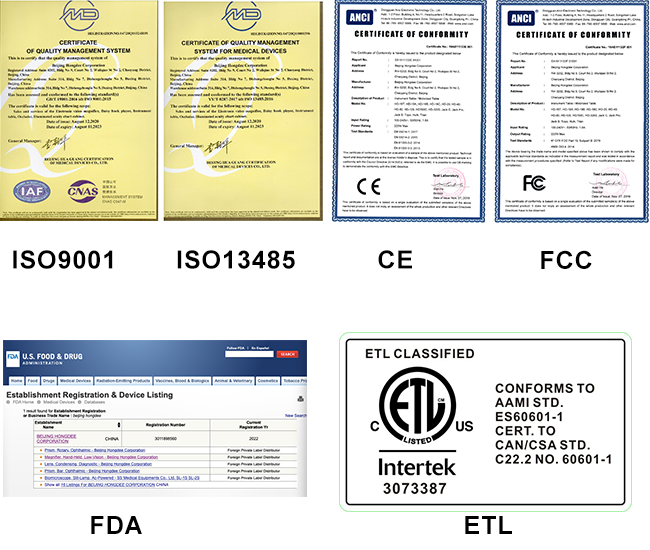
The 7 criteria for vetting include: 1) Verified physical factory location, 2) ISO 13485 certification, 3) CE/FDA product registrations, 4) A dedicated R&D team, 5) Proof of 5+ years in the industry, 6) Positive global distributor testimonials, and 7) A clear after-sales service protocol.
1. Physical Factory vs. Trading Office
Always ask for a video walk-through of the factory. If they only show you a fancy office in a skyscraper, they are probably a trading company. We invite all our potential partners to visit our Beijing facility or join a live video tour. You need to see the assembly lines and the quality testing stations.
2. Certifications and R&D Depth
Don’t just look for a logo on a website. Ask for the certificate numbers and check them on the official databases. A real manufacturer like Hongdee has a deep R&D team. We don’t just copy designs; we improve them. Look for patents and unique features that show the company understands the clinical needs of eye doctors.
3. Track Record and Testimonials
How many distributors do they have? We are proud to have over 60 distributors and 300+ customers globally. Ask for references in your region. A company that has been shipping to the US, Europe, and Australia for years understands the logistics and regulatory hurdles of those markets.
| Vetting Step | What to Look For | Red Flag |
|---|---|---|
| Documentation | Original ISO/CE PDFs | Watermarked or blurry copies |
| Samples | Option to buy a demo unit | “Only bulk orders accepted” |
| Communication | Technical English proficiency | Vague answers to tech questions |
| Factory Tour | Live video or in-person visit | “Visitors not allowed for safety” |
Understanding Certifications: What Do ISO 13485, CE, FDA, TGA, and ANVISA Actually Mean for Your Market?
Do you find the alphabet soup of medical certifications confusing? It is easy to get lost in the paperwork. We help our partners navigate these regulations to ensure every shipment clears customs without a hitch.
ISO 13485 is the foundational quality management system for medical devices. Regional certifications like CE (Europe), FDA (USA), TGA (Australia), and ANVISA (Brazil) are legal requirements for selling in those specific markets. Without these, you risk having your equipment seized by customs or facing legal liability.
The Global Standard: ISO 13485
Think of ISO 13485 as the “constitution” of our factory. It ensures every slit lamp or tonometer is built exactly the same way every time. It covers everything from how we source raw materials to how we handle customer complaints. At Hongdee, this is our most important badge of honor. It proves we are a professional medical manufacturer, not a consumer electronics shop.
Navigating Regional “Gatekeepers”
Each country has its own rules. If you are in the US, the FDA is your biggest hurdle. If you are in Brazil, it is ANVISA. We have experience with all of them. We provide the full technical files needed for registration. For example, our 3-year OEM partnership with Topcon forced us to maintain the highest levels of documentation, which makes it much easier for our distributors to get local approvals.
Why Compliance Protects Your Brand
As a distributor, you are legally responsible for the products you sell. If a patient is injured by a non-certified device, your business is over. By sourcing from a certified manufacturer, you transfer that risk. We provide the safety and efficacy data that proves our machines are safe for clinical use.
| Certification | Primary Region | Focus Area |
|---|---|---|
| CE Mark | European Union | Safety and Performance |
| FDA | United States | Safety and Effectiveness |
| TGA | Australia | Risk Management |
| ISO 13485 | Global | Quality Management Systems |
What Are the Common Pitfalls When Importing from China (and How Do You Avoid Them)?
Have you ever opened a shipping container only to find broken glass and missing parts? It is a nightmare scenario. We have spent years perfecting our shipping and quality control to help our clients avoid these common “China sourcing” traps.
Common pitfalls include hidden shipping costs, poor protective packaging, lack of technical English manuals, and “quality fade” where subsequent batches are worse than the sample. You can avoid these by using “Door-to-Door” DDP shipping terms, requesting plywood crating, and insisting on a pre-shipment inspection.
The Trap of “Quality Fade”
Some factories send a beautiful sample and then use cheaper components for the main order. We solve this by having a transparent QC (Quality Control) process. We send photos and videos of your actual units being tested before they go in the box. Our 300+ long-term customers know that a Hongdee unit ordered in 2026 is just as good as the one they bought in 2022.
Shipping and Logistics Nightmares
Many buyers get caught by low “FOB” prices, only to find that the shipping and port fees are double what they expected. We often recommend DDP (Delivered Duty Paid) terms for new importers. This means we handle everything from the factory floor to your warehouse door. No surprise bills. We also use heavy-duty plywood crates because cardboard simply cannot survive a 40-day journey across the ocean.
The Manual and Software Language Barrier
There is nothing worse than a medical device with a manual written in “broken English.” It makes the product look cheap and dangerous. We invest heavily in professional translation. Our software interfaces and manuals are written for global users. Whether you are in Algeria or California, your technicians will understand how to use our machines.
| Pitfall | Impact | Our Solution |
|---|---|---|
| Damage in Transit | Non-functional equipment | Plywood crating & shock sensors |
| Customs Rejection | Total loss of order | Full documentation prep before shipping |
| Technical Support | Unusable “dead” units | WhatsApp/Zoom support in English |
What After-Sales Terms Should You Negotiate: Warranty, Spare Parts, and Training?
Do you worry about who will fix the machine when it stops working two years from now? Buying the machine is only the first half of the deal. We believe that after-sales service is the most important part of any partnership.
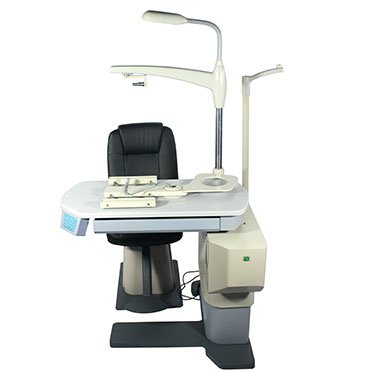
Essential after-sales terms include a minimum 12-month comprehensive warranty, a guaranteed supply of spare parts for at least 5 years, and access to digital training materials. You should also negotiate for real-time technical support via video call to minimize downtime for your clinical customers.
Why Warranty is About More Than Repair
A warranty is a manufacturer’s “promise” of quality. We offer strong warranties because we trust our build quality. But beyond the paper, you need to know how the manufacturer handles a claim. Do they send a whole new unit, or just the part? We ship spare parts via fast couriers like DHL/FedEx to ensure your clinic is never down for more than a few days.
Spare Parts Availability
Medical equipment should last 7 to 10 years. If a factory stops making parts after 2 years, your investment is wasted. We commit to a long-term spare parts supply for all our models. Even if we upgrade a machine, we keep a stock of components for the older versions. This is why we have 300+ loyal customers who keep coming back to Hongdee.
Training Your Technicians
You cannot be a successful distributor if you cannot service the equipment. We provide detailed “service manuals” and video tutorials. For our larger distributors, we offer online training sessions with our lead engineers. We want your team to be the “experts” in your local market. This builds trust with your doctors and allows you to charge for service contracts.
| Service Element | Recommended Standard | Why It Matters |
|---|---|---|
| Warranty Period | 12 to 24 Months | Protects your initial investment |
| Technical Support | < 24 Hour response time | Essential for clinic continuity |
| Spare Parts | Stocked in our warehouse | Reduces repair downtime |
| Updates | Free software patches | Keeps the machine modern |
Conclusion
Sourcing from China is the best way to grow your ophthalmic business in 2026. By vetting factories like Hongdee and focusing on certifications, you get world-class quality without the premium price. Let’s build a reliable supply chain together.