


How Do You Plan Voltage, Power, and UPS Protection for Imported Ophthalmic Equipment?

Power mistakes can fry costly devices. Voltage differs by country. A bad plug or surge can ruin a refraction unit on day one.
At Hongdee, we plan power by matching device voltage and frequency to your local grid, adding the right plug, a voltage stabilizer where needed, and a UPS to protect against surges and outages. This keeps imported equipment safe.
Let me walk you through the full power plan we use with partners.
Why Does Voltage and Frequency Vary by Region?
Grids are not the same worldwide. Many buyers assume one standard. Voltage and frequency differ, and that mismatch can destroy a device.
Countries use different mains voltage and frequency. Most run either 100–127V or 220–240V, at 50Hz or 60Hz. If a device expects one and gets the other, it can fail or burn out instantly.
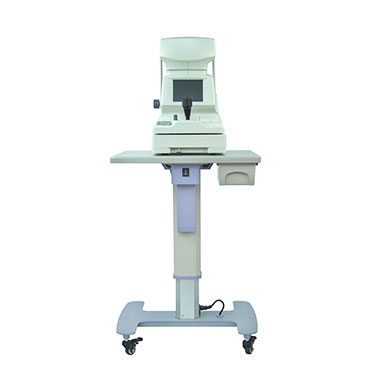
Here is why I always confirm the grid before shipping. A refraction unit built for 110V will not survive 230V without protection.
Voltage Basics
Voltage is the “push” of electricity. Too much push on a low-voltage device causes damage. Too little leaves motorized tables and chairs underpowered.
Frequency Basics
Frequency, in Hz, affects motors and timing. Some devices need the exact frequency; others adapt. Always check the label.
Region Reference Table
| Region | Typical Voltage | Frequency | Common Plug |
|---|---|---|---|
| Germany/EU | 230V | 50Hz | Type C/F |
| Australia | 230V | 50Hz | Type I |
| Brazil | 127V/220V | 60Hz | Type N |
| UAE | 230V | 50Hz | Type G |
| South Africa | 230V | 50Hz | Type M/D |
| Southeast Asia | 220–240V | 50Hz | Varies |
Confirm your exact values before you order. Local addresses can differ from the national norm.
What Power Specs Should You Check Before Importing?
Specs prevent disasters. Buyers often skip the label. Voltage range, frequency, wattage, and plug type all decide if a device works safely.
Check the device’s rated voltage range, frequency, wattage, and plug type. Confirm whether it is dual-voltage or fixed. Match every spec to your grid, or plan a converter or stabilizer before the equipment arrives.
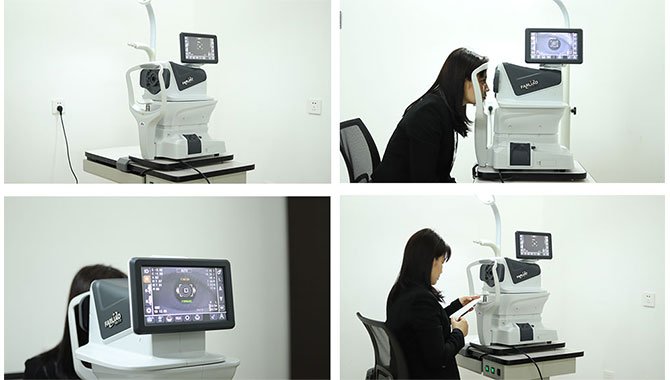
Let me explain each spec in plain terms.
Voltage Range and Dual-Voltage
Many modern devices accept 100–240V. These are easy to use anywhere. Fixed-voltage units need a transformer if your grid differs. We at Hongdee tell you which type you are buying.
Wattage and Load
Wattage sets how much power a device draws. Motorized tables and chairs draw more than a handheld tonometer. You size your UPS and stabilizer to total load.
Plug and Cable
We ship the plug type for your country or a suitable adapter. Never force a mismatched plug.
| Spec to Check | Why It Matters | Hongdee Support |
|---|---|---|
| Voltage range | Prevents burnout | We confirm per order |
| Frequency | Motor safety | Matched to grid |
| Wattage | Sizing UPS | We list device draw |
| Plug type | Safe connection | Correct plug shipped |
A five-minute spec check saves a very costly repair.
How Does Power Quality Affect Different Devices?
Not all devices react the same. Sensitive optics hate dirty power. A surge that a lamp survives may ruin a fundus camera’s electronics.
Precision devices like fundus cameras and autorefractors are sensitive to surges, sags, and outages. Motorized tables tolerate more but still need stable voltage. I protect each by its sensitivity, not with one blanket solution.
Here is how I group devices by power need.
High-Sensitivity Devices
Fundus cameras, autorefractors, and digital imaging units carry delicate electronics. They need a UPS with surge protection and clean output.
Medium-Sensitivity Devices
Slit lamps and refraction units need stable voltage. A stabilizer plus basic surge protection usually suffices.
Lower-Sensitivity Devices
Motorized tables and chairs are robust but still deserve surge protection to guard motors.
| Device | Sensitivity | Recommended Protection |
|---|---|---|
| Fundus camera | High | UPS + surge + stabilizer |
| Autorefractor | High | UPS + surge |
| Slit lamp | Medium | Stabilizer + surge |
| Refraction unit | Medium | Stabilizer |
| Motorized table | Lower | Surge protector |
Protect by sensitivity and you spend money where it counts.
Why Is a UPS Worth the Extra Cost?
A UPS feels like an optional add-on. Many skip it to save money. But one outage during imaging can corrupt data or damage hardware.
A UPS gives clean, steady power and keeps devices running briefly during an outage. This prevents data loss, protects electronics from surges, and lets you shut down safely. For sensitive imaging devices, it is well worth the cost.
Let me show the value in real clinic terms.
What a UPS Does
It smooths voltage, blocks surges, and supplies battery power for a short time. In regions with an unstable grid, like parts of South Africa and Southeast Asia, this is essential.
Sizing a UPS
Match UPS capacity to total device wattage, plus headroom. An undersized UPS fails under load. We help you size it per device.
Cost vs. Risk
| Scenario | Without UPS | With UPS |
|---|---|---|
| Power surge | Device may fail | Blocked |
| Outage mid-scan | Data lost | Safe shutdown |
| Voltage sag | Errors, damage | Stabilized |
| Repair cost | High | Avoided |
A UPS costs far less than one damaged fundus camera. The math is simple.
What Setup Support and After-Sales Should You Expect?
Power planning needs guidance. Buyers should not guess alone. A good supplier helps match grid, size protection, and support installation.
From us at Hongdee you get voltage-matched devices, correct plugs, guidance on stabilizers and UPS sizing, and setup support. We also provide warranty and compliance documents, so your imported equipment installs safely and runs reliably.
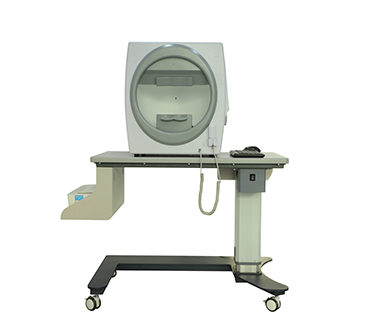
I treat power planning as part of delivery.
Pre-Shipment Matching
Before we ship, we confirm your voltage, frequency, and plug. We tell you if you need a stabilizer or transformer. This avoids damage on first use.
Compliance and Safety
Our devices carry CE marking, and we support FDA, TGA, ANVISA, and PMDA requirements. Electrical safety standards matter for medical devices, and we document compliance for your market. Always use a licensed electrician for installation; this is planning guidance, not an electrical code.
Warranty and Help
We back equipment with warranty and give remote setup support. If a power question arises, we help you solve it fast.
Conclusion
Match device voltage and frequency to your grid, add the right plug and stabilizer, protect sensitive devices with a UPS, and let us at Hongdee confirm specs and support a safe, reliable installation.