



Refraction is the most common task in your clinic, but it takes too much time. Manual testing can tire you out and lead to errors. We show you how auto refractometers make your day easier.
An auto refractometer is a computer-controlled machine that measures a patient’s refractive error in seconds. It uses light projection and infrared sensors to determine the sphere, cylinder, and axis. This automation speeds up your workflow, increases patient throughput, and provides a precise starting point for subjective refraction.
At Hongdee, we have spent years perfecting our ARK series. We know that every second counts when you have a waiting room full of patients. Whether you are in a high-volume hospital or a small boutique optical shop, the right auto refractometer is a game-changer. Let’s look at how this technology works and why it is the best investment for your practice.
How Does an Auto Refractometer Actually Work From Light Projection to Prescription Output?
How can a machine tell what a patient sees without them saying a word? It feels like magic, but it is actually advanced optical physics at work.
Auto refractometers work by projecting infrared light into the eye and measuring how the retina reflects it. The machine’s sensors analyze the reflection to calculate the eye’s focusing power. It then outputs the sphere, cylinder, and axis readings almost instantly, giving you a highly accurate baseline for the patient’s vision.
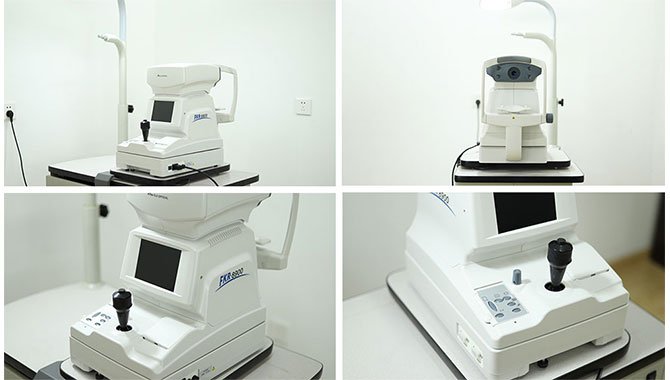
The Role of Infrared Light
We use infrared light because the human eye cannot see it. This means the patient’s pupil does not shrink when the light hits it. Keeping the pupil natural allows our sensors to get a clear view of the retina. Inside machines like the ARK-200, a series of lenses moves quickly to find the sharpest reflection point. This process happens in a fraction of a second, much faster than any human could do it manually.
The Fogging Technique
One big problem with eye tests is that the eye tries to “accommodate” or focus on the target. This can lead to wrong readings. To fix this, our machines use a “fogging” technique. The patient looks at an image, like a hot air balloon or a house. The machine makes the image slightly blurry, which relaxes the eye muscles. This relaxation is what allows us to get the “true” measurement of the eye’s shape.
From Data to Prescription
Once the sensor captures the reflection, the internal computer does the math. It calculates the refractive error across different meridians to find the astigmatism (cylinder and axis). The result is printed out or sent to your digital phoropter. This data isn’t just a number; it is a map of the patient’s vision. It saves you minutes of “better 1 or better 2” questions during the final exam.
| Component | Function | Why It Matters |
|---|---|---|
| Infrared Source | Projects invisible light into the eye | Prevents pupil constriction for better data |
| Optical Sensor | Captures the light reflected by the retina | The “eyes” of the machine for measuring power |
| Moving Lens System | Adjusts focus to find the neutral point | Enables high speed and accuracy |
| Fogging Target | Relaxes the patient’s eye muscles | Prevents over-accommodation and false readings |
How Much Time and Patient Throughput Can Automation Actually Save You?
Does buying an auto refractometer really pay for itself, or is it just a fancy gadget? We look at the numbers to see the real impact on your daily schedule.
Automation can save you 5 to 10 minutes per patient compared to manual refraction. This allows you to see 20% to 40% more patients every day. By reducing the time spent on basic measurements, you can focus on complex diagnoses and building better relationships with your patients.
The Math of Throughput
Let’s look at a typical day in a clinic in Singapore or the US. If you see 20 patients a day and save 5 minutes on each, you just gained 100 minutes. That is enough time to see three more patients. Over a year, those extra patients add up to significant revenue. This is why many of our distributors call the auto refractometer a “revenue generator,” not just a tool.
Reducing Doctor Fatigue
Manual refraction is hard on your eyes and your back. Leaning over a phoropter all day can lead to burnout. By using an ARK-710, you let the machine do the heavy lifting. You only need to do the final “fine-tuning.” This means you stay fresh and focused even during the last appointment of the day. A tired doctor is more likely to make mistakes, so automation is also a safety feature.
Improving the Patient Experience
Patients today expect fast and modern care. If they spend 20 minutes in a dark room while you click through lenses, they might feel the process is outdated. An auto refractometer makes the test feel quick and professional. It also reduces the “pressure” on the patient to give the “right” answer. We have found that patients are much more relaxed when the machine does the initial work.
| Task | Manual Time | Automated Time | Time Saved |
|---|---|---|---|
| Initial Assessment | 5-7 Minutes | 30 Seconds | ~5 Minutes |
| Astigmatism Check | 3-5 Minutes | 10 Seconds | ~4 Minutes |
| Data Recording | 1 Minute | Instant (Print) | 1 Minute |
| Total per Patient | 9-13 Minutes | 1-2 Minutes | 8-11 Minutes |
Manual vs. Semi-Automated vs. Fully Automated Refractometers: What’s the Real Difference?
Which model should you choose for your specific clinic size and budget? Not all machines are the same, and understanding the tiers is key to a good ROI.
Manual refractometers require the operator to align every shot. Semi-automated models like the ARK-710 offer auto-tracking in the Y-axis but need manual trigger. Fully automated models like the ARK-900 handle 3D tracking and firing for both eyes automatically. The choice depends on your patient volume and the skill level of your staff.
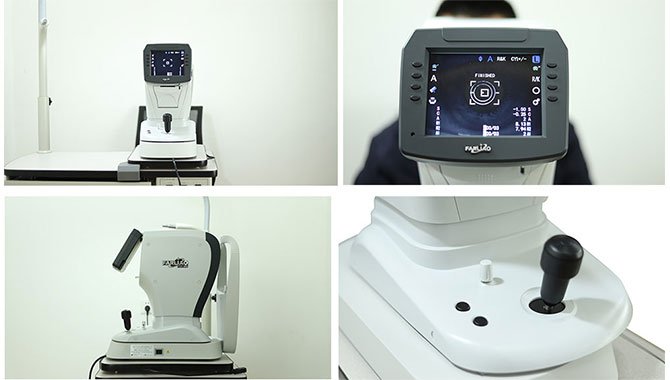
ARK-200: The Reliable Manual Workhorse
The ARK-200 is what we call a manual-alignment auto refractometer. You use the joystick to center the eye on the screen and press the button. It is very affordable and perfect for clinics with lower volume or for those who want full control. It is built with the same high-quality optics as our top-tier models, so accuracy is never compromised.
ARK-710: The Semi-Automated Balance
This is our most popular model for general practices. It is “semi-automated” because it helps you with the vertical alignment. If the patient moves slightly, the machine follows. You still use the joystick for the final depth and horizontal focus. It is faster than the ARK-200 and reduces the learning curve for new technicians. It offers a great balance of price and speed.
ARK-900: The Fully Automated Future
If you have a very busy hospital, the ARK-900 is for you. It features full 3D auto-alignment. You just point it near the eye, and the machine does the rest. It finds the eye, focuses, and takes the measurement for both eyes without you touching the joystick. It is the ultimate tool for high-throughput environments. It ensures that every measurement is taken at the perfect moment, every time.
| Model | Automation Level | Best For | Key Advantage |
|---|---|---|---|
| ARK-200 | Manual | Small clinics / Low budget | Lowest price, high durability |
| ARK-710 | Semi-Automated | Mid-size clinics | Auto-tracking, fast learning |
| ARK-900 | Fully Automated | Large hospitals / High volume | Hands-free, maximum speed |
What Key Specs Should You Compare: Sphere Range, Cylinder Range, and Minimum Pupil Size?
When you look at a spec sheet, which numbers actually matter for your clinical success? Don’t get lost in the jargon—focus on these three critical areas.
Look for a wide sphere range (-20D to +20D) and a cylinder range of at least ±10D to cover all patients. A small minimum pupil size (2.0mm or less) is vital for elderly patients with miosis. These specs ensure you can treat everyone from young children to seniors with complex vision needs.

Why Minimum Pupil Size is Crucial
We often hear from doctors in regions like Latin America and Asia that many of their patients are seniors. As we age, our pupils naturally get smaller. If your machine needs a 3.0mm pupil, you won’t be able to test these patients. All Hongdee ARK models are designed to work with pupils as small as 2.0mm. This small detail saves you from having to switch back to manual methods for your elderly patients.
Range and Precision
A wide sphere and cylinder range means you can handle extreme cases of nearsightedness or astigmatism. Some “budget” machines from other brands cut costs by limiting the range. At Hongdee, we use high-grade sensors that maintain accuracy even at the edges of the range. This reliability is why we have been an OEM for Topcon for 3 years. We understand that a medical device must work in every scenario, not just the easy ones.
Connectivity and Data Storage
In a modern clinic, you don’t want to type numbers by hand. Check if the machine can connect to your EMR (Electronic Medical Record) or a digital phoropter. Our ARK series supports standard data output, making it easy to build a fully digital lane. This reduces transcription errors, which are a common cause of wrong prescriptions in busy practices.
| Specification | Standard Requirement | Hongdee ARK Performance |
|---|---|---|
| Sphere Range | -15D to +15D | -20D to +20D (Higher range) |
| Cylinder Range | ±6D to ±8D | Up to ±10D (Extreme cases) |
| Min. Pupil Size | 2.5mm to 3.0mm | 2.0mm (Better for seniors) |
| Vertex Distance | 0, 12, 13.5mm | Adjustable for all regions |
Should You Buy New or Refurbished Auto Refractometers?
Is it better to save money on a used brand-name machine or invest in a new Hongdee? We look at the long-term value and the risks of both options.
Buying a new auto refractometer is generally the better investment due to the manufacturer’s warranty, modern software, and lower maintenance costs. While refurbished units have a lower initial price, they lack support and often have hidden wear on internal motors that can lead to expensive repairs within a few months.
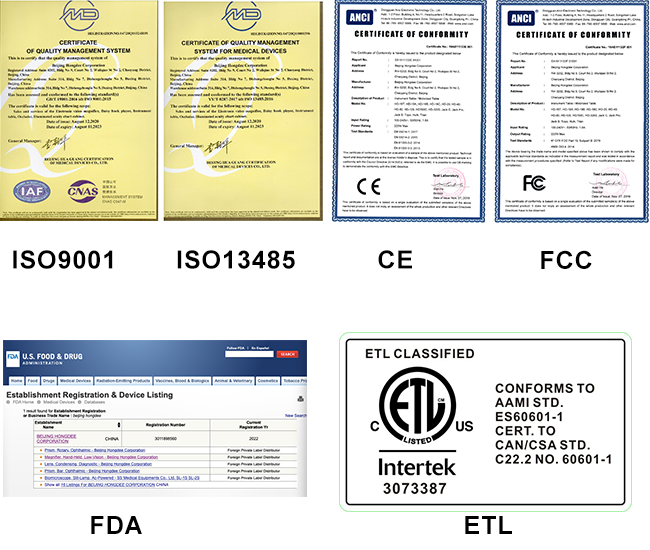
The Warranty Safety Net
When you buy a new Hongdee ARK, you get peace of mind. We offer free repairs and free replacements for parts during the warranty. If a motor fails in a refurbished machine, you are on your own. Often, the cost of one major repair on an old machine is more than the difference in price for a new one. We build our machines to last, but having that factory support is vital for any business.
Shipping and Global Support
We ship our new machines worldwide with double-wall protection. We have 60+ distributors who can help with setup. With a used machine from an online marketplace, you never know how it was handled during shipping. Misalignment during transport is a huge risk for sensitive optical equipment. By buying new, you ensure the machine arrives in factory-perfect condition.
The Value of Modern Technology
Eye care technology changes fast. A new ARK-900 has better sensors and faster processors than a 10-year-old machine from a “premium” brand. You get better accuracy for a lower price because manufacturing has become more efficient. We have served over 300 customers who switched from old used gear to new Hongdee equipment, and they all report better reliability and faster workflow.
Conclusion
Choosing the right auto refractometer is about more than just a list of specs. it is about making your clinic faster, safer, and more profitable. Whether you choose the ARK-200 or the ARK-900, we are here to support your success.
文件已保存到 articles/07-what-is-auto-refractometer-workflow.md